
Space looks calm from down here, a quiet velvet sky dusted with stars. Up close it is one of the most violent places imaginable, full of worlds that rain iron, storms that could knock out our power grids, and objects that would stretch a human body into a thread. Here are ten space facts that are stunning and unsettling in equal measure, and every one of them is real.
We grow up thinking of space as peaceful. No noise, no weather, just stillness going on forever. The truth is stranger and a lot scarier. The universe is enormous, mostly empty, and quietly busy doing things that would end you in seconds if you were there to witness them. None of this is meant to keep you up at night. It is meant to remind you how wild the place we live in actually is, and how lucky we are to be watching it from behind the thin blue shield we call home.
Key Takeaways
- On some exoplanets it literally rains rock or molten iron, and here in our own solar system Venus rains sulfuric acid.
- In 2012 the Sun fired off a storm powerful enough to cripple modern technology, and it missed Earth by about a week.
- Without a spacesuit, a human would lose consciousness in roughly 15 seconds. You would not explode, but you would not last long either.
- A meteor exploded over Russia in 2013 with no warning and injured around 1,500 people.
- Space is completely silent, because there is no air to carry sound.
1. It Rains Rocks on One Planet, and Molten Iron on Another
We complain about rain. We have no idea how good we have it.
Far out in the galaxy sits CoRoT-7b, a world roughly 489 light-years away that is locked so one face always points at its star. That daylit side gets hot enough to melt rock into vapor, and astronomers think that vapor can condense high in the sky and fall back down as a drizzle of pebbles and lava. Then there is WASP-76b, about 640 light-years away in the constellation Pisces, where the dayside climbs past 2,400 degrees Celsius. That is hot enough to boil iron into gas. Fierce winds carry that iron vapor around to the cooler night side, where it cools, condenses, and falls as rain made of liquid metal. These are the kinds of alien worlds astronomers keep turning up, and if you want to know how they even find planets this far away, our guide to what an exoplanet is breaks it down.
2. Closer to Home, Venus Rains Acid
You do not need to leave the solar system to find nightmare weather. Our neighbor Venus has clouds made of sulfuric acid, and it does rain acid up in that thick atmosphere. The twist is that the surface is so blisteringly hot, around 465 degrees Celsius, that the acid rain evaporates long before it ever reaches the ground. So Venus has acid showers that never land, falling and boiling away over and over in the sky. If you are curious just how hostile our sister planet really is, we went deep on Venus and its backward orbit.
Here is a quick look at where the weather actively tries to kill you.
| World | What falls from the sky | Why |
|---|---|---|
| CoRoT-7b | Rock and lava | Dayside hot enough to vaporize rock |
| WASP-76b | Molten iron | Iron boils on the dayside, condenses at night |
| Venus | Sulfuric acid | Acid clouds, though the rain evaporates before landing |
| Earth | Water | The temperature is just right |
3. The Sun Nearly Knocked Us Back to the 1800s
Our own star is not as steady as it looks. Every so often the Sun launches a coronal mass ejection, a colossal cloud of charged particles hurled out at millions of kilometers per hour. If one of those slams into Earth head on, it can overload power grids, fry satellites, and scramble GPS and radio.
This is not a hypothetical. In July 2012 the Sun fired off one of the most powerful storms in over 150 years. It tore straight through the patch of space Earth’s orbit passes through. The only reason you did not hear about it is that Earth had moved on about a week earlier, so the storm hit empty space instead of us. NASA later described it plainly: if the timing had been slightly different, we would still be picking up the pieces. You can read NASA’s own account of that near miss, and it is a sobering read.
 A solar flare erupting from the Sun, seen in ultraviolet by NASA’s Solar Dynamics Observatory. Storms like this can reach across the solar system. (Image: NASA/SDO)
4. Taking Your Helmet Off in Space Would Be a Terrible Idea
Ever wonder why astronauts guard their suits so carefully? Because the vacuum of space does unpleasant things to an unprotected body, and quickly.
With almost no pressure around you, the water in your body starts turning to vapor. You would swell up as gas bubbles formed in your tissues, though, contrary to the movies, you would not burst. Human skin is tougher than that. What would get you is the lack of oxygen. You would have somewhere around 15 seconds of useful consciousness before you passed out, because that is roughly how long the oxygen already in your blood would last. And whatever you do, you would not want to hold your breath, because the pressure difference could rupture your lungs. It is a grim picture, which is exactly why the suit matters so much.
5. Space Radiation Is Trying to Cook You
Down here on the ground we are bathed in sunlight and barely think about it. Out in open space, the radiation situation is far nastier. Cosmic rays and high-energy particles stream through everything, and prolonged exposure raises the risk of cancer, damages tissue, and strains the heart. The reason we stroll around Earth unbothered is our planet’s magnetic field and thick atmosphere, which together deflect and soak up most of that incoming radiation. It is an invisible shield we never see doing its job, and life here depends on it completely.
6. Rocks Fall From the Sky Without Warning
Space does not send a heads up before it drops something on us. On an ordinary morning in February 2013, a chunk of rock about 20 meters wide came screaming into the atmosphere over Chelyabinsk, Russia, and exploded in the air with the force of a large bomb. Nobody saw it coming. The shockwave blew out thousands of windows across the city, and around 1,500 people were hurt, most of them cut by flying glass. It was a loud reminder that Earth sits in a cosmic shooting gallery, and that the next visitor could arrive on any random Tuesday.
7. Jupiter Is Quietly Guarding Us
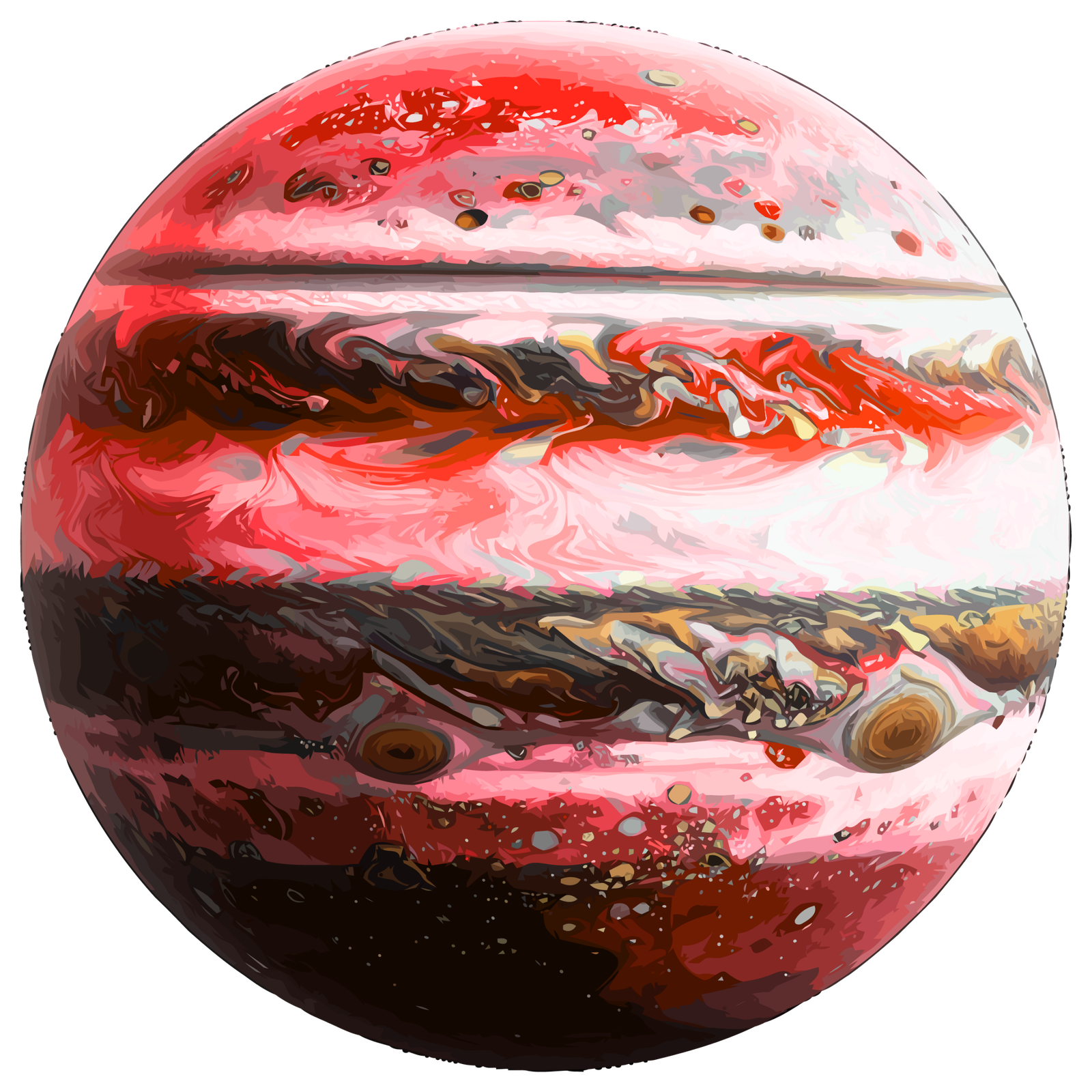
Now for a fact that is comforting rather than terrifying. Jupiter is enormous, and its gravity is so strong that it acts a bit like a bouncer for the inner solar system. Many comets and asteroids that might otherwise drift toward Earth get pulled off course, captured, or flung away by Jupiter’s pull long before they reach us. The giant planet does not catch everything, and astronomers debate exactly how much of a shield it really is, but it has taken some serious hits on our behalf. It is strange to think our safety owes something to a planet more than 600 million kilometers away. For more on the worlds looming out there, our piece on what an exoplanet is is a good companion read.
8. A Black Hole Would Stretch You Into a Noodle
Black holes are the stuff of nightmares for good reason. Their gravity is so intense that not even light can escape once it crosses the point of no return. But the truly unsettling part is what would happen to a person who fell in.
Near a black hole, gravity pulls on the part of you closest to it far more strongly than the part farthest away. Fall in feet first, and your feet get yanked harder than your head. The difference grows so extreme that you would be stretched out longer and longer, thinner and thinner, like a piece of dough pulled into a strand. Physicists actually have a name for this, and it is exactly as ridiculous as it sounds: spaghettification. To learn where these monsters come from, see our explainer on the black hole at the center of our own galaxy.
9. In Space, No One Can Hear Anything at All
Two stars can collide, a planet can be torn apart, an entire supernova can detonate, and it all happens in total silence. This is not poetic exaggeration. Sound travels as a vibration passing through a medium, usually the air around us. Space is a near-perfect vacuum with almost no air, so there is nothing for those vibrations to move through. A cosmic explosion bright enough to outshine a galaxy would reach you as pure, soundless light. The universe stages the most violent events imaginable and never makes a sound doing it.
10. Those Violent Explosions Build the Universe’s Darkest Objects
The silence hides real fury. When a truly massive star runs out of fuel, it collapses and blows itself apart in a supernova, one of the most powerful explosions in existence. If the core left behind is heavy enough, it keeps collapsing until it becomes a black hole. So the peaceful-looking night sky is quietly recycling dead stars into the very objects that would spaghettify you. Our guide to what a supernova is covers these titanic blasts, which also happen to forge many of the atoms your body is made from.
Frequently Asked Questions
What is the scariest fact about space? It is hard to pick just one, but the silence unsettles most people. Space is a near-total vacuum, so the most violent events in the universe, from colliding stars to exploding supernovae, all happen without a single sound.
Can it really rain iron on a planet? Yes. On the exoplanet WASP-76b, the dayside gets hot enough to vaporize iron, and winds carry that vapor to the cooler night side, where it condenses and falls as molten iron rain. It is one of the strangest weather systems ever discovered.
What would happen to a human in space without a suit? You would not explode. Your body would swell as fluids turned to vapor, and you would lose consciousness in roughly 15 seconds from lack of oxygen. Holding your breath would be dangerous, since the pressure difference could damage your lungs.
Does Jupiter really protect Earth? Partly. Jupiter’s powerful gravity deflects or captures many comets and asteroids that might otherwise head toward the inner solar system. It is not a perfect shield, but it has absorbed some major impacts that could have been aimed our way.
Why is space silent? Sound needs a medium such as air to travel through. Space is an almost perfect vacuum with virtually no air, so sound waves have nothing to move through and cannot carry from one place to another.
If you enjoyed this article, don’t forget to drop us a comment, it really helps support the site, and be sure to check out our other articles because we think you’re going to love them too.