Interactive Tool
Age on Planets Calculator
A year is just how long a planet takes to orbit the Sun. Enter your birth date to see how old you’d actually be, in local years, on every planet in the solar system.
Pick a valid birth date first, one that isn’t in the future.
Calculated using each planet’s real orbital period around the Sun (its true “year” length), applied to the exact number of days you’ve been alive. Ring sizes above are scaled to show relative orbit length, not drawn to true distance.
How Old Would You Be on Mars? Your Age on Every Planet, Explained
A “year” isn’t some fixed, universal unit, it’s just how long a planet takes to loop around the Sun once. Earth happens to take 365 days to do that. Mars takes nearly two Earth years. Mercury does it in less than three months. Which means your actual age depends entirely on which planet you’re standing on when you ask the question.
Age Is Really Just an Orbit Count
Every “birthday” you’ve ever celebrated marks one full trip Earth has made around the Sun. Nothing about that trip is special to the universe itself, it’s simply Earth’s specific orbital period, about 365.25 days. Mercury completes the same kind of lap in just 88 days, meaning a Mercury year passes more than four times for every single Earth year. Someone who’s 30 in Earth years would already be well past 124 birthdays on Mercury, without a single extra moment having actually passed.
Why the Gap Gets So Extreme
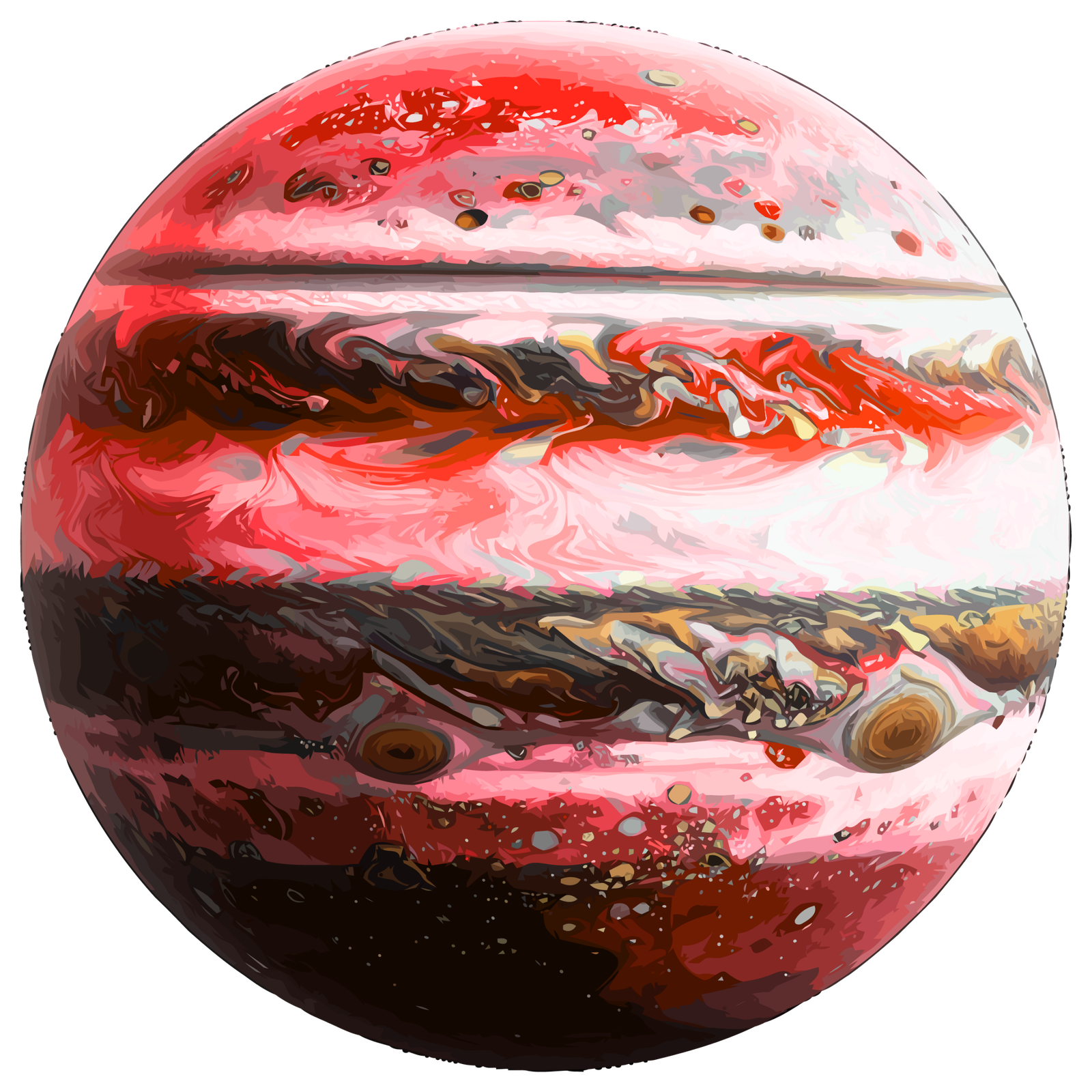
The pattern comes straight from orbital mechanics, planets farther from the Sun move slower and have much farther to travel, so their years stretch out dramatically. Jupiter, sitting about five times farther from the Sun than Earth, takes almost 12 Earth years to complete one orbit. Saturn stretches that to roughly 29.5 years. By the time you reach Uranus and Neptune, a single “year” on that planet can outlast most of a human lifetime measured in Earth years.
It’s a genuinely different way of thinking about age than most people are used to, not a measure of how much you’ve lived, just a measure of how many times a specific rock has circled the Sun since you were born.
See Your Own Numbers
Rather than just reading about the math, our Age on Planets Calculator runs the actual numbers for you. Enter your birth date and it instantly shows your exact age on all eight planets side by side, using each planet’s real, measured orbital period rather than rounded estimates. If you’re curious about the individual worlds involved, our full profiles of Mercury, Mars, and Saturn cover the exact orbital details behind each calculation.
A Simple Number With a Bigger Point
Beyond being a fun party-trick calculation, the exercise is a genuinely good way to feel, rather than just read, how differently the solar system’s clocks run. The same 365 days that mark one Earth year are barely a fraction of a Mercury year, and an entire human childhood, adolescence, and adulthood combined still wouldn’t add up to one full year on Neptune. Time, it turns out, was never really universal to begin with, it was always just local to wherever you happen to be standing.
If you enjoyed this article, don’t forget to drop us a comment, it really helps support the site, and be sure to check out our other articles because we think you’re going to love them too.