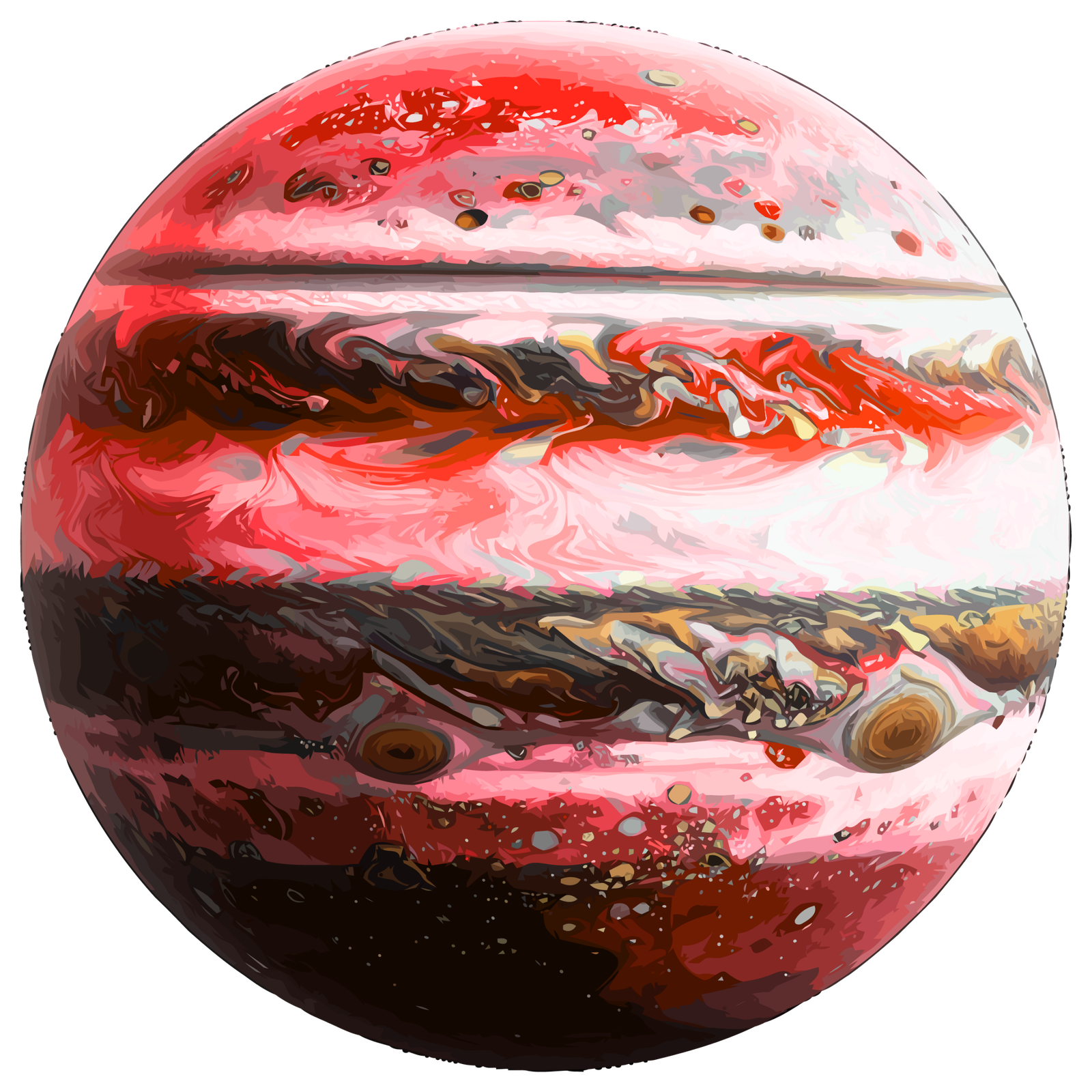
How Much Would You Weigh on Other Planets? A Trip Across the Solar System’s Scales
(Paste this on the same page as the calculator — intro and Key Takeaways above the tool, the rest below it.)
(⚠ INTERNAL LINKS: two links below use placeholder URLs marked “REPLACE-URL”. Swap them for your real published article URLs before publishing, or the links will break.)
Step on a scale on the Moon and it would read about a sixth of your Earth weight. Do the same on Jupiter and you’d suddenly weigh more than two and a half times as much. Same body, same amount of stuff, wildly different numbers. It all comes down to gravity, and every world in the solar system pulls with its own strength. Enter your weight in the tool above to see your personal figures, then read on for what’s really going on.
Key Takeaways
- Your weight changes from planet to planet because weight depends on gravity, and gravity differs on every world.
- Your actual mass, the amount of matter you’re made of, never changes no matter where you go.
- On the Moon you’d weigh about 17% of your Earth weight. On Jupiter, roughly 253%.
- Mercury and Mars pull almost identically, even though Mercury is far smaller.
Weight and Mass Are Not the Same Thing
This trips a lot of people up, so it’s worth clearing up first. Mass is how much matter you’re made of, and it stays exactly the same whether you’re on Earth, the Moon, or drifting in deep space. Weight is different. Weight is just gravity pulling on that mass. Change the gravity and the weight changes with it, even though you haven’t gained or lost a single atom.
So when we say you’d “weigh less” on Mars, you’re not shrinking. You’re the same you. The planet is simply pulling on you more gently, and the scale reflects that softer tug.
What You’d Weigh Across the Solar System
Here’s how it shakes out for someone who weighs 150 lb (about 68 kg) on Earth. To find your own numbers, multiply your Earth weight by the gravity figure in the middle column.
| Where you’re standing | Gravity vs Earth | A 150 lb person weighs |
|---|---|---|
| Mercury | 0.38 | about 57 lb |
| Venus | 0.91 | about 137 lb |
| Earth | 1.00 | 150 lb |
| The Moon | 0.17 | about 25 lb |
| Mars | 0.38 | about 57 lb |
| Jupiter | 2.53 | about 380 lb |
| Saturn | 1.07 | about 161 lb |
| Uranus | 0.89 | about 134 lb |
| Neptune | 1.14 | about 171 lb |
| Pluto | 0.06 | about 9 lb |
The Moon is the one most people already have a feel for, thanks to old Apollo footage of astronauts bouncing around. That famous floaty hop happens because everything up there, including a heavy spacesuit, weighs roughly a sixth of what it does on Earth. We covered exactly why in our piece on why the Moon’s gravity is one-sixth of Earth’s.
The Surprises Hiding in That Table
A couple of rows don’t behave the way you’d expect. Mercury is a tiny planet, barely bigger than our Moon, yet it pulls on you just as hard as Mars, a world nearly twice its size. The reason is density. Mercury is packed with a huge iron core, so even though it’s small, there’s a lot of mass crammed into it, and that keeps its surface gravity surprisingly strong. Mars, bigger but far less dense, ends up at the same 0.38. If you want the full comparison, our article on Mars gravity versus Earth goes deeper.
Jupiter surprises people the other way. It’s the biggest planet by a mile, so you might expect its gravity to flatten you instantly. Instead you’d weigh “only” about two and a half times your Earth weight. That’s because Jupiter is a puffy ball of gas with low density, and its cloud tops sit so far from its centre that the pull, while strong, isn’t the monster you’d imagine. Saturn is even gentler, almost Earth-like, for the same reason.
Places You Could Never Actually Stand
There’s a catch with the giant planets. Jupiter, Saturn, Uranus, and Neptune don’t have solid surfaces to stand on at all. They’re gas and liquid all the way down, so the “weight” figures for them are really what you’d feel at the cloud tops before you started sinking. And the Sun, if we’re being morbid about it, has a surface gravity around 28 times Earth’s. A 150 lb person would register over two tons there, not that you’d survive long enough to read the scale. These numbers are a fun thought experiment more than a travel plan.
Frequently Asked Questions
How much would I weigh on Mars?
About 38% of your Earth weight. If you weigh 150 lb here, you’d weigh roughly 57 lb on Mars. Multiply your own weight by 0.38 to get your figure.
Would I weigh more or less on Jupiter?
More. Jupiter’s gravity is about 2.53 times Earth’s, so you’d weigh roughly two and a half times what you do here. A 150 lb person would tip the scale at around 380 lb.
Does my mass change on other planets?
No. Your mass stays identical everywhere in the universe. Only your weight changes, because weight is the result of gravity acting on your mass.
On which planet would I weigh the least?
Of the major worlds, Pluto, where you’d weigh only about 6% of your Earth weight. Among the eight main planets, Mercury and Mars tie for the lowest at 38%.
Why do Mercury and Mars have the same gravity?
Mercury is small but extremely dense thanks to its large iron core, while Mars is bigger but much less dense. The two effects roughly cancel out, leaving both with about 38% of Earth’s surface gravity.
For the official surface-gravity figures behind these calculations, NASA publishes a full set on its Planetary Fact Sheet.
If you enjoyed this article, don’t forget to drop us a comment, it really helps support the site, and be sure to check out our other articles because we think you’re going to love them too.