
Theres a reason almost every astronomy class, every science museum, and every kid’s first telescope experience starts in the exact same place, our own solar system. Its the one part of the universe close enough to actually study up close, and honestly, its got more variety packed into eight planets than most people realize. This installment of Astronomy101 is less about memorizing facts one planet at a time and more about seeing how these worlds actually stack up against each other, the extremes, the record holders, and the details that make each one worth remembering.
Putting the Planets in Order
Starting closest to the Sun and working outward, the lineup goes Mercury, Venus, Earth, Mars, Jupiter, Saturn, Uranus, and Neptune. A lot of people learned this order using a memory trick growing up, something like “My Very Educated Mother Just Served Us Noodles,” and honestly, that little phrase sticks with people well into adulthood for a reason, it works.
Whats easy to miss just from memorizing the order is how dramatically different the spacing actually is. The four inner planets are all crammed relatively close together, but once you cross the asteroid belt and reach Jupiter, the distances between planets stretch out enormously. Neptune alone sits so far out that sunlight needs about 4 hours just to reach it, compared to the roughly 8 minutes it takes to reach us here on Earth.
Record Holders Across the Solar System
One of the most fun ways to actually remember these planets is by their extremes, and the solar system has no shortage of them.
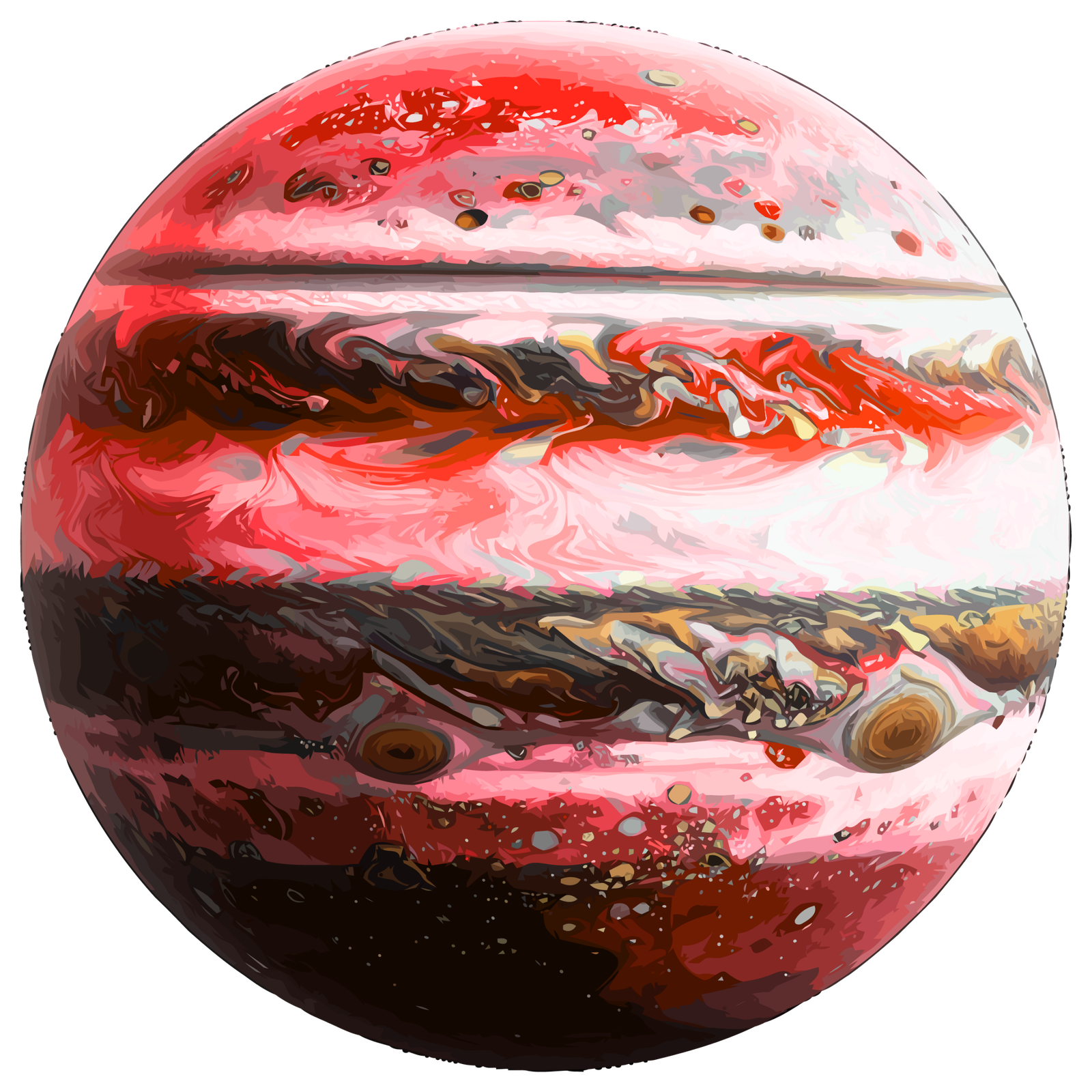
Jupiter takes the crown for biggest planet by a wide margin, so massive it outweighs every other planet in the solar system combined. Mercury sits on the opposite end as the smallest official planet, not much larger than Earth’s own Moon.
Venus holds the title for hottest planet, not Mercury, even though Mercury sits closer to the Sun. Venus’s thick, toxic atmosphere traps heat so effectively that surface temperatures reach around 900 degrees Fahrenheit, hot enough to melt lead.
Neptune wins for strongest winds recorded anywhere in the solar system, with gusts clocked at over 1,200 miles per hour, despite being the coldest and farthest official planet from the Sun.
Saturn claims the title of least dense planet, so light for its size that it would actually float if you dropped it into a big enough ocean.
And Uranus stands out as the tilted oddball of the group, spinning almost completely on its side, likely the result of a massive collision earlier in the solar system’s violent early history.
Rocky Worlds vs Gas Giants
The planets split naturally into two very different families. Mercury, Venus, Earth, and Mars are terrestrial planets, small and rocky with solid ground you could theoretically stand on. Jupiter, Saturn, Uranus, and Neptune are gas and ice giants, enormous worlds without any true surface at all, just thick layers of gas that get denser and denser the deeper you go.
This split traces back to how the solar system formed. Close to the young Sun, temperatures were too high for lightweight gases to stick around, so only rock and metal survived to form planets. Past a boundary astronomers call the frost line, conditions cooled enough for ice and gas to pile up in massive quantities, which is exactly why the outer planets grew to such enormous sizes compared to their rocky inner neighbors.
The Only Planet With Life (That We Know Of)
Sitting third from the Sun, Earth remains the only planet confirmed to support life anywhere in the universe, at least based on everything scientists have discovered so far. It sits in what astronomers call the habitable zone, close enough to the Sun to keep water liquid, far enough away to avoid the runaway heat that turned Venus into a toxic furnace. Between its liquid water, protective atmosphere, and magnetic field shielding it from solar radiation, Earth checks every box needed to support the kind of life we know how to look for.
If pondering how humanity might eventually expand beyond Earth interests you, our deep dive into O’Neill colonies covers one of the most detailed proposals ever put forward for permanent human settlement in space.
Why Pluto Isn’t on This List
Anyone who grew up before 2006 probably learned about nine planets, not eight. Pluto held official planet status from its discovery in 1930 all the way until 2006, when the International Astronomical Union introduced stricter criteria for what counts as a full planet. Pluto failed to meet one specific requirement, clearing its orbital neighborhood of other debris, so it got reclassified as a “dwarf planet” instead. Its still out there, still actively studied, it just doesn’t carry the same official title anymore.
Getting Started With Your Own Observations
The great thing about diving into Astronomy101 is that several of these planets don’t require any equipment at all to spot. Venus, Jupiter, and Mars regularly shine bright enough to catch with just your eyes on a clear night, and even a basic beginner telescope is enough to reveal Saturn’s rings or Jupiter’s four largest moons lined up in a row.
For a closer look at exactly how far one of these planets sits from the Sun and what that distance actually means for its climate and orbit, check out our full breakdown on Jupiter’s distance from the Sun. And if you’re ready to start putting names to what you’re seeing overhead tonight, our guide on what you can see in the night sky without a telescope is a solid next step.
A Solar System Worth Revisiting
Even with decades of space missions and thousands of photos taken by orbiters, rovers, and telescopes, these eight planets still manage to surprise scientists on a regular basis. New details about Jupiter’s storms, Mars’s ancient water, or Uranus’s strange tilt keep coming in, proving that even the most familiar part of the universe still has plenty left to teach us. Wherever your interest in space takes you next, understanding these eight neighbors is always a solid place to build from.
For more detailed planetary comparisons straight from the source, check out NASA’s Solar System Exploration site and the planet fact sheets from NASA Science.
If you enjoyed this article, don’t forget to drop us a comment, it really helps support the site, and be sure to check out our other articles because we think you’re going to love them too. astronomy101 astronomy101 astronomy101 astronomy101