
Here’s the twist that surprises almost everyone: stars don’t actually twinkle. Not really. The flickering you see on a clear night has almost nothing to do with the star itself. It happens down here, in the few miles of restless air between you and space. Starlight arrives as a steady beam, then gets jostled by our atmosphere on the final leg of a journey that took years, and that last little shove is the twinkle. Astronomers even have a name for it: scintillation.
Once you know what’s really going on, that childhood rhyme starts to look like a physics lesson in disguise. So let’s unpack it.
It’s Not the Stars, It’s Our Air
Think about a coin lying at the bottom of a swimming pool. Look down at it and it seems to wobble and shift, even though it’s sitting perfectly still. The moving water bends the light on its way up to your eyes. Earth’s atmosphere does the exact same thing to starlight.
Our air isn’t one smooth, still layer. It’s a churning stack of pockets at different temperatures and densities, warm air rising, cool air sinking, everything constantly shifting. Each of those pockets bends light by a tiny amount, like a weak, wobbling lens. As a star’s light threads down through dozens of these moving layers, it gets nudged this way and that, thousands of times a second. Sometimes a bit more light reaches your eye, sometimes a bit less. That rapid flickering in brightness is the twinkle.
The star, meanwhile, is shining as steadily as ever. It’s just so absurdly far away. Even the closest star beyond our Sun sits more than four light-years off, which is why every star, no matter how huge, shows up as nothing more than a single pinpoint of light. Our guide to the closest star systems to Earth gives you a real feel for those distances. And a pinpoint is exactly the kind of thing our jittery atmosphere can push around most easily.
Why Stars Twinkle but Planets Don’t
Here’s the genuinely useful part, the trick that lets you read the night sky like an insider.
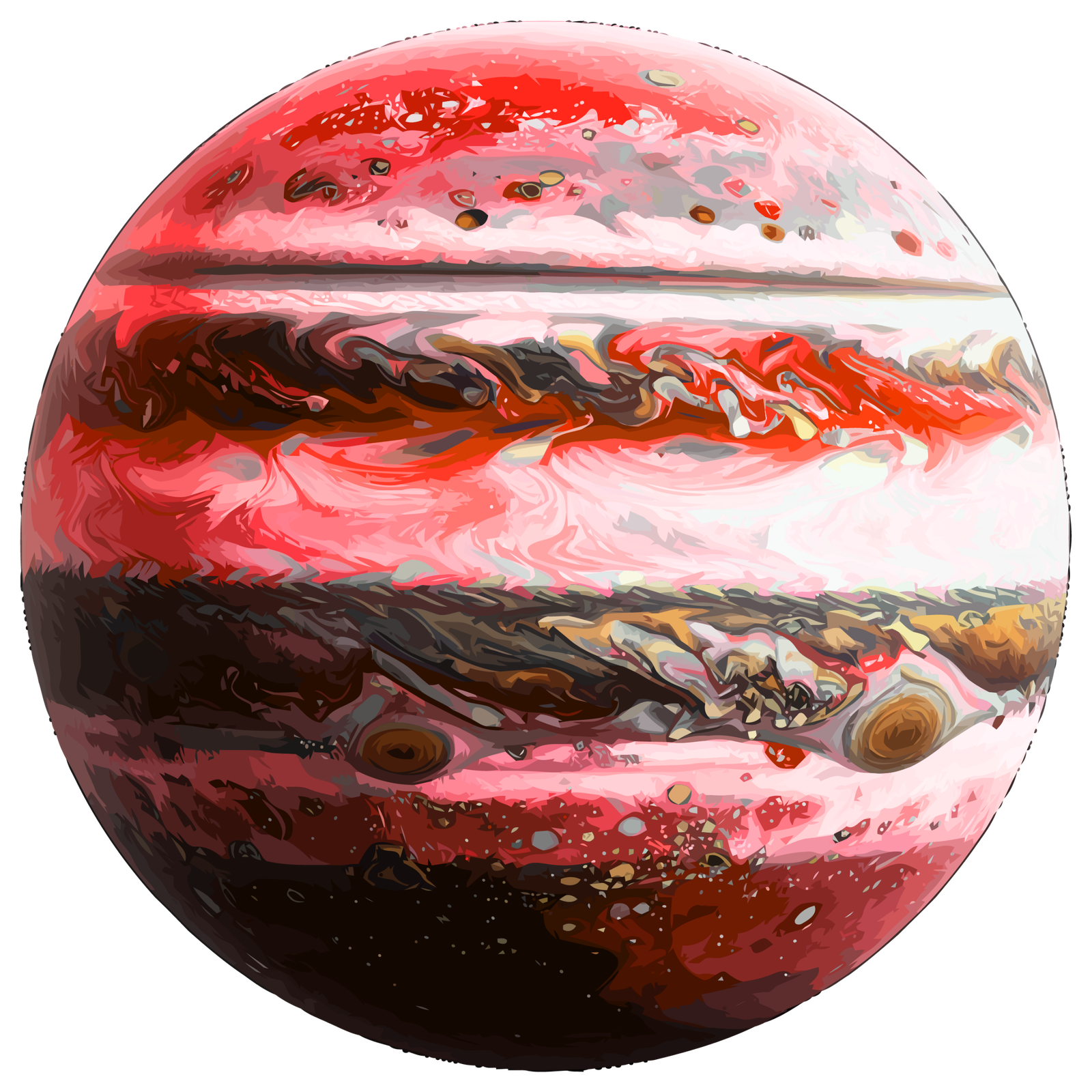
Planets barely twinkle at all. If you spot a bright point of light that’s shining calm and steady while everything around it flickers, there’s a good chance you’re looking at a planet, not a star.
The reason comes straight back to distance. Planets are close enough that, unlike stars, they aren’t true pinpoints. They’re actually tiny disks, far too small for your eye to resolve, but disks all the same. A disk is really a whole cluster of light points packed together. When the atmosphere jostles one edge of that little disk dimmer, it usually nudges another edge brighter at the same moment, and the flickers cancel each other out. The result is a smooth, steady glow. That single habit, steady light equals planet, twinkling equals star, is one of the handiest things you can carry into a night of stargazing. Our roundup of what you can see in the night sky without a telescope puts it to good use.
Why Some Stars Flash Colors
Every now and then you’ll catch a bright star low in the sky doing something wilder than a plain twinkle, flashing red, then green, then blue, like a tiny stuck traffic light. Sirius, the brightest star in our night sky, is famous for it.
That’s the atmosphere acting as a prism. On top of bending starlight, our air splits it into its different colors by slightly different amounts, the same way a prism fans white light into a rainbow. When a star sits low near the horizon, its light has to punch through the greatest thickness of air to reach you, so the effect gets exaggerated and the separate colors flicker in and out. It looks like the star is changing color, but really you’re just seeing its white light being shuffled. If the colors of stars intrigue you, our beginner’s guide to the sky’s colorful stars is a lovely next read.
This is also why stars overhead twinkle less than stars near the horizon. Straight up, starlight passes through the least amount of air. Down low, it runs a much longer, messier gauntlet.
The Twinkle That Drives Astronomers Crazy
As pretty as it is, twinkling is a genuine headache for anyone trying to study the sky seriously. That same shimmer smears out fine detail in a telescope. Astronomers call the steadiness of the air on a given night the “seeing,” and bad seeing can ruin a night of observing.
It’s the whole reason the world’s great observatories are perched on high, dry mountaintops, in places like the deserts of Chile and the volcanic peaks of Hawaii, where there’s less turbulent air overhead. It’s also a big part of why we launched telescopes like Hubble into space entirely. Above the atmosphere there’s nothing left to do the jostling, so the stars hold perfectly still and the images come back razor sharp. You can confirm the effect for yourself using NASA’s own explainer on why stars twinkle. Engineers have even invented clever “adaptive optics” that flex a telescope’s mirror in real time to cancel the shimmer out.
So the next time you’re outside and the stars are dancing overhead, you can enjoy the show while knowing the secret. Those stars aren’t flickering at all. You’re watching your own sky breathe.
If you enjoyed this article, don’t forget to drop us a comment, it really helps support the site, and be sure to check out our other articles because we think you’re going to love them too.