
Stare up at a dark, clear sky long enough and its easy to start wondering which of those thousands of little lights is actually the closest one to us. Not counting our own Sun, of course, that ones close enough that we don’t even really count it as a “star” in casual conversation. When people ask about the closest star systems to Earth, theyre usually surprised to learn just how much is packed into our own tiny cosmic neighborhood, and how weird some of these nearby stars actually are.
How Close Is “Close” When It Comes to Stars?
Before running through the list, its worth setting the scale. Distances between stars are so massive that miles or kilometers stop being useful, so astronomers switch to light-years instead, the distance light travels in a single year, which comes out to about 5.88 trillion miles. Even the very closest star system to Earth sits over 4 light-years away, meaning the light you’d see from it tonight actually left that star more than four years ago.
Alpha Centauri: Our Nearest Neighbor
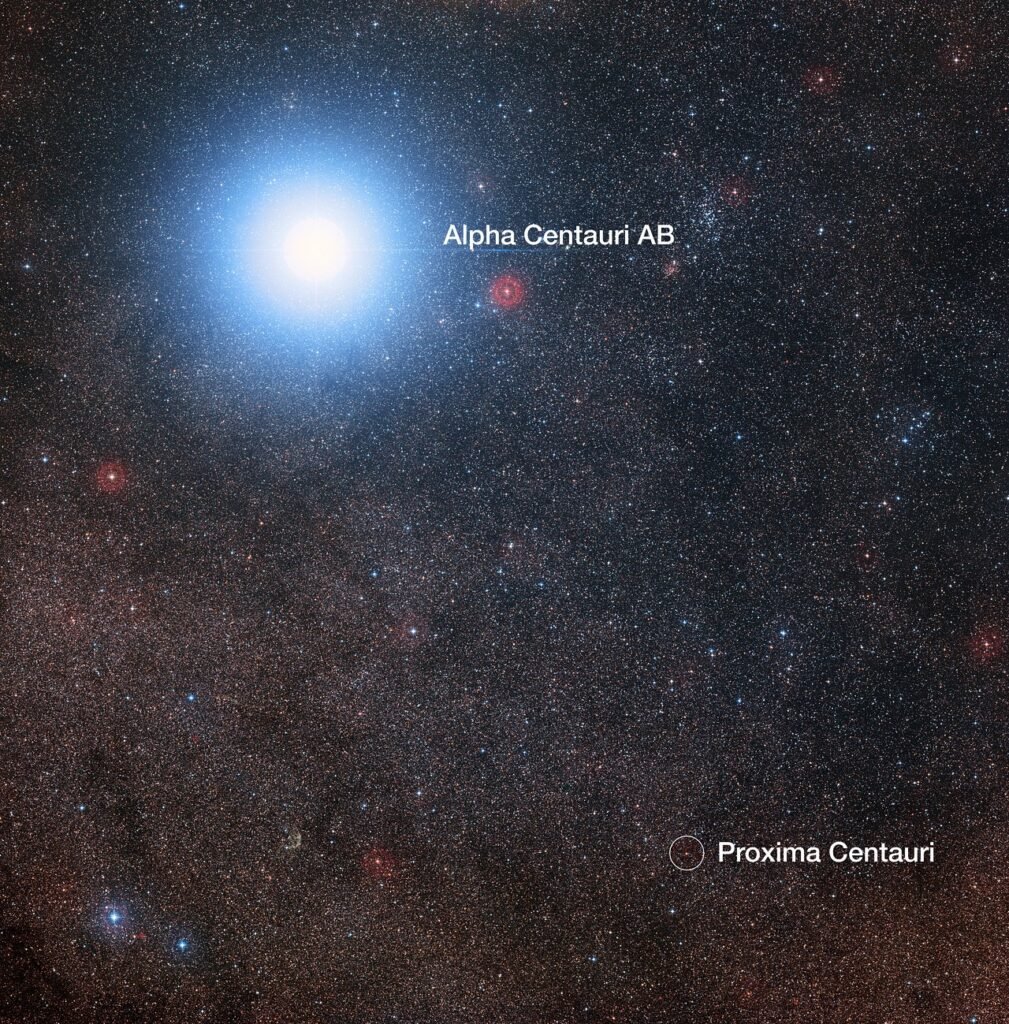
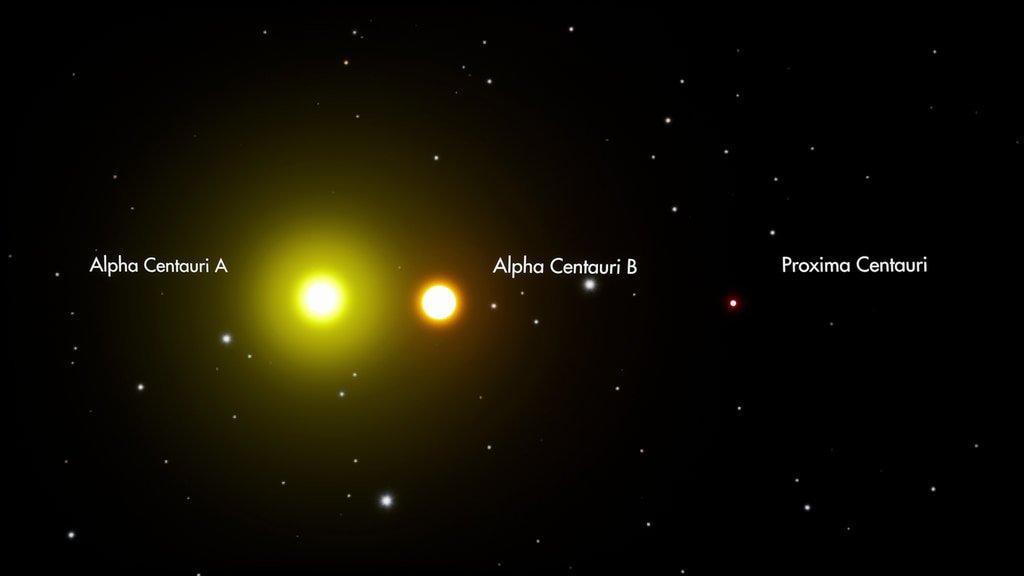
Topping the list of the closest star systems to Earth is Alpha Centauri, sitting about 4.37 light-years away in the southern constellation Centaurus. Its not just one star, its actually three stars locked together in a gravitational dance. The two brighter members, Alpha Centauri A and B, orbit each other closely and are both fairly similar to our own Sun, one slightly bigger and hotter, the other slightly smaller and cooler.
The third member of the system, Proxima Centauri, is the real record holder here. At just 4.24 light-years away, its the single closest star to Earth outside of the Sun. Proxima is a small, dim red dwarf, so faint you’d never spot it without a telescope, but it’s earned plenty of attention thanks to the exoplanets orbiting it, including Proxima b, a rocky world sitting right in the star’s habitable zone. Even more exciting, astronomers using the James Webb Space Telescope announced in 2025 that they’d found evidence of a planet orbiting the brighter Alpha Centauri stars as well, adding even more intrigue to our closest stellar neighbors.
If exploring how far these distances really stack up interests you, our light travel time calculator is a great way to compare how long light takes to reach different corners of our galaxy.
Barnard’s Star: The Fast Mover
Coming in as the second closest star system to Earth, and the closest single star, is Barnard’s Star, sitting about 5.96 light-years away in the constellation Ophiuchus. Its a red dwarf, cooler and much smaller than our Sun, but what really sets it apart is its speed. Barnard’s Star holds the record for the fastest apparent motion across our sky of any known star, drifting a noticeable amount even over the course of just a few decades of careful observation.
Barnard’s Star has had a complicated relationship with planet hunters over the years. Back in the 1960s, astronomers thought they’d detected planets orbiting it, but later observations disproved those early claims. More recently though, real exoplanets have finally been confirmed here, Barnard b was verified in 2024, followed by three more candidates, Barnard c, d, and e, confirmed in 2025, making this quiet little red dwarf a genuinely active area of research.
Wolf 359: Small, Dim, and Famous Anyway
Sitting around 7.8 light-years from Earth in the constellation Leo is Wolf 359, one of the faintest and lowest mass stars known in our stellar neighborhood. Its so dim that you’d need a fairly serious telescope to spot it at all, despite it being one of our nearest neighbors. Wolf 359 is also classified as a flare star, meaning it occasionally lets out sudden, dramatic bursts of brightness, similar to solar flares from our own Sun, just on a much more frequent and unpredictable basis.
Even though its practically invisible from a backyard telescope, Wolf 359 has picked up a surprising amount of cultural fame, largely thanks to being referenced as the site of a major battle in Star Trek. Its a good example of how a star doesn’t need to be bright to end up well known.
Lalande 21185: The Overlooked Neighbor
Rounding out the next tier of the closest star systems to Earth is Lalande 21185, about 8.3 light-years away. Its another red dwarf, named after the French astronomer who catalogued it, and despite being one of our closer neighbors, it rarely gets the same attention as Alpha Centauri or Barnard’s Star. Astronomers have found evidence suggesting it hosts a small planetary system of its own, adding it to the growing list of nearby red dwarfs worth keeping an eye on in the search for potentially habitable worlds.
Sirius: The One You Can Actually See
If you’ve ever looked up and noticed one absurdly bright star outshining everything else nearby, theres a good chance it was Sirius. Sitting about 8.6 light-years away in the constellation Canis Major, Sirius is the brightest star in Earth’s entire night sky, and unlike most of the stars on this list, you don’t need any equipment at all to spot it. Sirius is actually a two star system, made up of Sirius A, a hot, brilliant white star roughly twice the size of our Sun, and a faint white dwarf companion called Sirius B, the collapsed remnant of a star that burned through its fuel long ago.
Ancient civilizations, including the Egyptians, tracked Sirius closely, since its yearly reappearance in the dawn sky lined up with the flooding of the Nile, making it one of the most historically significant stars in the sky long before anyone understood what a light-year even was.
Why This Cosmic Neighborhood Matters
Studying the closest star systems to Earth gives astronomers a much better shot at answering some of the biggest questions out there, how common planets are around other stars, whether any of those planets could support life, and how stars like our own Sun actually behave over their lifetimes. Because these systems are relatively close, they’re also the easiest targets for upcoming space telescopes designed to directly image exoplanets, rather than just detecting them indirectly the way most discoveries happen today.
Given how many of these nearby stars have turned out to host planets of their own, its hard not to wonder what else might be waiting to be found in that tiny 12 light-year bubble surrounding our own solar system. For anyone looking to start spotting some of these stars yourself, our what you can see in the night sky without a telescope tonight guide is a solid place to begin, Sirius especially is an easy naked eye target on any clear night.
For more detailed distance data and star characteristics, check out the full breakdown from Sky at Night Magazine and the reference guide from StarDate Online.
If you enjoyed this article, don’t forget to drop us a comment, it really helps support the site, and be sure to check out our other articles because we think you’re going to love them too.