
If you’ve been waiting for the right year to finally see the Perseids at their absolute best, this is it. The Perseid meteor shower 2026 peaks on the night of August 12 into the early morning of August 13, and the timing this year is about as good as it gets. A new moon falls on the exact same night as the peak, meaning there will be zero moonlight washing out the fainter meteors, the kind of dark sky Perseid watchers only get once in a while.
Why This Year Is Special
Most years, the Moon at least partially spoils the show, its glow drowning out all but the brightest streaks. Last year, in 2025, the Perseids peaked under an 84 percent full moon that cut visible meteor rates down by as much as 75 percent. This year is a completely different story. With the Moon sitting at 0 percent illumination on peak night, skywatchers under clear, dark skies could see anywhere from 50 to 100 meteors per hour, some sources even suggesting rates could push higher during the strongest bursts of activity.
Adding to the excitement, this same new moon is also producing a total solar eclipse on August 12, 2026, the first time in the 21st century that a total solar eclipse and the Perseid peak have landed on the same date. The path of totality itself crosses northeastern Siberia, Greenland, Iceland, and small parts of northern Spain and Portugal, so it won’t be visible from the continental United States, but skywatchers in the Northeast and parts of Canada may catch a partial eclipse before nightfall gives way to meteor watching.
What Exactly Are the Perseids?
The Perseid meteor shower happens every year when Earth passes directly through the debris trail left behind by Comet 109P/Swift-Tuttle, a massive comet with a nucleus about 16 miles wide. Swift-Tuttle last swung through the inner solar system in 1992 and won’t return again until 2126, but the trail of dust and debris it’s left scattered along its orbit gets crossed by Earth like clockwork every August.
As Earth plows through that debris field, tiny particles, most no bigger than a grain of sand, slam into our atmosphere at roughly 37 miles per second and burn up in bright, fast streaks of light. The Perseids are famous for producing an unusually high number of fireballs, meteors that burn brighter and last longer than an average shooting star, which is part of why this shower has such a strong reputation among both casual and serious skywatchers.
When and Where to Look
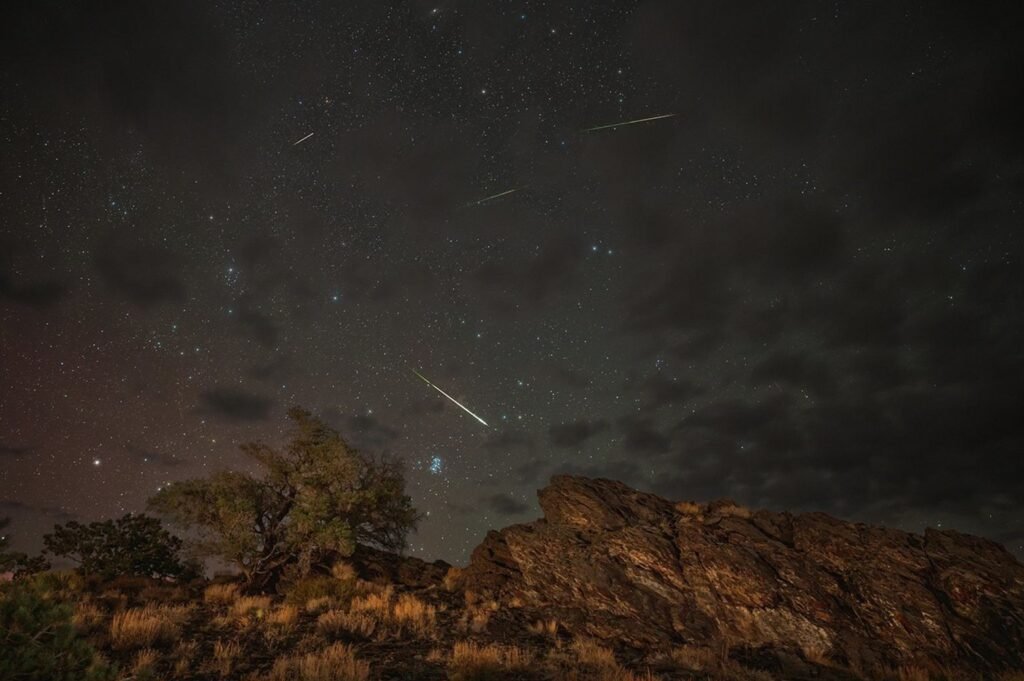
The shower itself is active over a long stretch, running from mid July through late August, but the real show happens during peak night. For 2026, that’s the night of August 12 heading into the early morning hours of August 13. The best viewing window falls between 2 a.m. and dawn, once the radiant point in the constellation Perseus climbs higher into the northeastern sky.
Speaking of the radiant, its worth understanding what that actually means. Meteors will appear to streak outward from a point near the constellation Perseus, but that’s really just a trick of perspective, the meteors themselves burn up roughly 60 miles above Earth’s surface and have no real connection to the stars in Perseus at all. For the best viewing experience, don’t stare directly at the radiant point itself, meteors there tend to have short, hard to catch trails. Instead, lie back, get comfortable, and let your eyes wander to the wider sky, the longest and most dramatic streaks usually show up off to the side.
If you want a refresher on how to track down constellations like Perseus before the big night, our guide on what you can see in the night sky without a telescope tonight covers the basics of star hopping and reading a night sky map.
Tips for the Best Possible View
No telescope or binoculars needed here, meteor showers are actually best enjoyed with just your naked eyes, since equipment narrows your field of view exactly when you want it as wide as possible. Getting away from city lights makes an enormous difference, light pollution can hide all but the brightest meteors, so a rural or dark sky location will dramatically boost how many you actually see.
Give your eyes at least 20 to 30 minutes to fully adjust to the darkness before you start counting meteors, and try to avoid checking your phone during that time, since even a quick glance at a bright screen resets your night vision. A comfortable reclining chair or blanket on the ground goes a long way too, since you’ll want to keep your eyes on a wide stretch of sky for an extended period rather than craning your neck upward the whole time.
Why 2026 Won’t Come Around Again Soon
Astronomers note that a new moon landing exactly on August 12 is a genuinely rare coincidence, one that won’t happen again until 2045. So while the Perseids return every single year without fail, this particular combination of a moonless peak night is a real once in a couple decades kind of opportunity. If you’ve been putting off an actual dedicated night of meteor watching, this is the year to finally make it happen.
If tracking down comets and understanding where meteor showers like this actually come from has sparked your curiosity, our piece on great comets and their tails digs into the science behind the icy bodies responsible for shows just like this one.
The Bottom Line
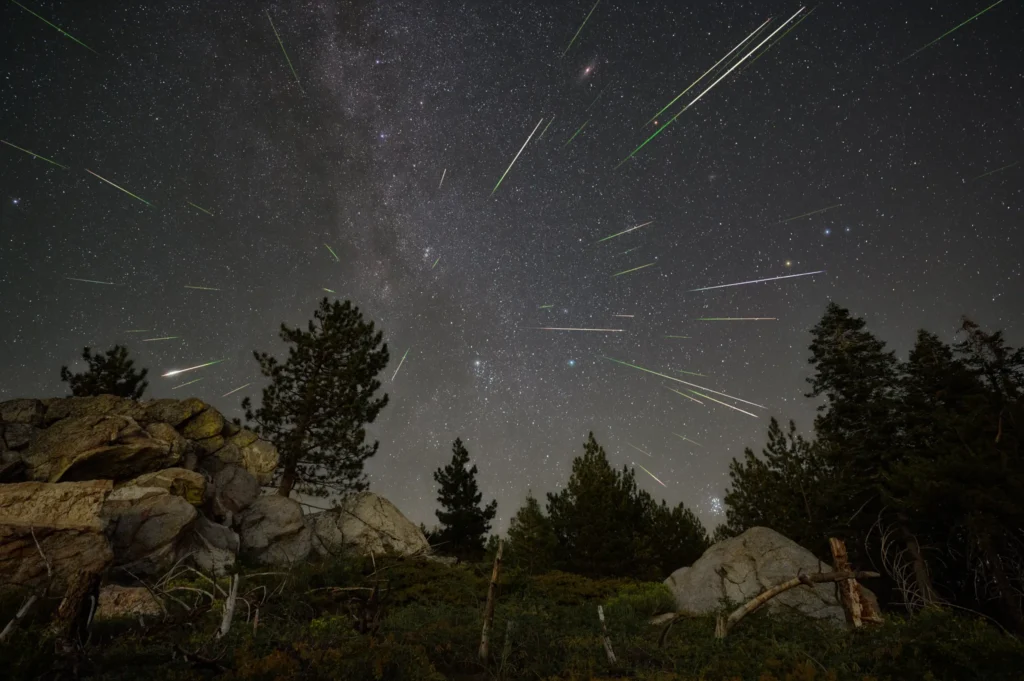
The Perseid meteor shower 2026 is shaping up to be one of the best viewing opportunities in years, thanks to a new moon landing right on peak night and clear, dark skies free of any lunar glow. Whether you’re an experienced stargazer or just someone looking for a good excuse to lie in a field and watch the sky for an hour, the night of August 12 into August 13 is worth setting an alarm for, or better yet, just staying up.
For real time updates and additional viewing tips, check out the detailed guide from EarthSky and the observing resources from The Planetary Society.
If you enjoyed this article, don’t forget to drop us a comment, it really helps support the site, and be sure to check out our other articles because we think you’re going to love them too.