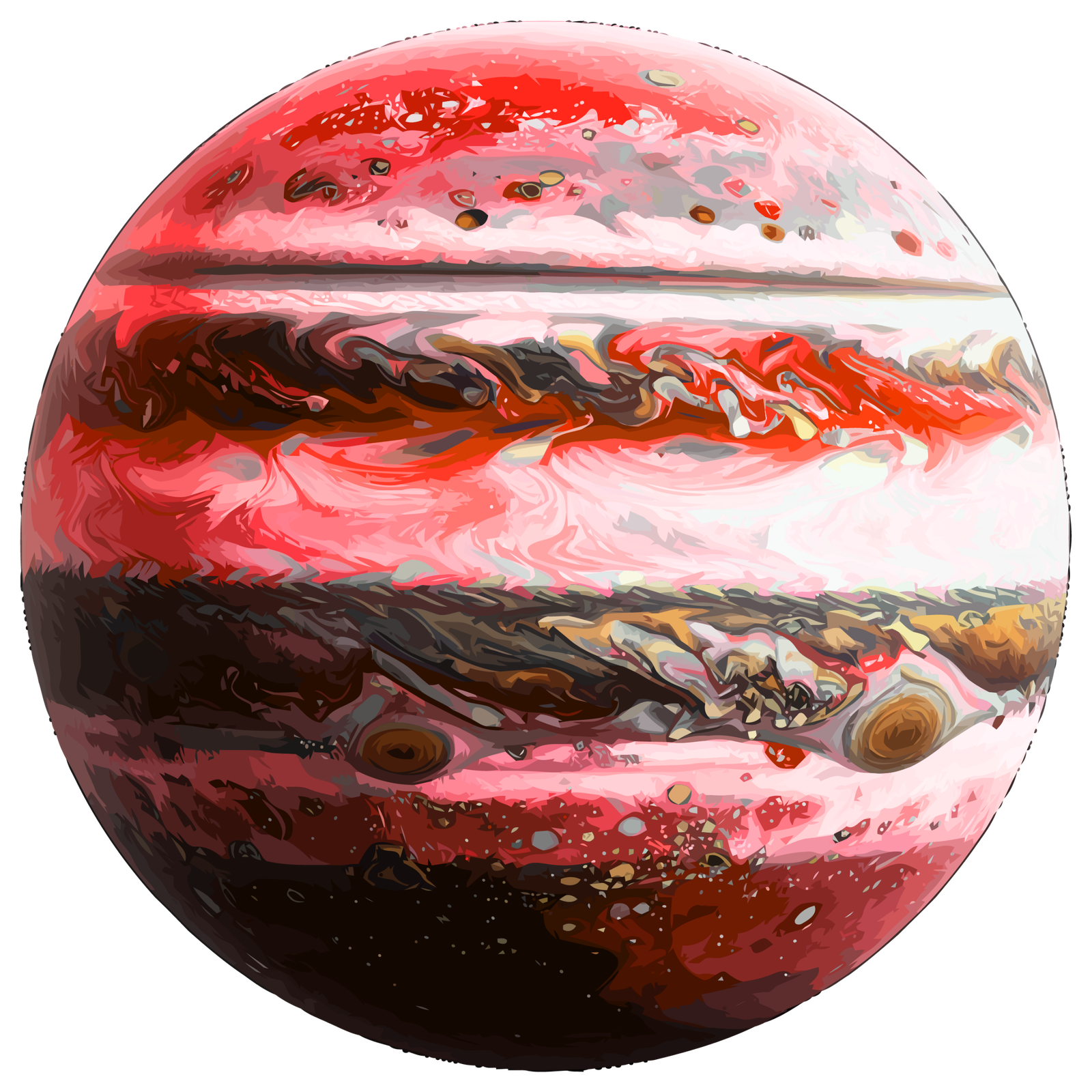

There are eight planets in our solar system: Mercury, Venus, Earth, Mars, Jupiter, Saturn, Uranus, and Neptune. That’s the answer most people are after, and it’s correct. But it’s also just the beginning, because once you widen the question beyond our own little corner of space, the count explodes into the thousands, with billions more waiting to be found.
So the honest reply to “how many planets are there” depends entirely on where you draw the line. Stick to our Sun’s family and it’s a tidy eight. Include the dwarf planets, a possible hidden world, and everything orbiting other stars, and the number becomes almost dizzying. Let’s count them all.
The Count at a Glance
| Category | How many |
|---|---|
| Planets in our solar system | 8 |
| Recognized dwarf planets | 5 (with 100+ more suspected) |
| Hypothetical “Planet Nine” | 0 confirmed (still unproven) |
| Confirmed planets beyond our Sun | more than 6,000 (and climbing) |
| Estimated planets in the Milky Way | billions |
Eight Planets in Our Solar System
Our solar system’s headline number is eight. In order from the Sun, they run Mercury, Venus, Earth, Mars, Jupiter, Saturn, Uranus, and Neptune. You can meet them one by one in our beginner’s guide to the planets.
It wasn’t always eight, though. For 76 years the count was nine, because Pluto was included. Then in 2006 astronomers tightened up the official definition of a planet, and Pluto no longer made the cut. It didn’t go anywhere, of course. It just got reclassified, which brings us neatly to the next group.
Then There Are the Dwarf Planets
Pluto is now the most famous member of a separate club: the dwarf planets. These are worlds round enough and big enough to look like proper planets, but which haven’t cleared their orbits of other debris, so they don’t qualify for full planet status.
Right now there are five officially recognized dwarf planets: Ceres, which sits in the asteroid belt, plus Pluto, Haumea, Makemake, and Eris out in the frozen fringes of the solar system. And that number is almost certainly going to grow. Astronomers suspect there could be a hundred or more dwarf planets still hiding in the Kuiper Belt, the icy zone beyond Neptune, simply waiting to be spotted.
Is There a Hidden “Planet Nine”?
Here’s where it gets tantalizing. Some astronomers think our solar system might still be hiding a genuine ninth planet, far out in the dark beyond Neptune.
The idea comes from a strange pattern. Several distant icy objects seem to have their orbits mysteriously clustered together, as if something big and unseen is herding them with its gravity. One leading explanation is an undiscovered planet, several times heavier than Earth, orbiting so far from the Sun that it’s fantastically faint and hard to find. To be clear, “Planet Nine” has never actually been seen, so it remains a hypothesis rather than a discovery. But the hunt is very much on, and if it’s out there, our count could tick back up to nine.
More Than 6,000 Planets Beyond Our Sun
Now we blow the doors off. Step outside our solar system and the number of known planets becomes staggering.
Planets orbiting other stars are called exoplanets, and NASA has now confirmed more than 6,000 of them, a tally that keeps climbing week by week with thousands of additional candidates awaiting confirmation. The first one around a Sun-like star was only found in 1995, so this entire catalog has been built in about thirty years. Our explainer on what an exoplanet is covers how we spot worlds we can’t even see directly, and the closest one to us, Proxima Centauri b, sits just over four light-years away.
And 6,000 is barely scratching the surface. Astronomers now believe there are more planets than stars in our galaxy, which puts the true number of worlds in the Milky Way alone in the billions. Upcoming telescopes are expected to find tens of thousands more. You can watch the official count tick upward on NASA’s exoplanets homepage.
So, How Many Planets Are There?
It all comes down to scope. If someone asks how many planets are in our solar system, the answer is a clean eight. Add the dwarf planets and you’re at thirteen and counting. Allow for a possible hidden Planet Nine and it might be more. And if you mean how many planets exist in total, the only honest answer is: billions upon billions, and we’ve only just begun to count them.
Eight is where it starts. It’s nowhere near where it ends.
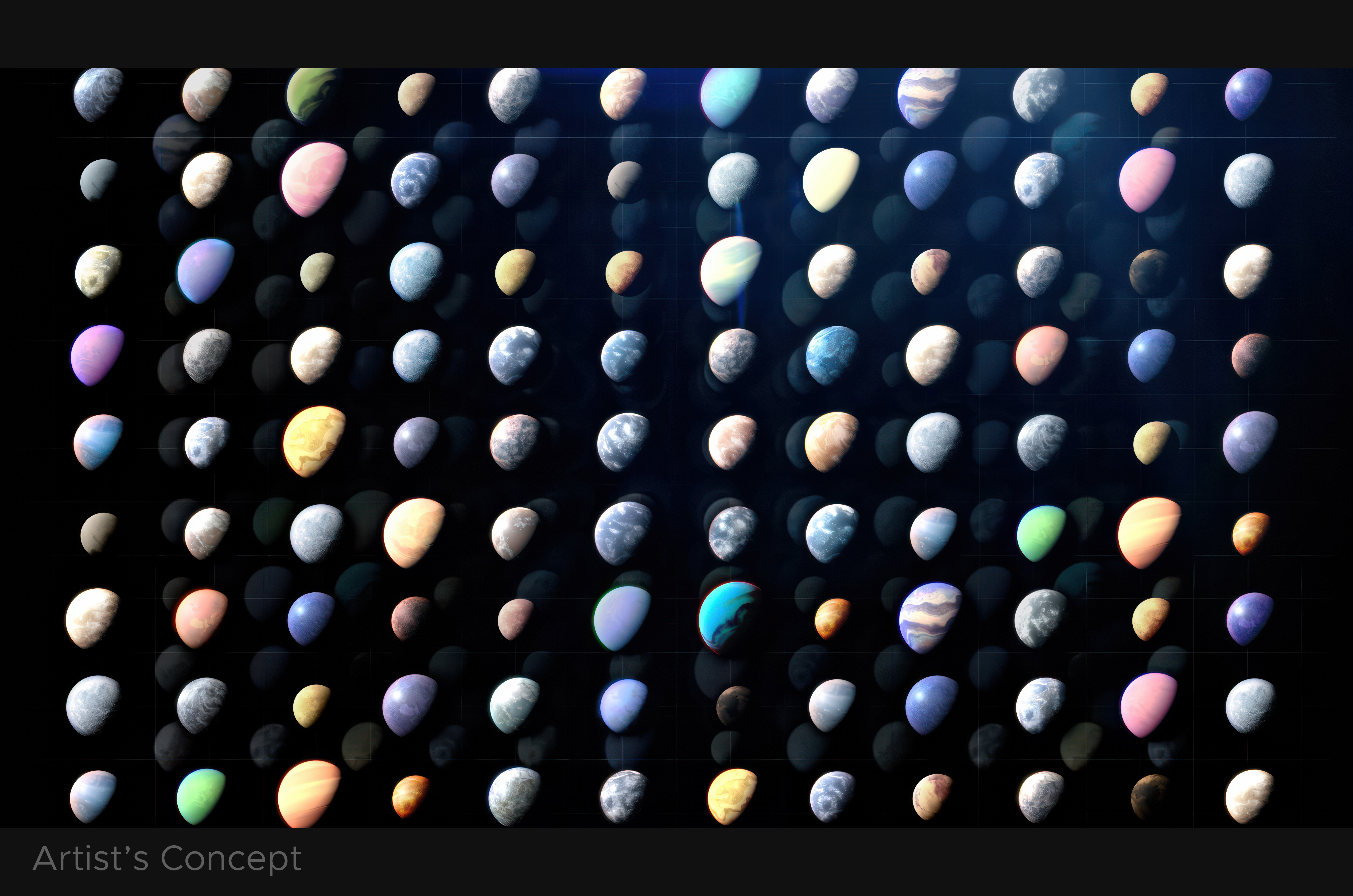 An artist’s grid of some of the 6,000-plus planets confirmed beyond our solar system. Our eight are just the ones closest to home. (Image: NASA/JPL-Caltech)
If you enjoyed this article, don’t forget to drop us a comment, it really helps support the site, and be sure to check out our other articles because we think you’re going to love them too.