
If you learned your solar system facts in school anytime before the last couple of years, theres a good chance whatever number you memorized for Saturn’s moons is now seriously out of date. This isn’t one of those slow, gradual updates either, Saturn’s moon count has genuinely exploded over the past few years, and its currently sitting at a number that would have sounded made up not too long ago.
The Current Count
As of June 2026, Saturn officially has 293 confirmed moons, according to NASA. Thats not a typo, and its not a rounded estimate, its the actual number of Saturnian satellites that have been observed enough times for astronomers to confirm stable, predictable orbits around the planet. For comparison, Jupiter, long considered the reigning moon champion of the solar system, currently sits at just 115 confirmed moons, meaning Saturn now has roughly two and a half times as many.
How Did the Number Get So High So Fast?
Its worth being clear about something important here, Saturn didn’t suddenly grow nearly 300 moons out of nowhere. What actually changed is our ability to detect them. For most of the space age, Saturn’s moon count crept upward slowly, sitting in the dozens for decades. By the early 2020s, it stood at around 83 confirmed moons, respectable, but nowhere close to todays total.
Then things shifted dramatically. In May 2023, astronomers announced more than 60 new moons at once, pushing Saturn’s total past 145 and putting it ahead of Jupiter for the first time in the process. That turned out to be just the beginning. On March 11, 2025, the International Astronomical Union’s Minor Planet Center dropped an even bigger bombshell, confirming 128 additional moons in a single announcement, taking Saturn’s total from 146 all the way up to 274 practically overnight. Another batch of 11 moons followed in March 2026, and by June 2026, the confirmed total had climbed to 293.
Why Saturn Specifically Has So Many
Two main factors explain why Saturn ended up with such a dramatically larger moon collection than any other planet. First, Saturn’s enormous mass gives it a huge gravitational reach, allowing it to capture small passing objects from the outer solar system over billions of years, often pulling them into unusual, tilted, or even backwards orbits far from the planet itself.
Second, and probably more significant, scientists believe a major collision occurred somewhere in Saturn’s neighborhood, possibly as recently as 100 million years ago, when a captured moon or passing object broke apart into countless smaller fragments. Each one of those fragments now technically counts as its own individual moon, which helps explain why the vast majority of Saturn’s confirmed satellites are tiny, often just a few kilometers across, and clustered together in similar tilted, distant orbits, essentially a scattered debris field left behind from one dramatic ancient impact.
Most of These Moons Are Absolutely Tiny
Its worth setting expectations here, when people picture “293 moons,” it’s easy to imagine something resembling 293 versions of Earth’s own Moon circling Saturn. The reality looks nothing like that. The overwhelming majority of Saturn’s confirmed satellites are small, irregular objects, many measuring just one to a few kilometers across, roughly 100 million times fainter than anything visible to the naked eye. These aren’t dramatic, photogenic worlds, theyre faint, distant specks that require serious telescope time and careful tracking across multiple observations before astronomers can confirm a stable orbit and officially add them to the catalog.
The Handful of Moons That Actually Matter Visually
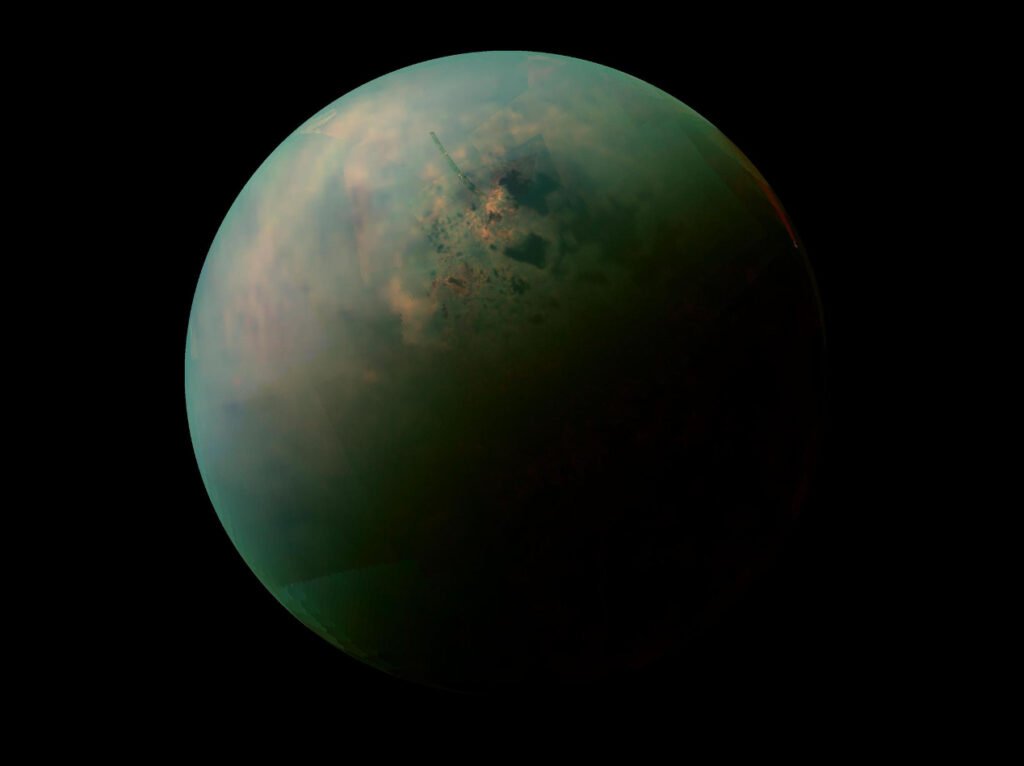
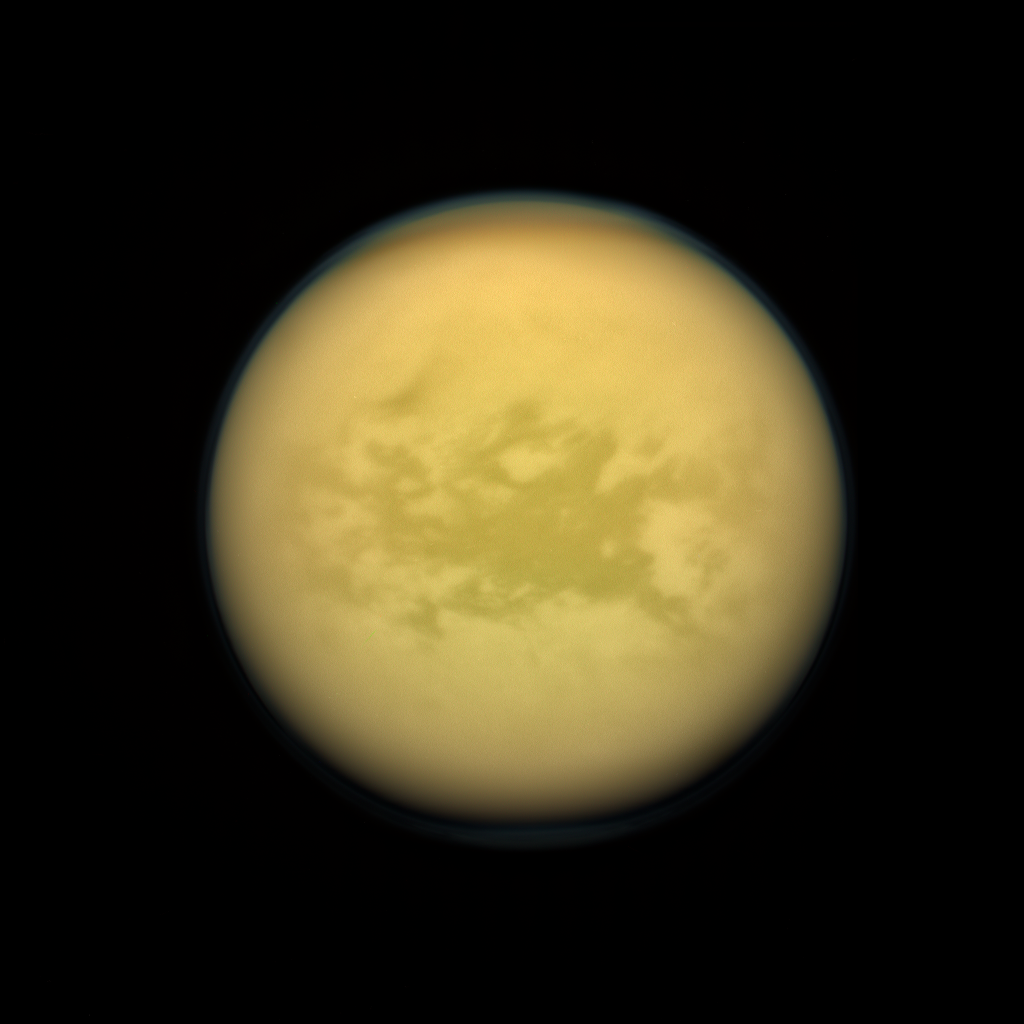
While hundreds of Saturn’s moons are small, faint fragments, a select few stand out as genuinely fascinating worlds in their own right. Titan, Saturn’s largest moon, measures over 3,200 miles across, making it larger than the planet Mercury and the second largest moon in the entire solar system. Titan is genuinely unique among moons, its the only one with a thick, dense atmosphere, plus actual liquid lakes and rivers on its surface, though instead of water, those lakes are made of liquid methane and ethane thanks to the moon’s brutally cold temperatures.
Enceladus is another standout, a relatively small, icy moon that shoots geysers of water vapor out from cracks near its south pole, hinting at a hidden ocean beneath its frozen surface, one of the more promising places in the solar system where scientists think conditions might support some form of microbial life. Mimas, Iapetus, and Rhea round out some of the other larger, well studied moons, each with their own distinct geological quirks that keep planetary scientists busy analyzing data from missions like Cassini even years after that spacecraft’s mission officially ended.
If exploring what makes Saturn’s rings themselves so distinctive interests you, our full breakdown on what Saturn’s rings are made of covers the icy composition and surprisingly young age of that other iconic feature orbiting the same planet.
Is the Count Actually Finished?
Not even close. Astronomers openly acknowledge there are likely hundreds of additional candidate objects that have been briefly glimpsed near Saturn but haven’t yet been observed enough times to confirm a stable, predictable orbit, a requirement before the International Astronomical Union will officially add them to the record. Every batch of new confirmations tends to trigger the same reaction, another wave of headlines, another quietly outdated textbook, and very likely, another update sometime in the near future as observation techniques keep improving.
Its also worth noting this pattern isn’t unique to Saturn. Jupiter’s own moon count jumped from around 95 to 101 in that same March 2026 announcement that pushed Saturn to 285 at the time, and researchers expect that if Jupiter’s neighborhood got the same intensive observing treatment Saturn has recently received, its own total would likely climb significantly too.
If keeping up with rapidly shifting numbers like this appeals to you, our guide on Astronomy 101 and the basics of our solar system’s planets is a good foundational starting point before diving into constantly updating details like moon counts.
A Number Worth Double Checking
So the next time someone confidently states a specific moon count for Saturn, its worth double checking the date on wherever they got that number from. As of June 2026, the confirmed total sits at 293, comfortably making Saturn the undisputed moon champion of our solar system, at least for now. Given how quickly this number has climbed over just the past few years, don’t be surprised if it climbs even higher before too long.
For the latest confirmed totals and detailed moon data, check out the official tracking from NASA Science and the announcement coverage from EarthSky.
If you enjoyed this article, don’t forget to drop us a comment, it really helps support the site, and be sure to check out our other articles because we think you’re going to love them too.