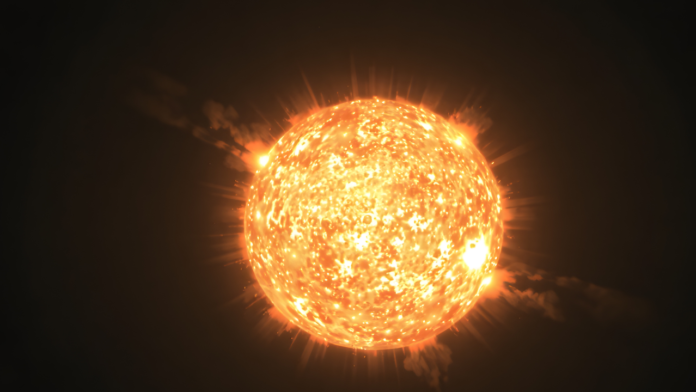

Weve all grown up staring at it, feeling its heat, and building our entire calendar around its rise and fall, but ask most people what sort of star is the sun, and you’ll probably get a shrug. Its just “the Sun,” the one constant fixture of daily life. But astronomically speaking, the Sun is a genuinely well studied and precisely categorized object, and understanding exactly what type of star it is tells you a lot about how it behaves, how long it’ll stick around, and what makes life on Earth possible in the first place.
The Short Answer: A G-Type Main Sequence Star
In official astronomical terms, the Sun is classified as a G-type main-sequence star, more specifically labeled G2V. Astronomers sort stars using a spectral classification system that runs through the letters O, B, A, F, G, K, and M, ranging from the hottest, most massive stars, the O-types, down to the coolest, smallest ones, the M-types. The Sun sits right in the G category, meaning it’s a relatively average, middle of the road star in terms of temperature and mass.
The “main-sequence” part of that classification refers to where a star sits in its life cycle. Main sequence stars are actively fusing hydrogen into helium in their cores, which is the longest, most stable phase any star goes through. The Sun has been doing exactly that for about 4.5 billion years, and it’s got roughly another 5 billion years of fuel left before that process starts winding down.
Why People Call It a “Yellow Dwarf”
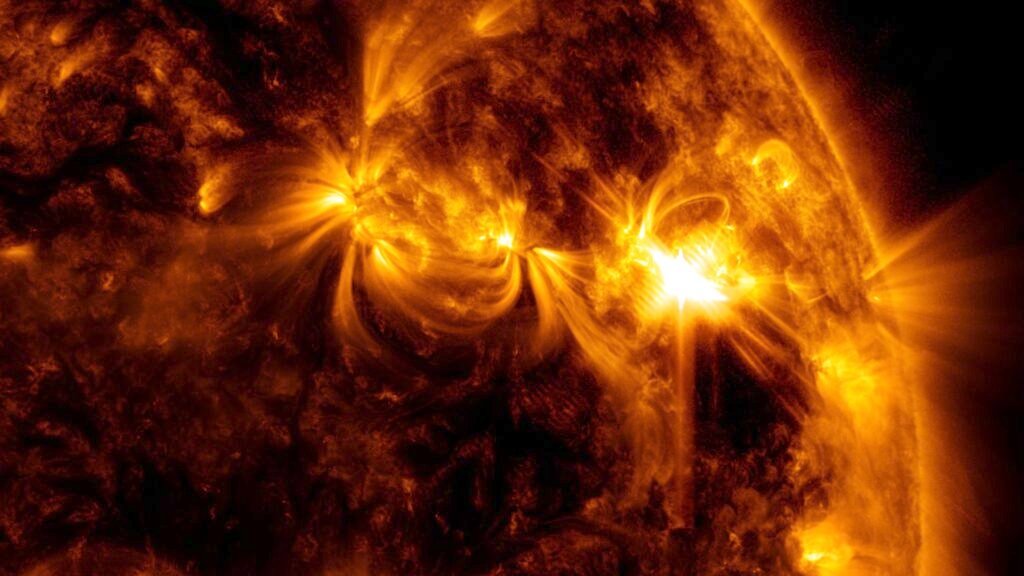
You’ve probably heard the Sun referred to as a “yellow dwarf” at some point, and while its a catchy, commonly used nickname, its actually a bit misleading on both counts. The Sun isn’t really yellow, its closer to white when viewed from space, without Earth’s atmosphere scattering the light and giving it that warm yellowish tint we’re used to seeing from the ground.
The “dwarf” part is equally confusing if you take it too literally. In astronomy, “dwarf” doesn’t mean small in any everyday sense, it just distinguishes main sequence stars from much larger giant and supergiant stars later in their evolution. Despite the modest sounding name, the Sun actually outshines around 90 percent of the stars in the entire Milky Way, since the galaxy is dominated by much dimmer, smaller red dwarfs.
How the Sun Stacks Up Against Other Stars
Roughly 7 to 10 percent of stars in the Milky Way fall into the same G-type category as the Sun, putting it in a genuinely uncommon group. For comparison, red dwarfs, smaller, cooler, dimmer stars, make up somewhere between 70 and 80 percent of all stars in the galaxy. So while the Sun feels perfectly ordinary from our perspective, its actually more massive and more luminous than the vast majority of stars out there.
If you’re curious how the Sun’s temperature and color compare to other stars across the spectrum, our piece on why there are no green stars breaks down exactly how a star’s temperature translates into the color we actually see from Earth.
The Sun also stands out for being a solo act. A significant portion of stars in the galaxy, especially ones with similar mass, exist in binary or multiple star systems, orbiting a companion star. The Sun, by contrast, orbits alone, with our entire solar system’s planets circling it instead.
The Numbers Behind the Classification
Some of the specific traits that earn the Sun its G2V label come down to hard measurements. Its surface temperature runs at about 5,800 Kelvin, comfortably inside the G-type range of roughly 5,300 to 6,000 Kelvin. Every single second, the Sun fuses somewhere around 600 million tons of hydrogen into helium through a process called the proton-proton chain, converting roughly 4 million tons of that matter directly into energy, the same energy that eventually reaches Earth as sunlight.
Other well known G-type stars scattered across the galaxy include Alpha Centauri A and Tau Ceti, both of which share broadly similar characteristics to our own Sun, temperature, size, and general behavior included.
What Happens When the Fuel Runs Out?
Every main sequence star, including the Sun, has a finite lifespan, and understanding the Sun’s classification helps explain exactly what’s coming next. G-type stars like ours typically spend around 10 billion years fusing hydrogen before that fuel source finally runs dry. Since the Sun is already about 4.5 billion years into that process, its roughly at the halfway point of its main sequence life.
Once the hydrogen fuel in its core is exhausted, the Sun will begin transforming into a red giant, expanding dramatically and eventually shedding its outer layers before settling into a dense white dwarf remnant. Its a genuinely dramatic transformation, and if you want the full breakdown of exactly what that process looks like step by step, our detailed piece on how the Sun will eventually die walks through the entire timeline.
Why the Sun’s Classification Actually Matters
Knowing exactly what sort of star the Sun is isn’t just trivia, it directly explains why life exists on Earth in the first place. G-type stars are stable, long lived, and produce a steady, reliable output of energy over billions of years, exactly the kind of consistency needed for a planet to develop and sustain complex life over deep time. A hotter, more volatile star might burn through its fuel far too quickly for life to ever get established. A cooler, dimmer star might not provide enough consistent energy to keep a planet’s surface habitable.
The Sun’s steady G-type nature, combined with Earth sitting at just the right distance to take advantage of it, is a big part of why our particular corner of the galaxy turned out to be capable of supporting life at all.
If diving deeper into planetary science interests you, our beginner friendly overview in Astronomy 101 covers how each planet in our solar system relates back to the Sun’s steady output of energy.
An Ordinary Star With an Extraordinary Job
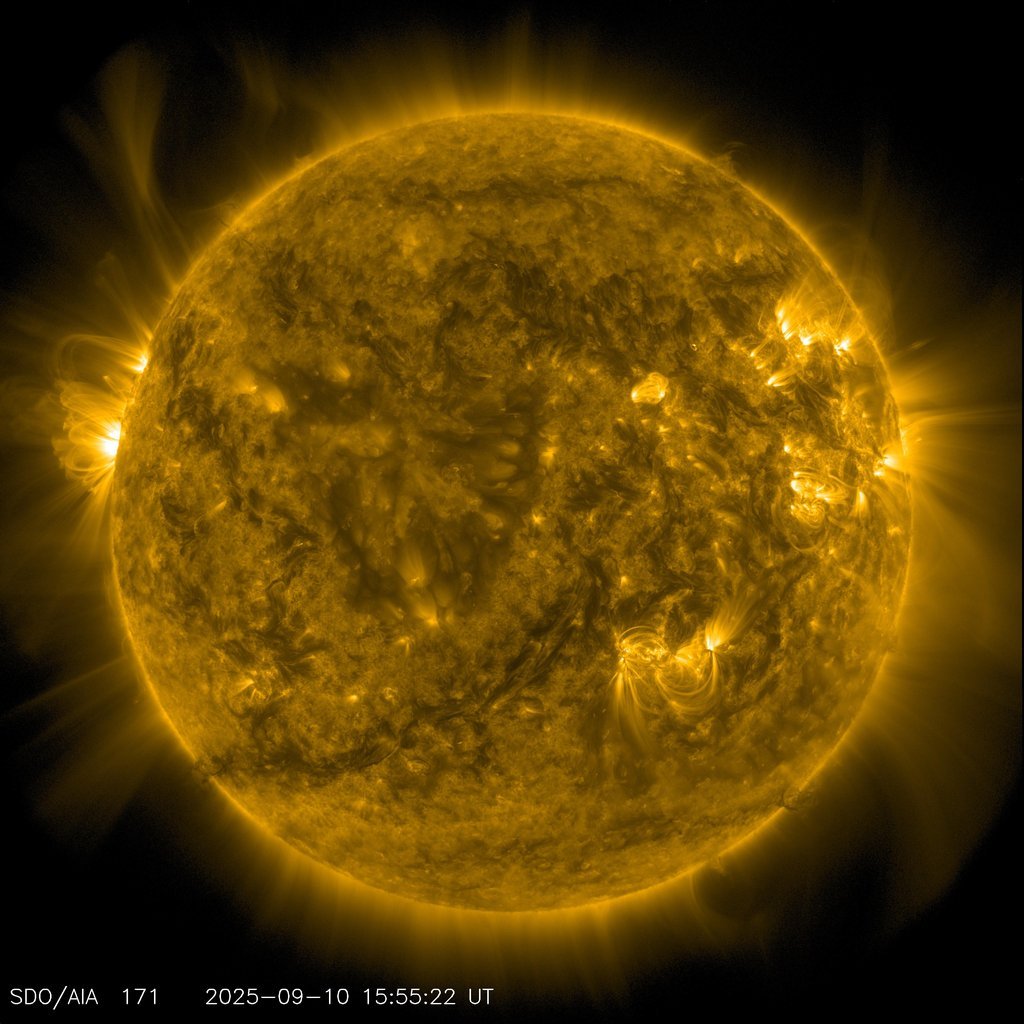
At the end of the day, the Sun is, astronomically speaking, a fairly unremarkable G2V main sequence star, one of billions scattered across the Milky Way sharing the same basic classification. But “unremarkable” only tells part of the story. Its steady, reliable output over billions of years is the exact reason Earth turned into a living, breathing planet instead of a frozen or scorched rock. Sometimes the most important things really do turn out to be the ordinary ones, they just happen to be doing an extraordinary job.
For more detailed data on the Sun’s classification and characteristics, check out the breakdown from NASA Science and the technical overview from Grokipedia’s entry on G-type main-sequence stars.
If you enjoyed this article, don’t forget to drop us a comment, it really helps support the site, and be sure to check out our other articles because we think you’re going to love them too.