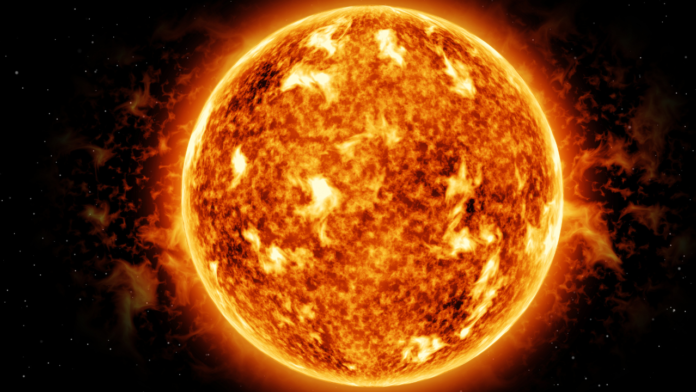

Its a question that pops into almost everyone’s head at some point, usually somewhere between a late night documentary and a genuine 3am existential spiral. When does the sun explode, and should we actually be worried about it? The good news is, you’ve got plenty of time to finish reading this article, and honestly your great, great, great, times a few thousand more, grandchildren will too. The slightly more complicated news is that “explode” isn’t really the right word for what’s eventually coming. Lets walk through what actually happens.
First Things First, the Sun Isn’t Going to Explode
Despite how dramatic the question sounds, the Sun is never actually going to explode in the way people usually picture, like a supernova ripping apart in a blaze of light. Explosive supernova deaths are reserved for stars much, much more massive than our Sun, typically stars at least eight times heavier. Our Sun simply doesn’t have the mass required to end its life that violently.
Instead, the Sun is going to go through a slower, stranger process, swelling up, shedding its outer layers, and eventually settling into a quiet, cooling ember. Its less an explosion and more a long, gradual fade, though “gradual” here still involves some genuinely dramatic changes along the way.
Where the Sun Is Right Now
The Sun is currently about 4.5 billion years old, which actually puts it roughly halfway through its expected lifespan. Right now, its in whats called its main sequence phase, steadily fusing hydrogen into helium in its core, the same process that’s been powering it since it first ignited. This is by far the longest and most stable chapter of a star’s life, and the Sun has been cruising through it for billions of years already.
The Sun Is Slowly Getting Brighter
Heres something that surprises a lot of people, the Sun isn’t just sitting there unchanged, its actually getting brighter over time, increasing its energy output by roughly 10 percent every billion years. That might not sound dramatic, but its enough to matter a lot sooner than the Sun’s eventual death.
Scientists estimate that within the next billion years or so, this gradual brightening will push Earth right out of the habitable zone, the region around a star where temperatures allow liquid water to exist. Long before the Sun’s core runs out of fuel, rising temperatures here on Earth could evaporate the oceans and end life as we know it. Its a sobering thought, but worth separating from the question of when does the sun explode, since Earth’s habitability clock is actually ticking a lot faster than the Sun’s own death clock.
The Red Giant Phase
Fast forward roughly 5 billion years, and the Sun will finally exhaust the hydrogen fuel in its core. Once that happens, the core will begin to contract under gravity while the outer layers of the Sun swell up dramatically. This is the beginning of the red giant phase, and its going to get big, really big. Scientists estimate the Sun will expand to more than 200 times its current size, easily swallowing Mercury and Venus, and quite possibly Earth as well, depending on exactly how much mass the Sun sheds along the way.
The Sun will spend roughly a billion years in this bloated red giant state, burning through helium in its core and fusing it into heavier elements like carbon and oxygen. Its worth noting this phase is actually named after its color and size, red giant stars are cooler at their surface than the Sun is now, but so enormous that they still glow brightly enough to dominate the sky around them. You can actually spot real red giants in the night sky today, stars like Arcturus and Betelgeuse are both examples of what our own Sun is eventually headed toward.
Shedding the Outer Layers
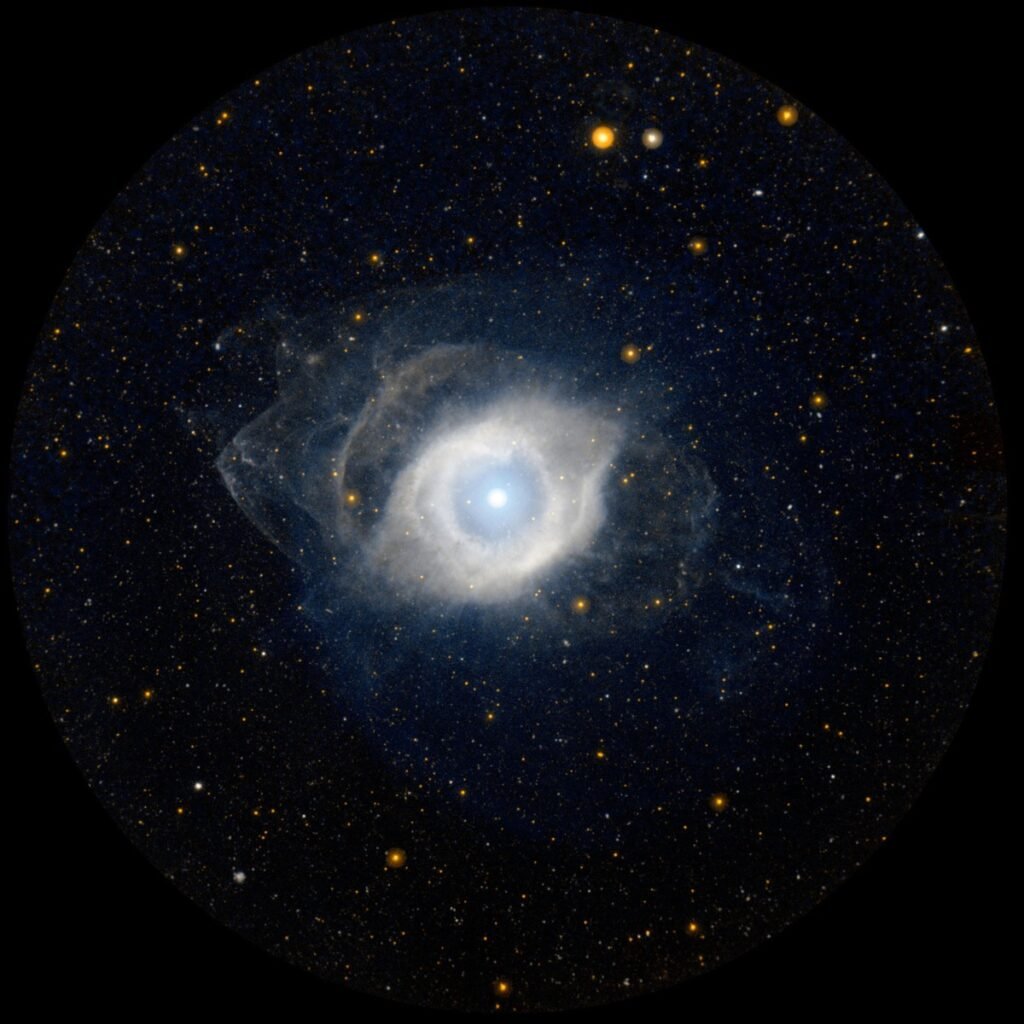
Once the Sun runs out of usable fuel entirely, things start to unravel fast, at least on a cosmic timescale. The outer layers of the Sun will be gently puffed away into space in a series of episodic bursts, forming a glowing, expanding shell of gas and dust known as a planetary nebula. Despite the name, this has nothing to do with planets, early astronomers just thought these glowing shells looked similar to planets through primitive telescopes, and the name stuck.
These planetary nebulae are actually some of the most photographed and admired objects in astronomy today, glowing in vivid colors and intricate shapes. The famous Helix Nebula and Ring Nebula are both examples of what the Sun’s own final outer layers will eventually look like, drifting outward into space long after the core has stopped burning.
The White Dwarf, and the Very End
What’s left behind after the outer layers disperse is called a white dwarf, a dense, Earth sized remnant containing most of the Sun’s original mass, packed into an incredibly compact space. A single teaspoon of white dwarf material would weigh more than a loaded pickup truck. This white dwarf will still glow, not from active fusion, but simply from residual heat, and it will slowly, slowly cool down over the following billions of years.
Eventually, given enough time, the white dwarf will cool completely into what scientists call a black dwarf, a cold, dark, inert sphere of carbon and oxygen drifting silently through space. Interestingly, no black dwarfs actually exist anywhere in the universe yet, the process takes so long, likely trillions of years, that the universe simply hasn’t been around long enough for any star to have finished cooling that far.
If exploring what other stars might be experiencing at various stages of their lives interests you, our piece on why there are no green stars dives into the physics behind how stars produce color based on temperature, another window into stellar life cycles.
So, When Does the Sun Explode?
To circle back to the original question directly, the Sun isn’t ever going to explode, but it does have a clear and well studied timeline ahead of it. Earth’s oceans could start evaporating within roughly a billion years due to the Sun’s gradual brightening. The Sun itself will exhaust its core hydrogen and begin transforming into a red giant in about 5 billion years, engulfing the inner planets shortly after. It will spend around a billion years as a swollen red giant before shedding its outer layers and settling into a slowly cooling white dwarf, a process that stretches out over billions of additional years after that.
None of this is exactly comforting on a personal level, but its worth remembering just how much time is actually involved here. Five billion years is longer than the entire history of life on Earth up to this point. Whatever happens to humanity, it almost certainly won’t be sitting around waiting to watch the Sun’s final act play out.
For more detailed timelines and research on the Sun’s future, check out the breakdown from Space.com and the official stellar life cycle overview from NASA Science.
If you enjoyed this article, don’t forget to drop us a comment, it really helps support the site, and be sure to check out our other articles because we think you’re going to love them too.