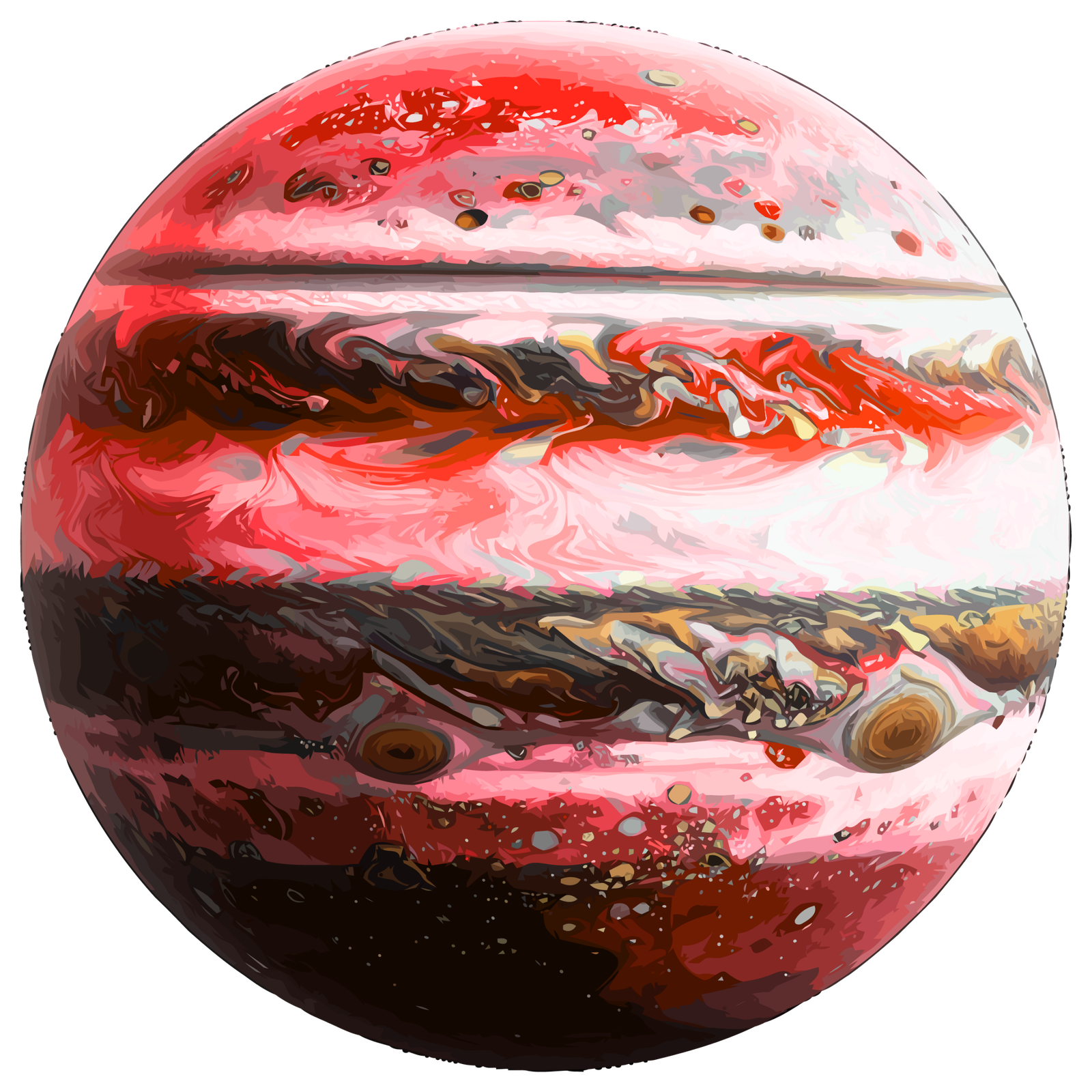

Ask most people to name the planets in order and they’ll usually get through Mercury, Venus, Earth, and Mars without much trouble. Then things slow down once you hit the gas giants, and Jupiter always seems to spark the same follow up question, okay, but how far away actually is that thing? So what is the distance from the Jupiter to the sun, and why does that number matter so much to astronomers? Lets get into the actual figures.
The Short Answer
Jupiter sits an average of about 484 million miles from the Sun, which works out to roughly 778 million kilometers. Scientists usually express this using astronomical units, or AU, a measurement based on the average Earth to Sun distance. In those terms, Jupiter orbits at about 5.2 AU, meaning its more than five times farther from the Sun than Earth is.
That’s the short version. But like most things in astronomy, the real number is a little more complicated once you dig past the average.
Why the Distance Isn’t Always the Same
Jupiter doesn’t travel around the Sun in a perfect circle. Its orbit is slightly elliptical, or egg shaped, which means the distance between Jupiter and the Sun actually shifts throughout its orbit. At its closest point, called perihelion, Jupiter comes in at around 460 million miles from the Sun. At its farthest point, aphelion, it stretches out to roughly 508 million miles.
That’s a swing of nearly 50 million miles between the closest and farthest points in a single orbit, which sounds massive, but on the scale of the outer solar system, it barely changes how Jupiter looks or behaves from our perspective here on Earth.
Breaking Down the Numbers
| Measurement | Value |
|---|---|
| Average distance from Sun | 484 million miles (778 million km) |
| Distance in astronomical units | 5.2 AU |
| Closest distance (perihelion) | 460 million miles |
| Farthest distance (aphelion) | 508 million miles |
| Sunlight travel time to Jupiter | About 43 minutes |
| Length of one Jupiter year | Roughly 12 Earth years |
That sunlight figure is one of the easier ways to picture the scale involved here. Light from the Sun reaches Earth in about 8 minutes. By the time that same beam of light reaches Jupiter, its been traveling through space for close to 43 minutes, over five times longer than it takes to reach us.
Why Jupiter Sits So Far Out
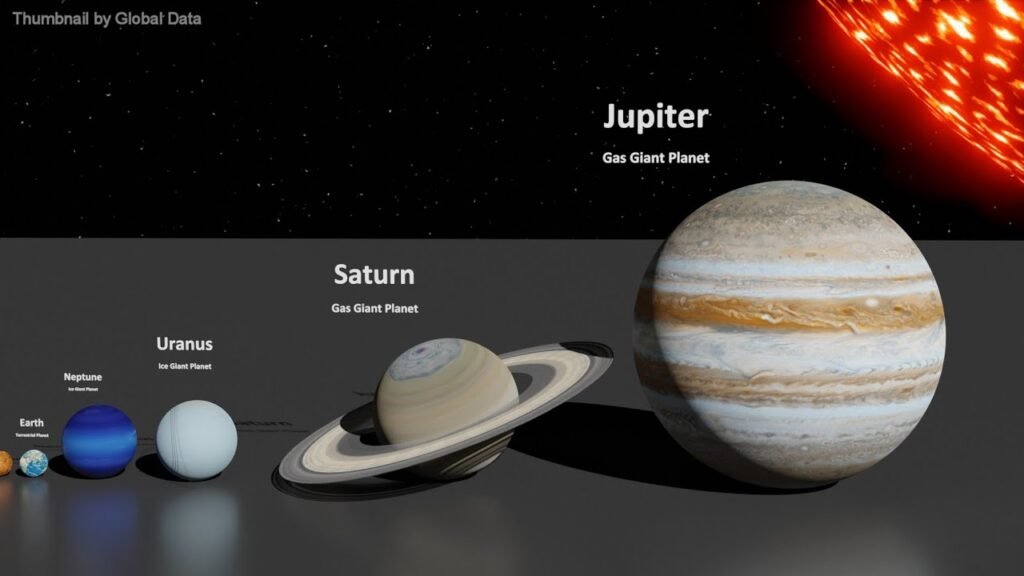
Jupiter’s distance from the Sun isn’t random, it lines up with how our solar system actually formed. Early in the solar system’s history, the region close to the Sun was too hot for lighter gases like hydrogen and helium to stick around, which is why the four inner planets, Mercury, Venus, Earth, and Mars, all ended up small and rocky. Farther out, past whats called the frost line, temperatures dropped low enough for ice and gas to accumulate in massive quantities, which is exactly what allowed Jupiter to grow into the enormous gas giant it is today.
Jupiter’s gravity is so strong, in fact, that it plays a major role in shaping the layout of the entire solar system, tugging on asteroids, occasionally flinging comets off course, and generally acting like a cosmic bouncer for anything wandering too far into the inner solar system.
If you’re curious how far light actually travels to reach each planet, our light travel time calculator lets you compare Jupiter’s distance side by side with every other planet in the solar system.
How That Distance Affects Jupiter Itself
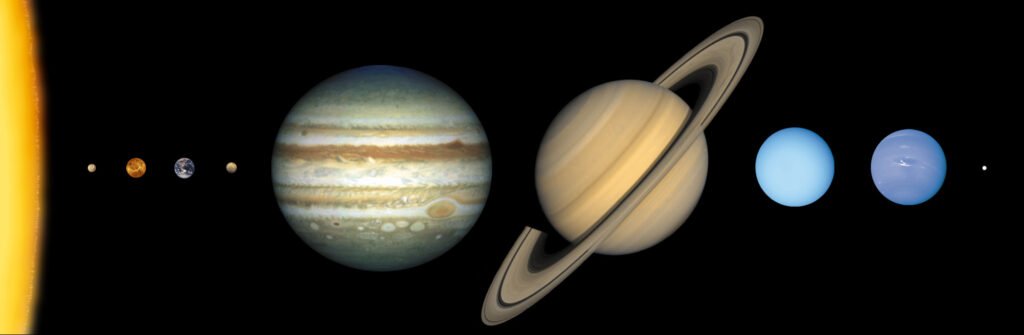
Being so far from the Sun has a couple of pretty obvious effects on Jupiter. First, sunlight reaching Jupiter is dramatically weaker than what we get here on Earth, only about 3 to 4 percent as intense, since light spreads out and weakens the farther it travels from its source. That’s a big part of why Jupiter is such a cold world at its cloud tops despite being so massive.
Second, that distance is directly responsible for how long a Jupiter year actually is. Because Jupiter has so much more ground to cover in its orbit, it takes almost 12 Earth years to complete a single trip around the Sun, compared to our own 365 days. So somebody born the same year Jupiter reaches a certain point in its orbit wouldn’t see it return to that same spot until they were closing in on their 12th birthday.
Curious how gravity and distance from the Sun stack up on other worlds? Our weight on planets calculator is worth checking out if you want to see how your own weight would change standing on Jupiter compared to somewhere like Mars or Mercury.
Spotting Jupiter for Yourself
Despite sitting nearly half a billion miles away, Jupiter is still one of the brightest objects in our night sky, often outshined only by Venus. That brightness comes down to its massive size and highly reflective cloud tops, which bounce back a huge amount of the sunlight that does reach it. On a clear night, Jupiter is easy to spot with the naked eye, and even basic binoculars can reveal its four largest moons lined up beside it.
If you’re new to stargazing and want a good starting point before hunting down planets like Jupiter, check out our guide on what you can see in the night sky without a telescope tonight.
The Bottom Line
So next time someone asks what is the distance from the Jupiter to the sun, you’ve got the full picture, an average of 484 million miles, give or take about 24 million depending on where Jupiter sits in its slightly elliptical orbit at any given time. Its a distance so vast that sunlight itself needs nearly 43 minutes just to make the trip, a solid reminder of just how much empty space separates the planets in our own solar system.
For more detailed figures straight from the source, check out NASA’s Jupiter Facts page and the additional data available through NASA’s Solar System Exploration site.
If you enjoyed this article, don’t forget to drop us a comment, it really helps support the site, and be sure to check out our other articles because we think you’re going to love them too.