
Here’s a small confession that a lot of people are too embarrassed to make out loud: for years, plenty of us assumed a light-year had something to do with time. It sounds like it should. The word “year” is sitting right there. So when a scientist says a star is 40 light-years away, part of your brain quietly files it under “40 years” and moves on.
It’s one of the most common mix-ups in all of astronomy, and honestly, it’s an easy trap to fall into. But once the real meaning clicks, the whole night sky starts to feel different. A light-year isn’t a measure of time at all. It’s a measure of distance. And it might be the single most useful ruler humans have ever invented for making sense of a universe that is almost rudely enormous.
So What Is a Light-Year, Really?
A light-year is the distance that light travels through empty space in one Earth year. That’s the whole definition. Nothing sneaky hiding in it.
The reason it works so well as a unit comes down to a fact that never stops being strange: light is the fastest thing in the universe, and its speed does not change. Light moves at about 186,000 miles per second, or roughly 300,000 kilometers per second. Nothing with mass can catch up to it, and as far as we can tell, nothing ever will.
Now let that speed run for a full year without stopping. Second after second, day after day, always covering another 186,000 miles every tick of the clock. By the time a year is up, that beam of light has crossed about 5.88 trillion miles, which works out to roughly 9.46 trillion kilometers. That distance is one light-year. If you’d rather see the raw numbers add up for yourself over different stretches of time, our light travel time calculator lets you play with it directly.
Write out 5.88 trillion in full and you get a 5 followed by twelve digits. It’s the kind of number that stops meaning anything the moment you look at it, which is exactly why astronomers reach for “one light-year” instead.
Why Not Just Use Miles or Kilometers?
Miles and kilometers are wonderful for the human-sized world. They handle the walk to the shop, the drive across the country, even the trip to the Moon without much fuss.
Space is a different beast. The nearest star to our Sun, Proxima Centauri, sits about 25 trillion miles away. Try describing a whole galaxy in miles and you end up drowning in zeros before you’ve said anything useful. It would be like measuring the distance between two cities in millimeters. Technically correct, completely unreadable.
Switch to light-years and that same ocean of numbers turns tidy. Proxima Centauri is about 4.24 light-years away. The center of our galaxy is around 26,000 light-years off. Suddenly the distances fit in a sentence, and you can actually compare them in your head. That is the quiet genius of the unit. It shrinks the cosmos down to numbers a person can hold.
The Part That Melts Brains: Looking at a Light-Year Means Looking Into the Past
This is the idea that turns a dry unit of distance into something almost poetic.
Because light takes time to travel, everything you see in the sky is a little bit old. The image is not live. It’s a delayed signal that left its source however long ago and has only just arrived at your eye.
Look at the Sun and you’re seeing it as it was about 8 minutes ago, since sunlight takes a little over eight minutes to reach us. Glance at the Moon and you’re about 1.3 seconds behind. Those delays are tiny. But push out to the stars and the lag stretches into something staggering. When you spot a star that’s 40 light-years away, the light hitting your eye tonight left that star 40 years ago. You are, in the most literal sense, looking into the past.
Point a serious telescope at a distant galaxy and the effect goes cosmic. The nearest big galaxy to us, Andromeda, is roughly 2.5 million light-years away, which means we see it as it looked 2.5 million years ago, long before modern humans existed. Some galaxies captured by the James Webb and Hubble telescopes are billions of light-years out, so their light is a message from the young universe itself. Every deep-space photo is a form of time travel, and the light-year is what makes that time travel measurable. If your appetite for scale is now thoroughly wrecked, our guide on how vast the universe really is leans all the way into it.
How Far Is a Light-Year Compared to Things We Can Actually Picture?
Trillions of miles is a hard number to feel. So let’s build up to it in steps that your imagination can survive.
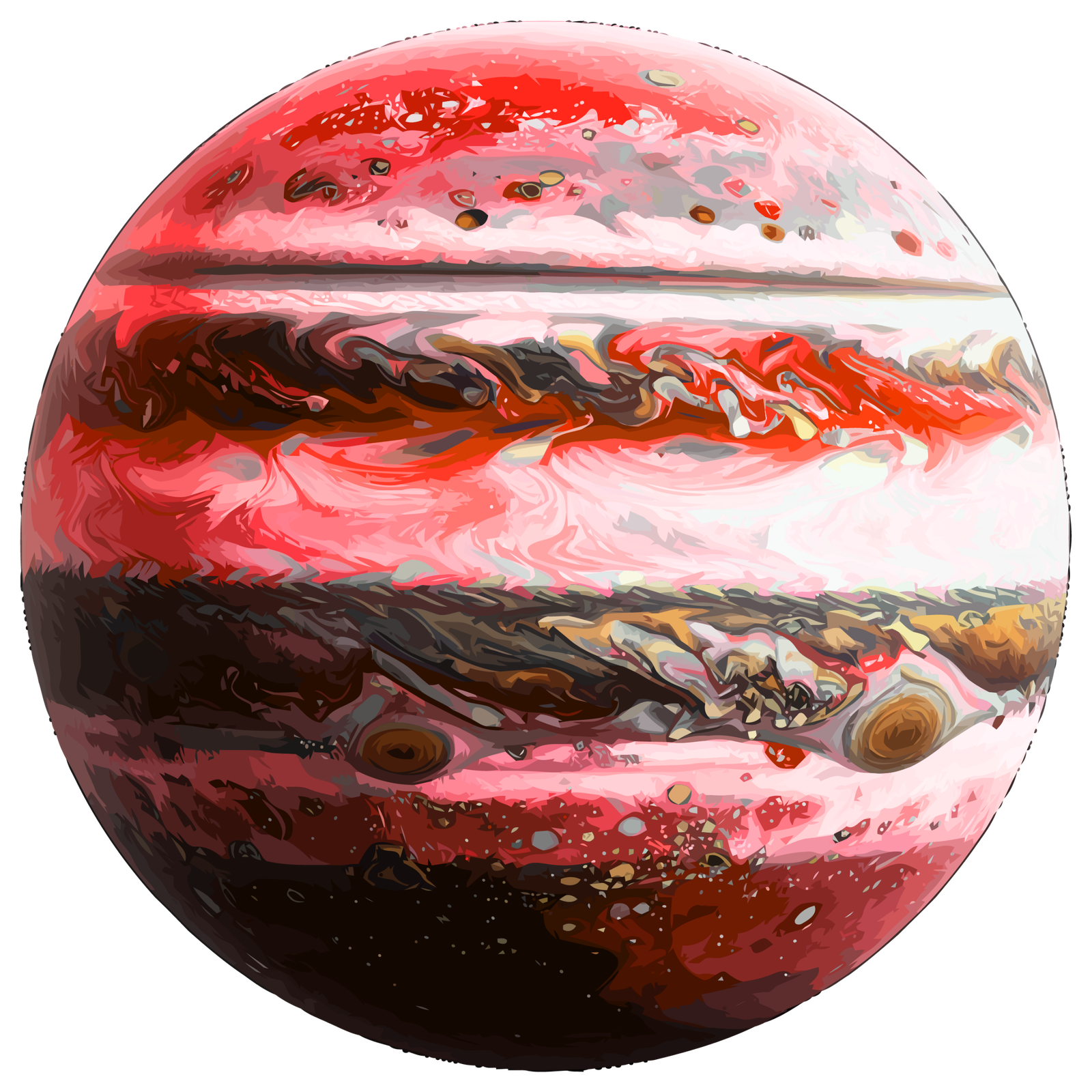
Light crosses the distance from Earth to the Moon in about 1.3 seconds. In one minute it covers roughly 11 million miles. Sunlight reaches Jupiter in about 43 minutes. Keep that same beam going for a full year and it finally clears one light-year.
Here’s the comparison that tends to land hardest. Our fastest deep-space probe, Voyager 1, has been racing away from Earth since 1977 at around 38,000 miles per hour, and it is now the most distant human-made object in existence. Even at that blistering pace, if Voyager were aimed straight at Proxima Centauri, it would take something like 70,000 years to arrive. That’s the gap between how fast we can fly and how fast light can travel. You can read more about just how far that little spacecraft has already gone in our piece on Voyager 1’s record-breaking journey.
A Few Cousins of the Light-Year
Once you’re comfortable with the light-year, the same trick scales up and down to whatever span you need.
A light-second is how far light travels in one second, roughly 186,000 miles. A light-minute stretches that to about 11 million miles. A light-hour, a light-day, and a light-week all follow the same logic, each one just light multiplied by that chunk of time. Voyager 1 is closing in on being a full light-day from Earth, a mile marker no other object we’ve built has ever reached.
There’s also the parsec, which you may have heard tossed around in science fiction. A parsec is a related distance unit favored by professional astronomers, and it equals about 3.26 light-years. Same job, different math behind it. For everyday stargazing and for wrapping your head around the sky, the light-year remains the friendliest ruler of the bunch.
Why the Light-Year Is Worth Knowing
Getting this one concept straight quietly upgrades everything else in astronomy. Distances stop being a wall of zeros and start telling a story. You realize the starlight in your eyes is ancient, that the sky is a museum of the past, and that our fastest machines have barely dipped a toe past our own doorstep.
The light-year doesn’t just measure space. It measures time, memory, and reach all at once, which is a lot to ask of a single unit. Not bad for something most of us spent years misunderstanding.
For a clear, official rundown straight from the source, NASA’s explainers on what a light-year is and the friendlier NASA Space Place version are both excellent next stops.
If you enjoyed this article, don’t forget to drop us a comment, it really helps support the site, and be sure to check out our other articles because we think you’re going to love them too.