
A hailstorm wrecked the Tombaugh family’s Kansas crops in the 1920s, wiping out any hope 20-year-old Clyde had of affording college. So instead, he taught himself trigonometry from library books, and started grinding his own telescope mirrors by hand. By 1928, he’d built one using the crankshaft from a 1910 Buick and spare parts salvaged from a cream separator. Two years later, that self-taught farm boy would find a planet that had eluded professional astronomers for decades.
Sketches That Turned Into a Job Offer
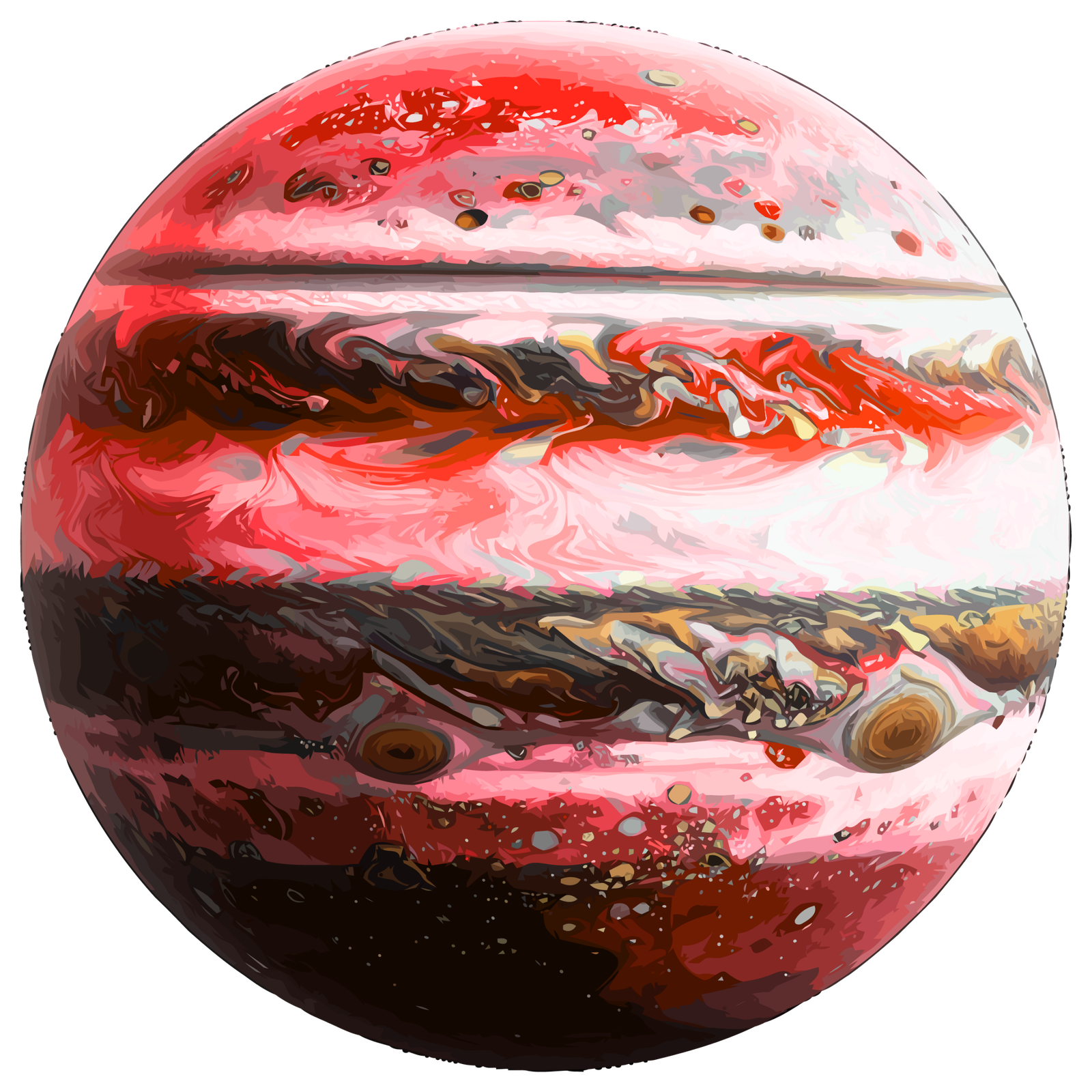
Tombaugh used his homemade telescopes to draw detailed sketches of Mars and Jupiter, good enough that he decided to mail them off to Lowell Observatory in Flagstaff, Arizona, mostly just hoping for some feedback from real astronomers. Instead, in 1929, observatory director V.M. Slipher offered him a job. The observatory had been chasing a hypothetical “Planet X” for over a decade, ever since founder Percival Lowell theorized something massive beyond Neptune was tugging at the orbits of the outer planets, and they needed someone patient enough to search for it.
Tombaugh’s father reportedly sent him off to Arizona with characteristically blunt advice, make yourself useful, and stay out of trouble. He was 22 years old, and had never been away from his family before.
Checking 900,000 Specks of Light, By Hand
The actual work was brutal. By day, Tombaugh shoveled snow and hauled coal to keep the observatory running. By night, he operated a 13-inch astrograph, holding it locked on a single guide star for hour-long exposures, producing large photographic plates of the same patch of sky taken several nights apart. Then came the truly grinding part, feeding pairs of plates into a machine called a blink comparator, which flickered rapidly between the two images. Stars stayed fixed. Anything that had moved against that background jumped out. Each plate held anywhere from 50,000 to 900,000 individual specks of light to check, one by one.
On February 18, 1930, comparing plates taken on January 23 and January 29, Tombaugh spotted a tiny point of light that had shifted position by exactly the right amount. He was 24 years old.
A Discovery Announced on a Deliberately Chosen Date
The observatory waited until March 13, 1930, to announce the find publicly, timed on purpose to land on both the anniversary of William Herschel’s 1781 discovery of Uranus and Percival Lowell’s birthday. The new world was eventually named Pluto, a suggestion that came from an 11-year-old English schoolgirl named Venetia Burney, who thought the Roman god of the underworld, capable of making himself invisible, fit a distant, barely visible planet perfectly. It didn’t hurt that the name’s first two letters happened to match Percival Lowell’s initials.
If you’re curious about the icy region of the solar system Pluto turned out to belong to, our explainer on the Kuiper Belt covers the frozen frontier astronomers didn’t fully map until decades after Tombaugh’s discovery.
 Clyde Tombaugh, discoverer of Pluto, February 4, 1906 to January 17, 1997. (Image: NASA)
A Farm Boy’s Dream, Delivered 85 Years Later
Ironically, Pluto turned out to be far too small to be the massive planet Lowell had originally gone looking for, its true mass wasn’t even known until its moon Charon was discovered in 1978. But the discovery changed Tombaugh’s own life immediately, it earned him a scholarship to study astronomy formally at the University of Kansas, a path the hailstorm had once closed off entirely.
He died in 1997, having never seen Pluto as anything more than a faint point of light. In 2006, a small capsule holding some of his ashes launched aboard NASA’s New Horizons spacecraft, and on July 14, 2015, it flew straight past the world he’d found as a young man squinting through a blink comparator, making him, by any reasonable definition, the farthest-traveled human being in history.
For more on Tombaugh’s life and the discovery, check out the detailed account from EarthSky and the mission history from NASA’s New Horizons team.