
If you line up high resolution photos of all eight planets in our solar system, it looks almost like an artist sat down with a vibrant paint palette. You got deep ocean blues, rusty brick reds, pale golden yellows, and chalky grays. planet colors
When people look at space art, they often ask themselves if those planet colors are actually real or just fancy CGI filters created by NASA graphic designers.
The short answer? They are very real! But the reasons behind those vibrant shades come down to a fascinating mix of chemistry, surface materials, atmospheric gases, and how sunlight reflects across millions of miles of empty space.
Here is a simple, straightforward guide to what colors the planets actually are and why they look so completely different from each other.
The Inner Rocky Worlds: Rust, Rock, and Blinding White
The four planets closest to the Sun are rocky worlds. Since they have solid surfaces, their appearance depends heavily on what their crusts are made of and how thick their atmospheres happen to be.
Mercury: Slate Gray
Mercury looks a lot like Earth’s Moon at first glance. It has virtually no atmosphere to scatter light or trap weather. Its dark gray color comes from its ancient, cratered surface, which is covered in heavy layers of silicate rock, iron, and dark carbon rich dust known as graphite.
Venus: Bright Butter Yellow
Venus is covered in super dense clouds of toxic sulfur dioxide and droplets of sulfuric acid. To the human eye looking through a telescope, Venus appears as a smooth, bright yellowish-white marble. Those thick clouds bounce nearly 70 percent of all incoming sunlight right back out into space, making it one of the brightest objects in our night sky.
Earth: Blue, Green, and Swirling White
Our home planet earns its nickname as the Blue Marble for a good reason. Oceans cover over 70 percent of Earth’s surface, reflecting sunlight in brilliant shades of dark blue and cyan. Landmasses add shades of green forest and tan desert, while water vapor creates swirling bright white clouds moving through our atmosphere.
Mars: Rusty Red and Butterscotch
Mars is famously known as the Red Planet, but up close through rover cameras, its actually more of a reddish-orange or butterscotch color. That distinct reddish tint comes from high amounts of iron oxide—literally rust—coating the soil and rocks across its dry, wind swept surface.
The Gas Giants: Swirling Bands of Gold and Red
Moving past the asteroid belt, we run into the gas giants. These worlds don’t have solid surfaces to look at, so their planet colors are created entirely by atmospheric gases, upper cloud layers, and violent planetary storms.
Jupiter: Stripes of Caramel, White, and Orange
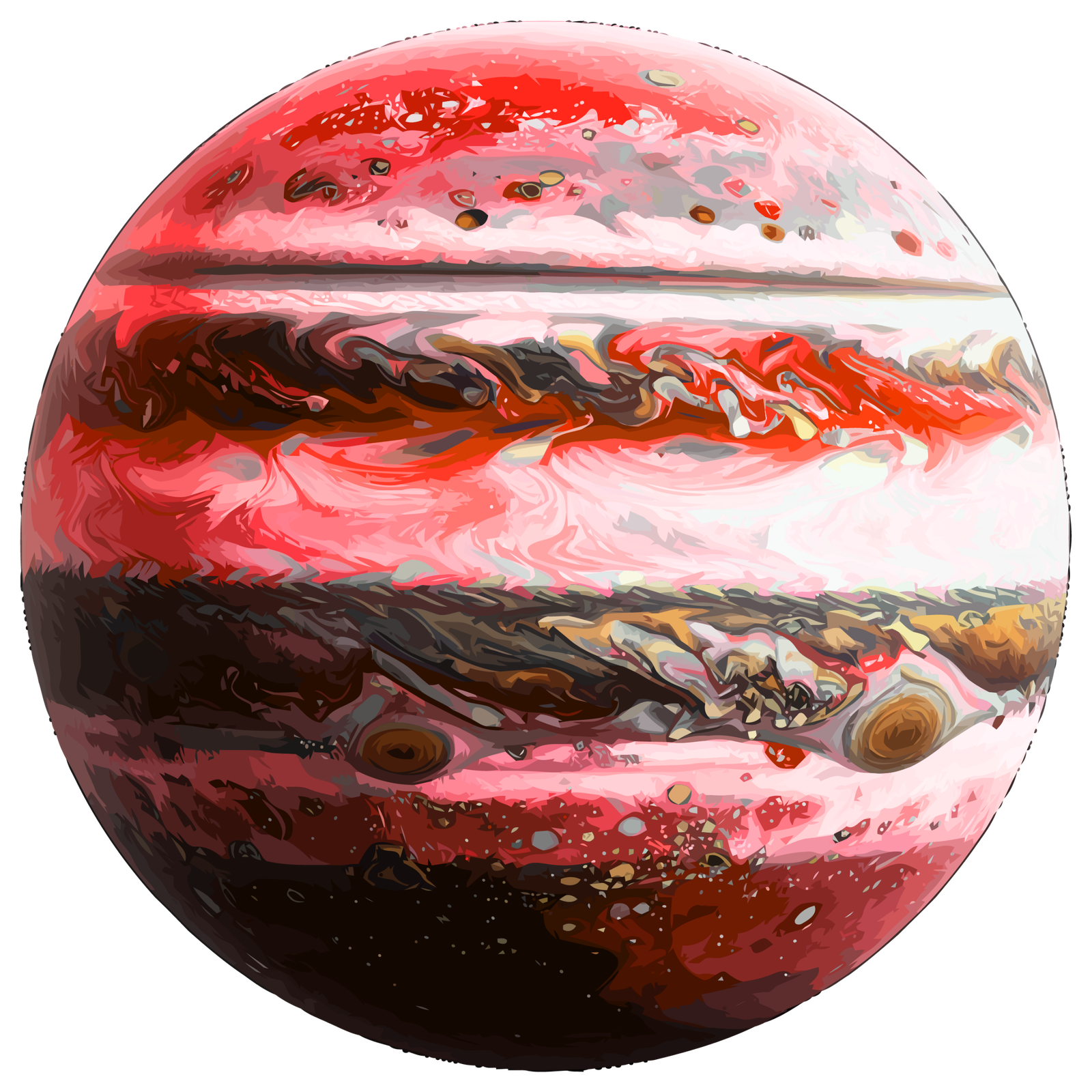
Jupiter is famous for its bold horizontal stripes. The pale white bands are made of cold ammonia ice crystals floating high up in the atmosphere, while the darker reddish-brown belts are caused by complex sulfur and phosphorus compounds reacting to ultraviolet rays from the Sun. Its iconic Great Red Spot is a giant, centuries old storm that churns up deep chemical compounds from lower down in the atmosphere.
Saturn: Golden Yellow and Muted Amber
Saturn shares a pretty similar gas mix with Jupiter, mostly made of hydrogen and helium. However, Saturn sits further out in colder space, causing its ammonia clouds to sink deeper down. A hazy layer of white methane haze sits over the top of those clouds, muting its colors into a softer pale gold, butter yellow, and light brown tone.
The Ice Giants: Deep Cyan and Aquamarine
Out on the far edges of our solar system sit the two ice giants: Uranus and Neptune. These worlds are famous for their stunning shades of blue, but for decades people thought they were vastly different in color. Recent scientific re-analysis showed they are actually much closer in shade than we originally thought!
Uranus: Soft Pale Turquoise
Uranus has a high amount of methane gas mixed into its upper hydrogen-helium atmosphere. Methane gas absorbs red light wavelengths from sunlight and reflects blue and green light back out. Uranus also has a thick blanket of pale haze that gives it a soft, icy teal or turquoise color.
Neptune: Rich Aquamarine Blue
Neptune also gets its blue shade from atmospheric methane, but it appears slightly deeper in color than Uranus because it has a thinner haze layer and more active weather. Neptunes deep azure blue is dotted with bright white clouds of methane ice crystals zipping through supersonic winds.
Why Do Fake Colors Show Up in Astronomy Photos?
Sometimes you will see photos of planets that look wildly different—like a neon pink Venus or a rainbow colored Pluto.
Astronomers often use “false color” images to reveal hidden details that human eyes can’t naturally see. By taking photos in infrared, ultraviolet, or X-ray spectrums, scientists can map out surface temperatures, mineral compositions, and atmospheric wind speeds. While those images look cool, they don’t represent what a human astronaut would see looking out a spaceship window!
Frequently Asked Questions
What planet has the most colorful atmosphere?
Jupiter is widely considered the most colorful planet due to its complex swirling bands of ammonia clouds, sulfur compounds, and massive storm systems like the Great Red Spot.
Why are Neptune and Uranus blue if they are gas planets?
Both Uranus and Neptune contain high concentrations of methane gas in their atmospheres. Methane absorbs red light wavelengths from the Sun and reflects blue and green light back out toward space.
Is Pluto a colorful world?
Even though Pluto is classified as a dwarf planet, close up photos from NASA New Horizons probe revealed it is surprisingly colorful! It features patches of dark reddish brown, bright white nitrogen ice fields, and pale orange mountain ranges.
The incredible variety of planet colors in our solar system is a great reminder of how diverse space really is—where simple chemical changes can transform an entire planet into a glowing red desert or an icy blue giant.
If you enjoyed this article, don’t forget to leave us a comment to encourage us, and check out our other articles because you’re going to love them! planet colors planet colors planet colors