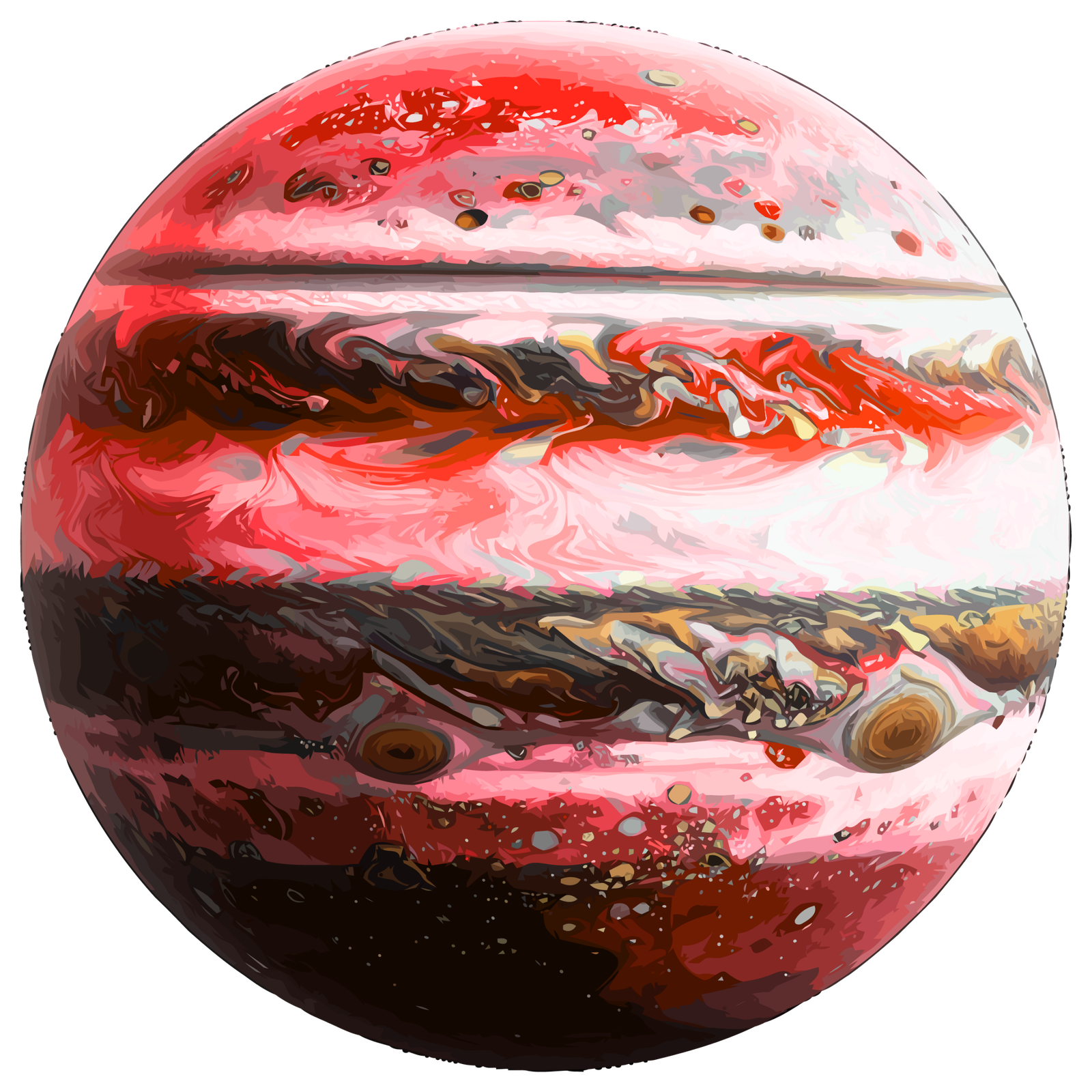

Ask almost anyone to point out a star pattern, and there’s a good chance they’ll go straight for the Big Dipper. That simple shape of a ladle or saucepan is one of the first things most of us learn to recognize overhead, a friendly landmark in an otherwise bewildering sky. It’s so beloved that even a NASA spacecraft bound for Jupiter turned its camera around to photograph it from millions of miles out in space. But there’s far more to the Big Dipper than a pretty shape, and once you learn its secrets, it becomes a key that unlocks the rest of the night sky.
Wait, the Big Dipper Isn’t a Constellation?
Here’s a fact that surprises a lot of people. The Big Dipper is not actually a constellation. It’s an asterism, which is just a well-known pattern of stars that sits inside a larger official constellation. In this case, those seven stars form only the hindquarters and tail of a much bigger figure: Ursa Major, the Great Bear.
The Great Bear is one of the oldest recognized constellations, listed by the astronomer Ptolemy nearly 2,000 years ago. And the little dipper shape within it has been seen in wildly different ways around the world. In Britain it’s the Plough, in parts of Europe it’s the Great Wagon, and in African American folklore it was known as the Drinking Gourd, a sky marker that pointed enslaved people north toward freedom. Same seven stars, countless human stories.
Meet the Seven Stars
The seven stars of the Big Dipper each have their own name, mostly handed down from Arabic astronomers centuries ago. Four of them form the bowl: Dubhe, Merak, Phecda, and Megrez. The other three curve out to make the handle: Alioth, Mizar, and Alkaid.
Mizar, the middle star of the handle, hides a lovely secret. Look closely on a dark night and you’ll notice a fainter star sitting right beside it, named Alcor. This pair is nicknamed the “Horse and Rider,” and for centuries people used them as a simple test of eyesight, since spotting the fainter Alcor takes reasonably sharp vision. If star pairs and colors fascinate you, our beginner’s guide to the sky’s colorful stars is a great companion for your next clear night.
Your Personal Sky Map: Using the Dipper to Find Everything Else
This is where the Big Dipper truly earns its fame. Because it’s so bright and easy to find, it works as a giant signpost pointing the way to other stars.
The most famous trick uses the two stars on the outer edge of the bowl, Dubhe and Merak, known as the “pointer stars.” Draw an imaginary line up through them, extend it about five times the distance between them, and you’ll land squarely on Polaris, the North Star, which anchors the smaller and fainter Little Dipper. Since Polaris marks true north, this single trick can keep you from ever getting lost under a clear night sky.
There’s a second favorite among skywatchers, a little rhyme that goes “arc to Arcturus, then speed on to Spica.” Follow the curve of the Dipper’s handle and keep that arc going, and it sweeps you down to Arcturus, a brilliant orange star. Carry on the same line and you’ll reach Spica, a bright blue-white star. Suddenly you’ve hopped across three constellations using nothing but the Dipper as your guide. For more ways to navigate the heavens, our complete guide to observing the night sky will turn you into a confident stargazer.
A Shape That’s Slowly Falling Apart
Here’s a final twist that stretches the imagination. The Big Dipper won’t always look the way it does tonight. In fact, it’s slowly coming undone.
Five of the seven stars are actually traveling together through space as part of a loose family astronomers call the Ursa Major Moving Group, all born from the same cloud of gas around 80 light-years away. But the two stars at the ends, Dubhe and Alkaid, are outsiders drifting in different directions. Over tens of thousands of years, that mismatch will gradually warp the familiar shape, stretching and skewing the ladle until it’s no longer recognizable. If you could jump 100,000 years into the future, you’d look up and struggle to find the Dipper at all. The sky we think of as eternal is quietly, endlessly on the move.
None of that spoils the magic of finding it tonight, though. The Big Dipper is the perfect place to begin a lifelong friendship with the stars. Learn these seven, use them to find Polaris and beyond, and the rest of the sky slowly opens up to you. For a bit more on the Dipper and the spacecraft that photographed it, NASA’s writeup on Juno’s image of the Big Dipper is a fun read, and our list of what you can see in the night sky without a telescope will give you plenty more to hunt for.
If you enjoyed this article, don’t forget to drop us a comment, it really helps support the site, and be sure to check out our other articles because we think you’re going to love them too.