
The Short Answer
Stars twinkle because of the Earth’s atmosphere, not because of anything the stars themselves are doing. As their light passes down through our restless, ever-moving air, it gets bent and jostled around, which makes the star appear to flicker, shimmer, and dance. The stars are actually shining with a perfectly steady light. It’s our own sky that adds the sparkle.
There’s something lovely about a twinkling star, and it’s no accident that we’ve been singing about it since childhood. But the twinkle is a bit of a cosmic illusion. The light left that star years, sometimes thousands of years ago, travelling in a calm, unbroken beam. It’s only in the final fraction of a second, as it dives through the last few miles of Earth’s atmosphere, that it starts to shiver. Let’s look at exactly why that happens, and why the planets don’t do it.
It’s All About the Air
The proper name for star twinkling is scintillation, and the cause is turbulence in the atmosphere. Our air isn’t a still, uniform blanket. It’s made of countless pockets and layers, all at slightly different temperatures and densities, and they’re constantly shifting, rising, and mixing.
When a thin beam of starlight enters this churning soup, each of those layers bends the light by a tiny amount, and in a slightly different direction from moment to moment. The beam gets nudged this way and that on its way down to your eye, so the star’s light seems to wobble in position and flicker in brightness. It’s the same basic effect you see when you look at objects shimmering above a hot road on a summer day, just happening to a pinprick of starlight instead.
Why Stars Twinkle but Planets Don’t
Here’s a detail that surprises a lot of people, and it’s genuinely useful to know. On any given night, the steady, non-twinkling lights in the sky are almost always planets, while the flickering ones are stars. It’s one of the easiest ways to tell them apart with the naked eye.
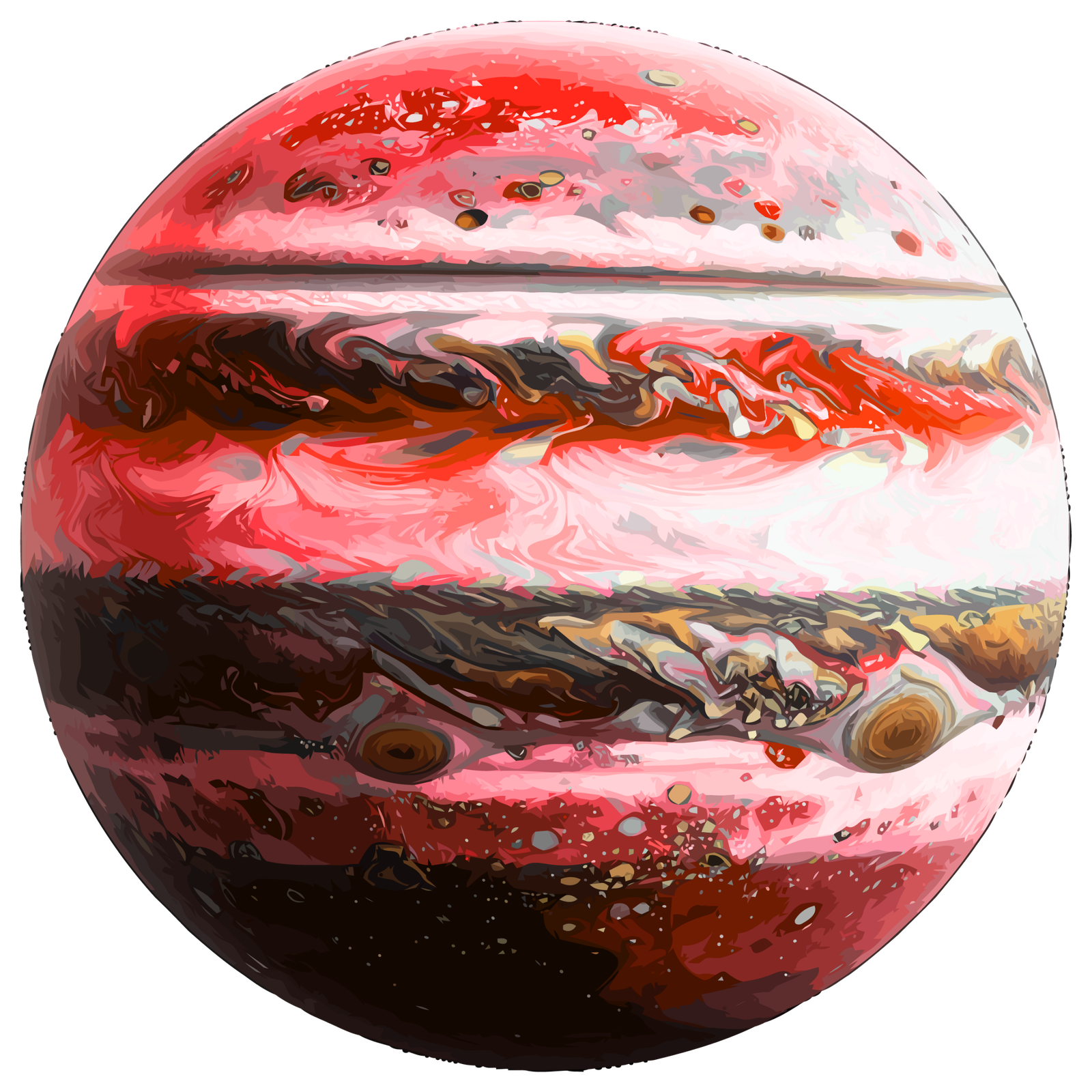
The reason comes down to distance. Stars are so unimaginably far away that even through a telescope they remain single points of light. A tiny point is easily knocked around by the atmosphere, so it twinkles. Planets, being vastly closer, actually show up as minuscule disks rather than points, even if your eye can’t quite resolve them as such. A disk is really made of many points of light side by side, and the atmosphere disturbs each one slightly differently, so all those little flickers average out into a calm, steady glow. Next time you’re out, look for the light that isn’t twinkling, and you’ve likely found a planet. Our guide to what you can see in the night sky tonight can help you work out which one.
When the Twinkling Gets Really Dramatic
Twinkling isn’t always the same strength. It depends on how much air the starlight has to fight through and how turbulent that air is on a given night.
Stars low on the horizon twinkle far more than those high overhead, simply because their light has to travel through a much thicker slice of atmosphere at that shallow angle. On a windy or turbulent night the effect ramps up too. Sometimes a bright star sitting near the horizon will even appear to flash different colours, flickering between red, white, and blue. That’s the atmosphere acting like a prism, splitting the starlight into its colours and scattering them slightly. The brilliant star Sirius is famous for putting on exactly this kind of colourful show when it’s low in the sky, something we touch on in our beginner’s guide to the sky’s colourful stars.
The Twinkle Vanishes Above the Clouds
Here’s the clincher that proves it’s all down to our atmosphere. If you rise above the air, the twinkling stops completely. Astronauts on the International Space Station see stars as steady, unblinking points of light, with no shimmer whatsoever, because there’s no turbulent atmosphere between them and the stars.
This is also the reason astronomers go to such lengths to beat the twinkle. It’s why great observatories are built on high, dry mountaintops where the air is thinner and steadier, and why space telescopes like Hubble deliver such crisp images. That same atmospheric shimmer that makes stargazing so charming is a real nuisance when you’re trying to study a star in fine detail. Twinkling is beautiful to the eye and frustrating to the scientist.
So the next time a star catches your eye with its flickering dance, you’ll know the truth behind it. The star is shining steadily, and it’s our own lively atmosphere doing all the twinkling. If you’d like to get more out of your nights under the stars, our complete guide to observing the night sky is a great place to begin, and NASA’s stars overview has plenty more to explore.
If you enjoyed this article, don’t forget to drop us a comment, it really helps support the site, and be sure to check out our other articles because we think you’re going to love them too.