
The Short Answer
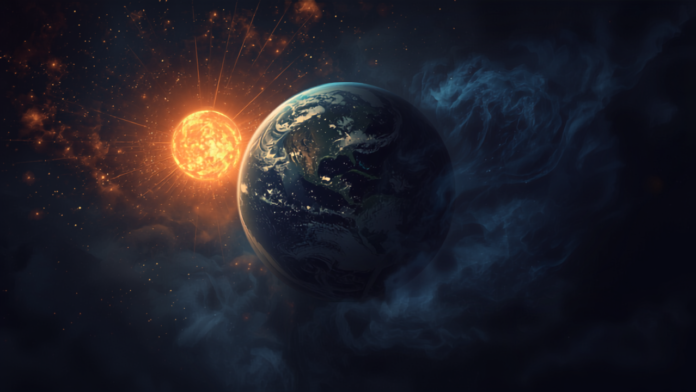
The Earth isn’t ending any time soon. There’s no scientifically predicted doomsday on the horizon, and our planet will very likely keep spinning peacefully for billions of years to come. The real long-term threat isn’t an asteroid or some sudden catastrophe, it’s our own Sun, which will eventually make Earth uninhabitable in about a billion years and may destroy it entirely in roughly five billion.
It’s a question that carries a lot of weight, and a fair bit of anxiety. People picture asteroids, or some cosmic accident wiping us out overnight. The reassuring reality is that the science points to timescales so vast they’re almost impossible to feel. So let’s separate the genuine long-term picture from the doomsday fears, and see what will actually bring about the end of our world.
First, the Good News
Let’s clear away the scary stuff. There is no known asteroid, comet, or cosmic event on course to end the Earth in any timeframe you need to worry about. Space agencies track thousands of near-Earth objects, and none of the large ones pose a civilisation-ending threat for the foreseeable future. The kind of impact that finished the dinosaurs is a rare, once-in-many-millions-of-years event, not something looming over the next few generations.
So the sudden, movie-style ending is extraordinarily unlikely. The end of the Earth, when it comes, will be a slow and predictable process driven by the life cycle of a star, not a bolt from the blue.
The Real Clock: Our Ageing Sun
Everything that will eventually doom the Earth comes back to the Sun. Our star is about 4.6 billion years old and sits roughly halfway through its stable life, quietly fusing hydrogen into helium in its core. That’s the good phase, and we’re comfortably in the middle of it.
The catch is that the Sun isn’t staying the same. As it slowly burns through its fuel, it’s gradually getting brighter and hotter. It’s a slow creep, only around ten percent brighter every billion years, but over enormous stretches of time that steady warming adds up to something Earth can’t survive. To understand the star at the centre of it all, our guide to what sort of star the Sun is is a good place to start.
About a Billion Years: The End of Life
Here’s the first major milestone, and it’s the one that really matters for living things. In roughly one billion years, the Sun will have brightened enough to push Earth’s climate past a tipping point.
As the extra heat pours in, the oceans will begin to evaporate, and water vapour, a powerful greenhouse gas, will trap even more warmth in a runaway spiral. Eventually the seas boil away entirely, the surface bakes, and Earth becomes far too hot for complex life to survive. This is, in a real sense, the end of the living Earth, even though the planet itself will still physically exist. A billion years is an almost incomprehensible stretch of time, hundreds of times longer than humans have even existed, so this is not something to lose sleep over. But it’s the point at which our world stops being habitable.
About Five Billion Years: The End of the Planet
The truly final chapter comes much later. In around five billion years, the Sun will run low on hydrogen fuel in its core and begin to swell into a red giant, ballooning outward to many times its current size.
As it expands, it will swallow Mercury and Venus, and reach out toward Earth’s orbit. Our planet may be scorched into a charred, lifeless cinder, or it may be engulfed and destroyed outright, depending on exactly how the Sun sheds mass and how the orbits shift. Either way, this is the end of the Earth as a world. The full story of that dramatic transformation, from red giant to fading white dwarf, is one we tell in our piece on how the Sun will die.
Putting the Fear in Perspective
So when will the Earth end? Life on it has around a billion years left, and the planet itself has roughly five billion before the dying Sun claims it. Those numbers are so enormous that they belong more to the story of the cosmos than to anything in human experience.
To put it in scale, the entire history of our species is a tiny blink against a billion years, and a billion years is itself only a fraction of the Earth’s remaining life as a physical world. Whatever challenges humanity faces, the natural end of the Earth is not one that any of us, or any civilisation for a very, very long time, will ever have to witness. If you enjoy pondering the truly deep future, our look at just how vast the universe is is a great next read, and NASA’s Sun science page has more on the star that will one day write our planet’s final chapter.
If you enjoyed this article, don’t forget to drop us a comment, it really helps support the site, and be sure to check out our other articles because we think you’re going to love them too.