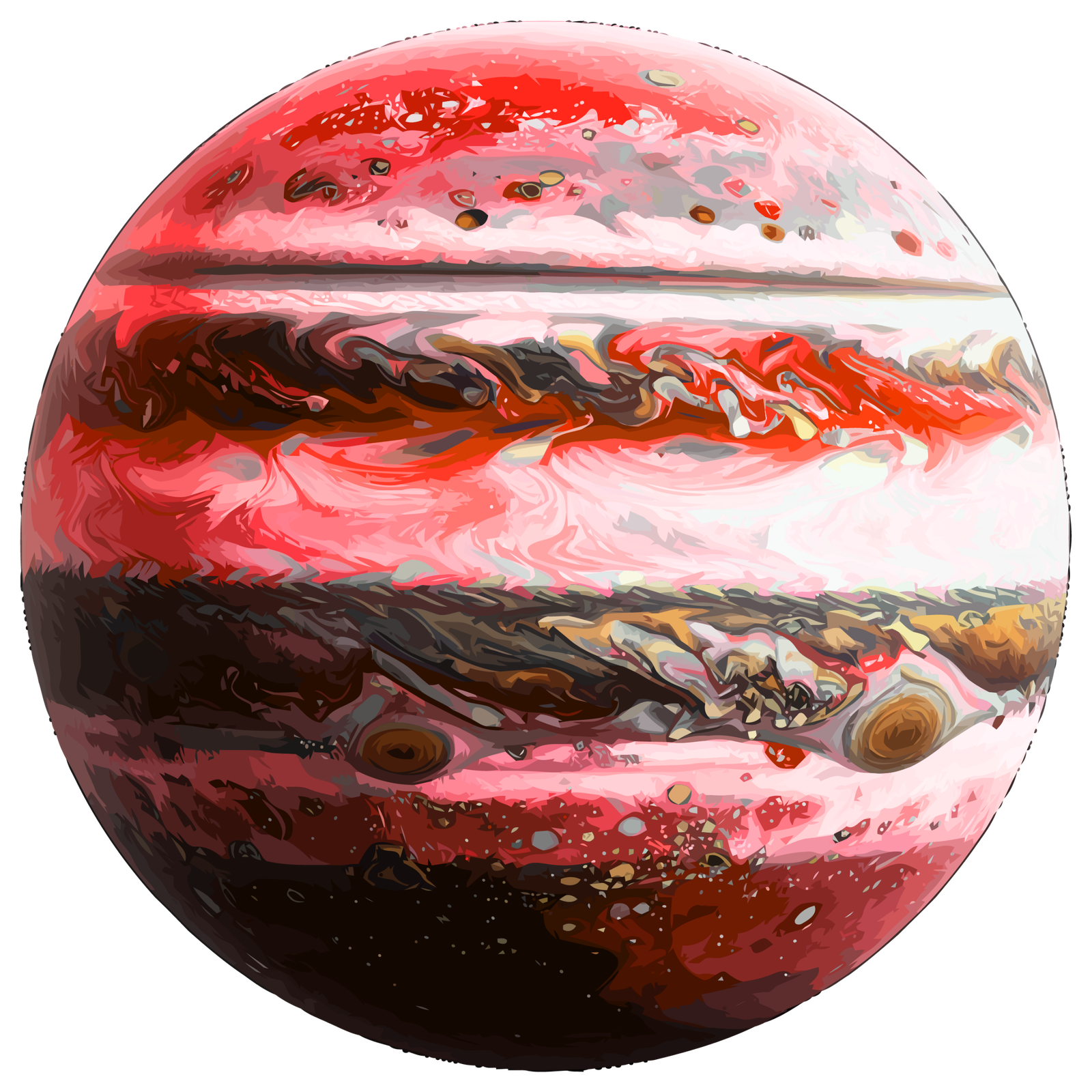

Everything that exists, every galaxy, star, planet, and atom in your own body, traces back to a single, almost unimaginable moment roughly 13.8 billion years ago. Scientists call it the Big Bang, and despite the name, it wasn’t an explosion in space, it was the beginning of space itself.
Not an Explosion, an Expansion
The Big Bang describes the moment the universe began expanding from an extremely hot, dense state. It didn’t happen at one point inside an already-existing empty space, space itself came into being and started stretching outward everywhere at once. In the first fraction of a second, the universe underwent a period called inflation, expanding by a factor of more than a trillion trillion in less than a trillionth of a trillionth of a second.
As that expansion continued over the following minutes, hours, and years, the universe cooled enough for protons and neutrons to form, then simple atoms like hydrogen and helium. It would take hundreds of millions of years more before gravity pulled that material together into the first stars and galaxies.
The Glow That Proves It Happened
The strongest evidence for the Big Bang isn’t theoretical, its something astronomers can actually observe, the cosmic microwave background, or CMB. About 375,000 years after the universe began, it had cooled enough for light to finally travel freely instead of being scattered by a hot, dense fog of charged particles. That ancient light is still detectable today, stretched by billions of years of cosmic expansion into faint microwave radiation that fills the entire sky.
Physicists Arno Penzias and Robert Wilson accidentally discovered this radiation in 1965 while troubleshooting a radio antenna, initially mistaking it for interference, possibly from pigeon droppings on their equipment. It turned out to be the leftover afterglow of the Big Bang itself, and the discovery earned them the Nobel Prize.
Reading the Universe’s Baby Picture
NASA’s WMAP mission spent nearly a decade mapping the CMB in extraordinary detail, and the results essentially locked down the numbers cosmologists had been debating for decades. The universe turned out to be 13.77 billion years old, accurate to within half a percent. Ordinary atoms, the stuff that makes up stars, planets, and people, account for only about 5 percent of everything that exists, with dark matter making up roughly 25 percent and mysterious dark energy responsible for the remaining 70 percent.
If you want to dig deeper into that dark matter figure specifically, our full explainer on what dark matter actually is covers the gravitational evidence behind that invisible 25 percent.
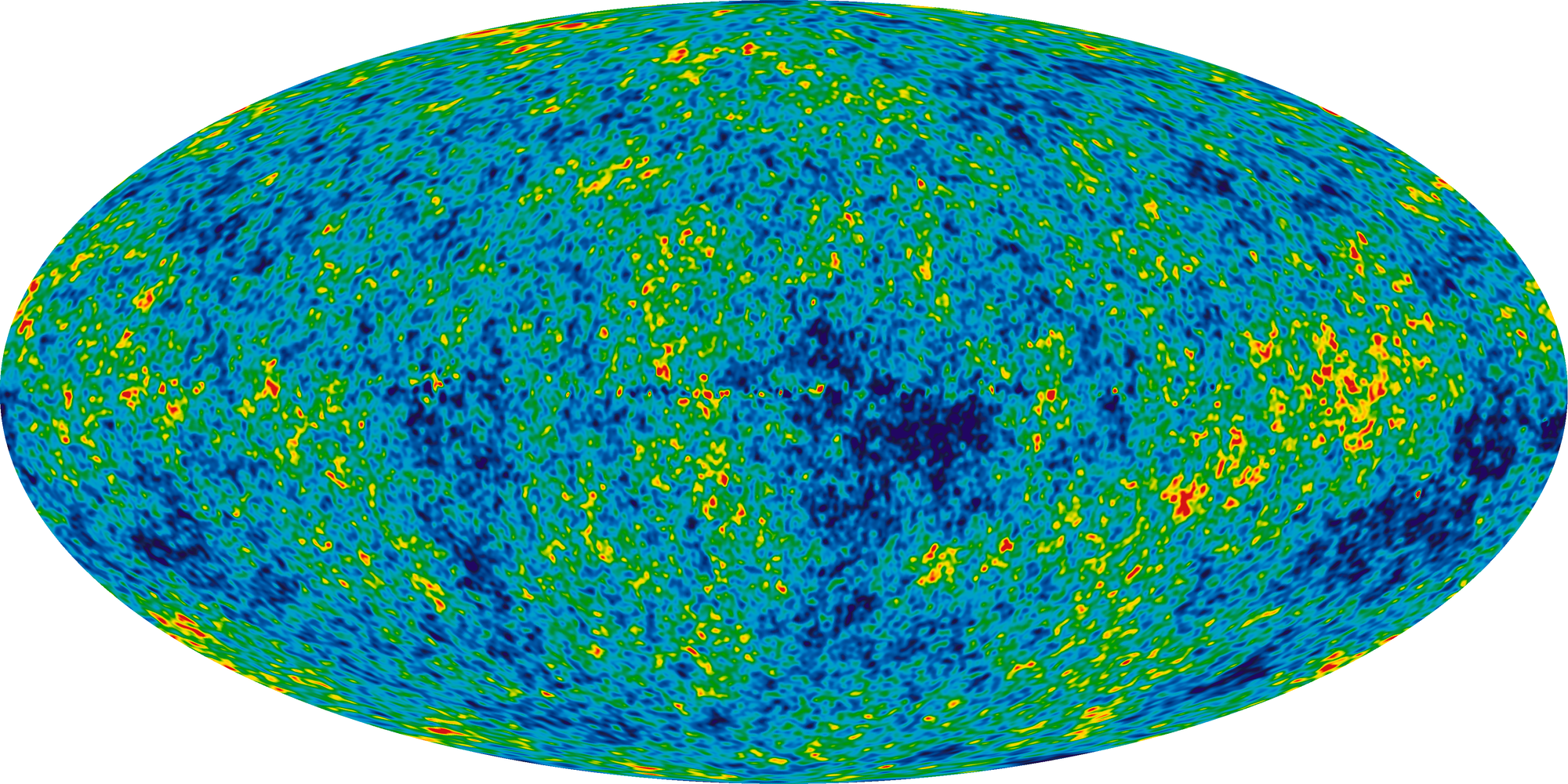 A full-sky map of the cosmic microwave background, the oldest light in the universe, captured by NASA’s WMAP mission. The tiny temperature variations shown here, released about 375,000 years after the Big Bang, mark the seeds that eventually grew into galaxies. (Image: NASA/WMAP Science Team)
A Beginning We Can Still See
What makes the Big Bang genuinely remarkable isn’t just that scientists believe it happened, its that the evidence is still arriving at Earth every single day, in the form of ancient light that’s been traveling since almost the dawn of time itself. Every observation of a distant galaxy is, in a very real sense, a glimpse further back toward that original moment.
For more on the CMB and what it reveals about the universe’s earliest moments, check out the overview from Space.com and NASA’s detailed mission summary at WMAP Overview.
If you enjoyed this article, don’t forget to drop us a comment, it really helps support the site, and be sure to check out our other articles because we think you’re going to love them too.