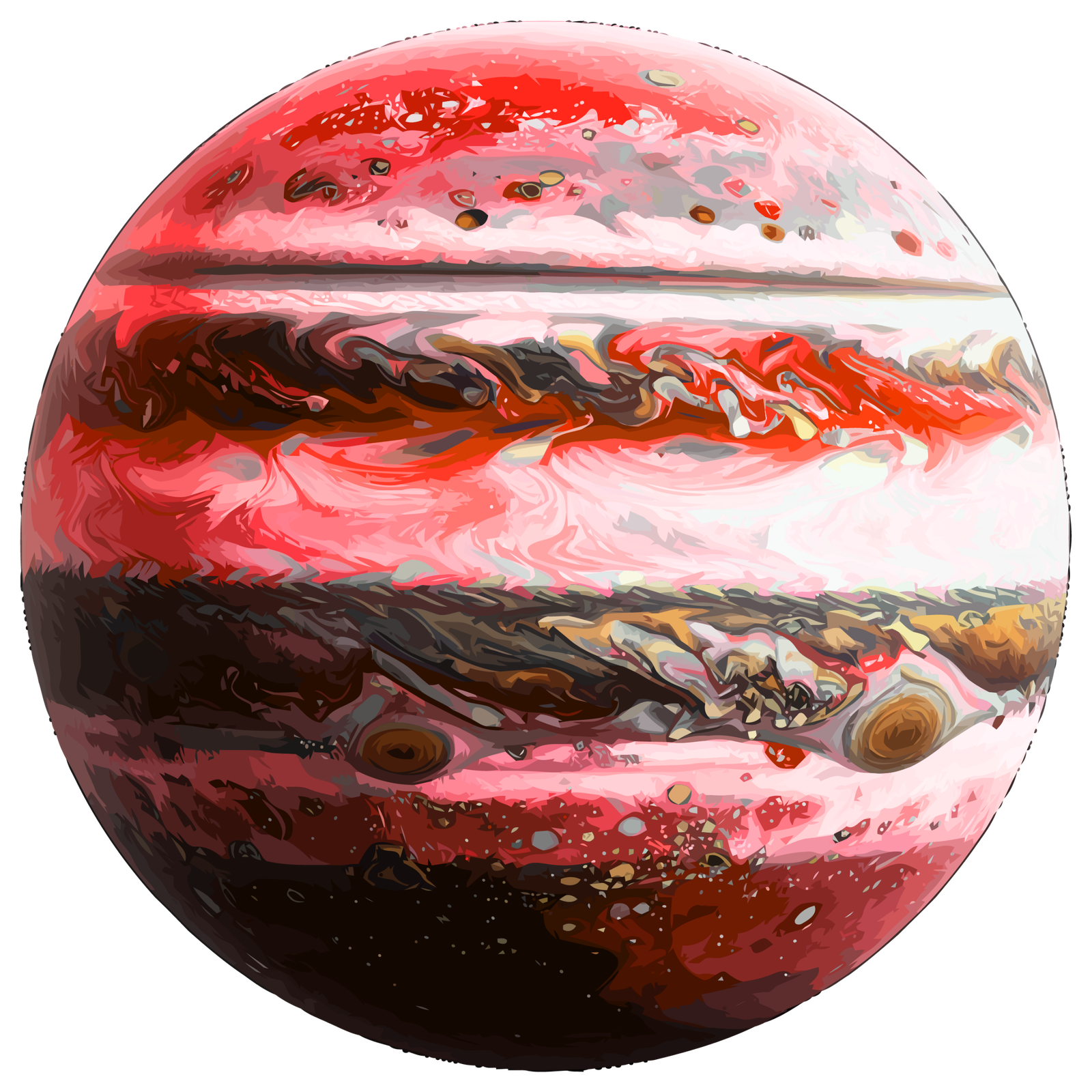

For most of human history, the only planets anyone knew about were the ones sitting right here in our own solar system. That changed permanently in 1995, when astronomers confirmed the very first planet ever found orbiting a distant, Sun-like star. Since then, the count has exploded, as of 2026, astronomers have confirmed over 6,000 exoplanets, with thousands more candidates waiting to be verified. So what is an exoplanet exactly, and how do scientists manage to find a planet orbiting a star trillions of miles away, one they usually can’t even directly see?
The Basic Definition
An exoplanet, short for “extrasolar planet,” is simply any planet that orbits a star other than our own Sun. That’s the whole definition, really, no exotic requirements beyond that. Exoplanets come in every shape and size imaginable, scorching hot gas giants orbiting closer to their star than Mercury does to the Sun, icy worlds drifting through permanent darkness, and everything in between, including a growing number of rocky, Earth sized planets that have astronomers genuinely excited.
Humans had speculated about the existence of other worlds going all the way back to ancient Greek philosophers, but actually confirming one required technology that simply didn’t exist until the final years of the 20th century. The breakthrough came with the discovery of 51 Pegasi b, a giant planet roughly half the mass of Jupiter, found orbiting an ordinary Sun-like star in an astonishingly tight four day orbit, far closer to its star than anything astronomers expected to find at the time.
The Problem With Actually Seeing a Planet
Heres the core challenge behind exoplanet science, with only a handful of rare exceptions, astronomers can’t actually see exoplanets directly. Stars are so overwhelmingly bright compared to any planet orbiting them that even the most powerful telescopes usually can’t pick a planet out from the glare of its host star, the same basic problem as trying to spot a firefly hovering directly next to a lighthouse. Instead, astronomers have had to become detectives, searching for subtle, indirect clues that reveal a planet’s presence without ever actually laying eyes on it.
The Wobble Method: Radial Velocity
The technique responsible for the very first exoplanet discovery is called the radial velocity method, sometimes nicknamed the “wobble method.” Here’s the idea, a star doesn’t just sit perfectly still while a planet orbits it, the planet’s gravity tugs back on the star too, causing it to wobble slightly around their shared center of mass. As the star wobbles toward and away from Earth, the light it emits shifts slightly, appearing a touch bluer as the star moves toward us, and a touch redder as it moves away, an effect called the Doppler shift, the same basic phenomenon responsible for the change in pitch you hear as an ambulance siren passes by.
By carefully tracking these tiny shifts in a star’s light over time, astronomers can calculate how fast a star is wobbling, and from that, work out the mass and orbital period of whatever invisible planet is causing it. The catch is that this method requires watching a single star patiently for a long stretch of time, sometimes years or even decades, especially for planets with longer orbits, making it a genuinely slow, painstaking process.
The Wink Method: Transit Photometry
In recent years, a different technique has taken over as the most productive method for finding new exoplanets, the transit method. Instead of watching for a star to wobble, astronomers watch for it to wink, monitoring the brightness of thousands of stars simultaneously and looking for a tiny, repeating dip in light that occurs whenever a planet passes directly between its star and Earth, briefly blocking a small fraction of the star’s light.
This only works if a planet’s orbit happens to be aligned just right from our viewing angle, but with enough stars being monitored at once, that alignment turns out to happen often enough to be genuinely productive. Missions like NASA’s Kepler Space Telescope and its successor, TESS, the Transiting Exoplanet Survey Satellite, were purpose built specifically for this kind of large scale search, staring at hundreds of thousands of stars at a time. Today, transit photometry alone accounts for roughly 71 percent of all confirmed exoplanet discoveries, making it by far the most successful detection method developed so far.
Transits offer a nice bonus too, when a planet passes in front of its star, some starlight actually filters directly through the planet’s atmosphere on its way to Earth, and by carefully analyzing that filtered light, astronomers can start piecing together what chemicals and gases make up a distant planet’s atmosphere, without ever having to travel there themselves.
Rarer Methods: Microlensing and Direct Imaging
A couple of other, less common techniques round out the exoplanet hunting toolkit. Gravitational microlensing takes advantage of a strange effect predicted by Einstein’s general relativity, when a star with an orbiting planet passes directly in front of a much more distant background star from our vantage point, its combined gravity briefly acts like a lens, magnifying and distorting the light from that background star in a very specific, measurable way. This method is particularly good at finding planets sitting extremely far from Earth, sometimes thousands of light-years away.
Direct imaging, meanwhile, is exactly what it sounds like, actually photographing an exoplanet, though its by far the rarest and most difficult method to pull off, generally only possible for large, young, still warm planets orbiting relatively far from their host star, where the glare problem is less overwhelming. The handful of directly imaged planetary systems, like the four planets orbiting the star HR 8799, remain some of the most striking images in modern exoplanet science.
The Search for Habitable Worlds
Beyond simply cataloging distant planets, one of the biggest driving goals behind exoplanet research is finding worlds that could potentially support life. Scientists focus heavily on a planet’s location relative to its star’s habitable zone, the specific distance range where temperatures would allow liquid water to exist on a planet’s surface, not so close that everything boils away, not so far that everything freezes solid.
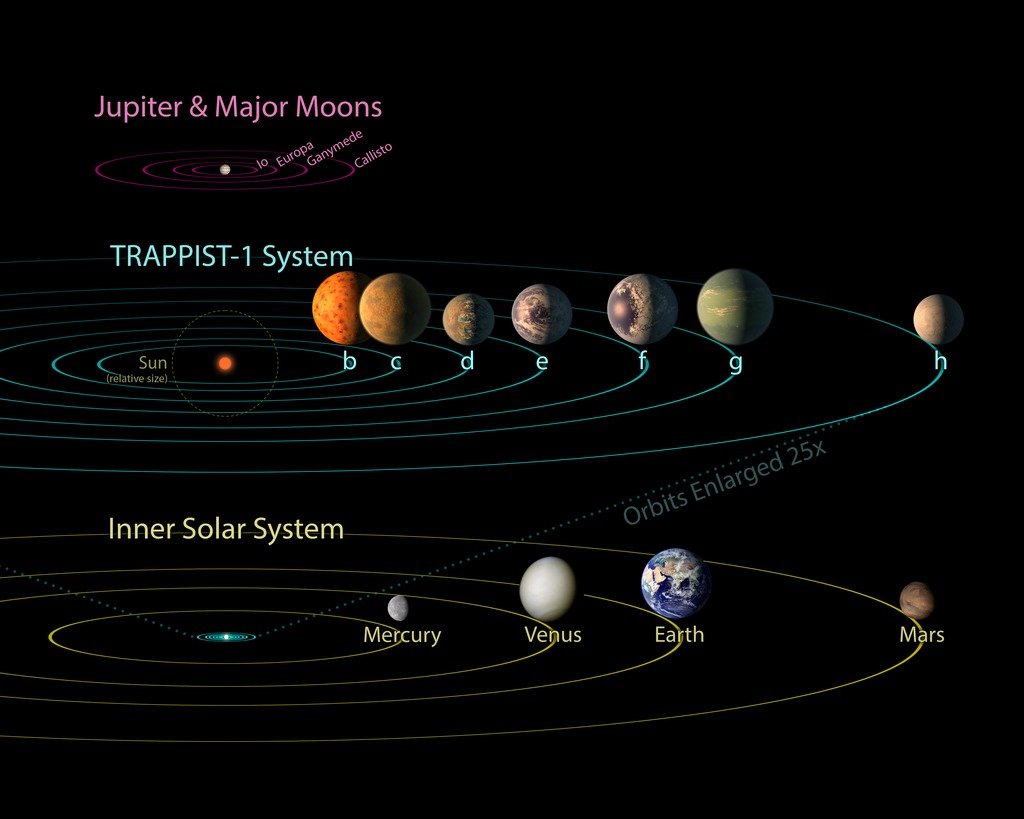
Some of the most exciting candidates found so far sit remarkably close to home in cosmic terms. Proxima b, orbiting the nearest star to our own Sun, sits right within its star’s habitable zone, and the TRAPPIST-1 system, a small, cool red dwarf star, hosts an unusually compact family of seven roughly Earth sized planets, several of which fall within a potentially habitable range. If you’re curious about other nearby stellar neighbors hosting planets of their own, our full rundown on the closest star systems to Earth covers several of these systems in more depth, including recent exoplanet discoveries around Barnard’s Star and Alpha Centauri.
A Field Still Expanding Fast
Exoplanet science is still a remarkably young field, barely three decades old, and new discoveries continue rolling in at a rapid pace, with fresh detections announced on an almost weekly basis as survey missions keep scanning the sky. Each new find adds another small piece to one of the biggest questions humanity has ever asked, just how common are planets like our own, and are any of them actually home to something else looking back.
For more detailed data on detection methods and the latest confirmed discoveries, check out the breakdown from the European Space Agency and the additional overview from The Planetary Society.
If you enjoyed this article, don’t forget to drop us a comment, it really helps support the site, and be sure to check out our other articles because we think you’re going to love them too.