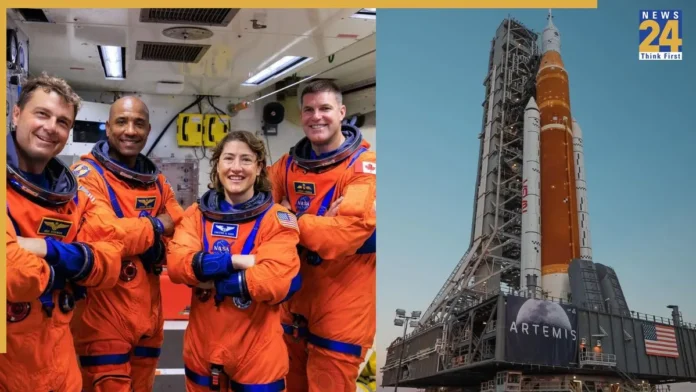

For the first time in over fifty years, human beings left low Earth orbit and traveled out toward the Moon. Artemis 2 launched on April 1, 2026, carrying four astronauts on a ten day journey that NASA had been planning and refining for years, and the path they actually flew, known as the Artemis 2 trajectory, is a genuinely elegant piece of orbital mechanics worth understanding in detail.
Meet the Crew
Before diving into the flight path itself, its worth knowing who was actually on board. Artemis 2 carried NASA astronauts Reid Wiseman as commander, Victor Glover as pilot, and Christina Koch as mission specialist, along with Canadian Space Agency astronaut Jeremy Hansen. The mission made history beyond just the flight path alone, Glover became the first person of color to travel beyond low Earth orbit, Koch became the first woman to do so, and Hansen became the first non-U.S. citizen ever to fly that far from home.
Liftoff and the Climb to Orbit
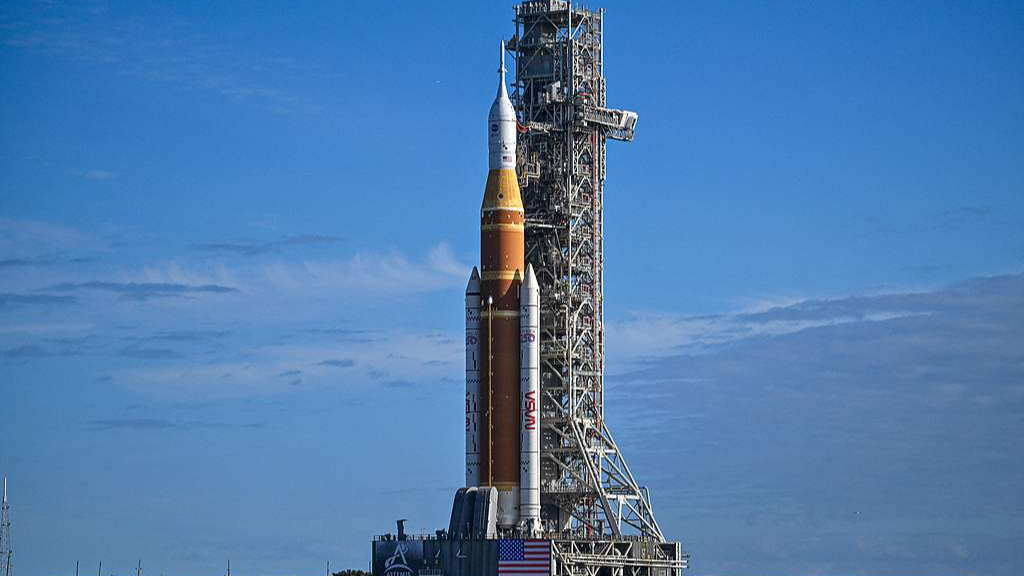
Artemis 2 lifted off from Launch Complex 39B at NASA’s Kennedy Space Center in Florida, riding NASA’s powerful SLS, or Space Launch System, rocket. Once in space, the Orion capsule, named Integrity, didn’t head straight for the Moon. Instead, it settled into an elliptical orbit around Earth, circling our planet twice while flight controllers ran through a full checklist of systems tests, confirming everything from life support to navigation was working exactly as expected before committing to the much longer journey ahead.
The Translunar Injection Burn
The real turning point of the entire Artemis 2 trajectory came with what’s called the translunar injection burn, or TLI for short. This burn, which took place on April 2, 2026, essentially works like hitting the gas pedal at exactly the right moment, propelling Orion out of its Earth orbit and setting it on a precise path toward the Moon. The burn itself took about five minutes, and once it was complete, there was largely no turning back, the spacecraft was committed to its lunar flyby.
What Makes It a “Free Return” Trajectory
Here’s the part that makes the Artemis 2 trajectory such a clever piece of engineering, its designed as a free return trajectory, meaning the spacecraft’s path around the Moon and back to Earth is shaped almost entirely by gravity rather than constant engine burns. Once Orion swung around the far side of the Moon, lunar gravity naturally bent its path and set it back on a course toward Earth, without needing major additional propulsion to make the return trip happen.
This same basic type of trajectory famously saved the crew of Apollo 13 back in 1970, after an onboard explosion forced them to abandon their planned Moon landing. Astronaut Jeremy Hansen actually referenced that legacy during the mission, and it’s part of why NASA engineers trust this approach so heavily, its reliable, fuel efficient, and gives a crew a built in path home even if something goes wrong along the way.
Behind the Moon, and Out of Contact
As Orion swept around the far side of the Moon on April 6, 2026, coming within about 4,067 miles of the lunar surface, the crew experienced something no human had felt in over fifty years, roughly 40 minutes completely cut off from communication with Mission Control, as the Moon itself physically blocked any radio signal between Earth and the spacecraft. It’s one of the more dramatic moments built into any lunar mission, a genuine, unavoidable stretch of total isolation before contact resumes on the other side.
During that same flyby, Orion also set a new distance record for a spacecraft designed to carry humans, traveling roughly 252,756 miles from Earth, surpassing the previous record set by Apollo 13. Mission specialist Jeremy Hansen proposed that a lunar crater be named to mark the achievement, framing it as a challenge for future missions to eventually push that record even further.
If exploring how the Moon’s own size and formation history ties into missions like this interests you, our piece on the diameter of our moon breaks down exactly what makes our closest neighbor such a compelling destination for continued exploration.
The Trip Home
Once Orion completed its swing around the Moon, the free return trajectory did exactly what it was designed to do, gently guiding the spacecraft back toward Earth using gravity alone. A relatively small return trajectory correction burn, lasting just 15 seconds, took place on April 7 to fine tune the capsule’s path for reentry.
Orion splashed down in the Pacific Ocean near San Diego on April 10, 2026, completing a mission that spanned a little more than nine days from launch to splashdown. Reentry into Earth’s atmosphere happened at blistering speeds, with the capsule traveling at roughly 25,000 miles per hour before its heat shield and parachute systems brought the crew safely home.
Why the Artemis 2 Trajectory Matters for What Comes Next
Artemis 2 wasn’t designed to land on the Moon, it was a flight test, built specifically to prove out Orion’s life support systems, navigation, and deep space performance with an actual crew on board, all before NASA commits to Artemis 3, the mission planned to finally put astronauts back on the lunar surface for the first time since Apollo 17 in 1972. Every part of the trajectory, the Earth orbits, the translunar injection burn, the free return path around the Moon, was chosen specifically to validate systems under conditions as close to a real landing mission as possible, without the added risk of an actual descent to the surface.
With Artemis 2 now successfully complete, NASA’s attention turns fully toward Artemis 3, currently targeted for as early as 2028, which will attempt to land astronauts near the Moon’s south pole, a region of major scientific interest thanks to suspected deposits of water ice that could support future long term lunar exploration.
If you’re curious about even more ambitious visions for humanity’s future in space beyond just the Moon, our deep dive into O’Neill colonies explores one of the boldest proposals ever put forward for permanent human settlement beyond Earth.
A Historic Flight Path, Successfully Flown
The Artemis 2 trajectory represents more than just clever orbital mechanics, it represents the first time in half a century that human beings have actually traveled beyond low Earth orbit and returned safely. From the translunar injection burn to the tense 40 minutes of radio silence behind the Moon, to a record breaking distance from home, every phase of this mission builds directly toward NASA’s broader goal of returning astronauts to the lunar surface, and eventually, much farther beyond it.
For more detailed trajectory visualizations and mission data, check out the official breakdown from NASA and the full mission recap from Scientific American.
If you enjoyed this article, don’t forget to drop us a comment, it really helps support the site, and be sure to check out our other articles because we think you’re going to love them too.