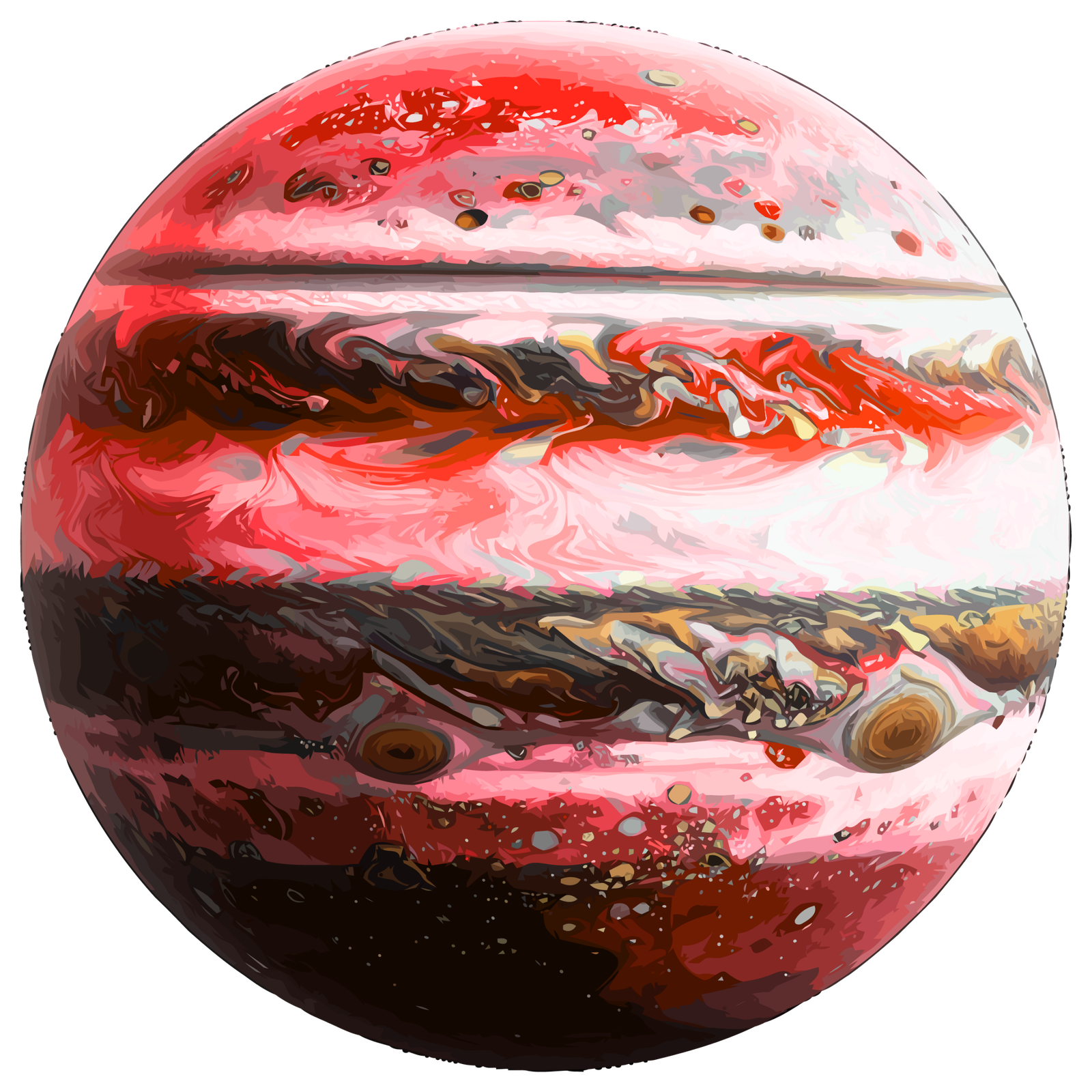

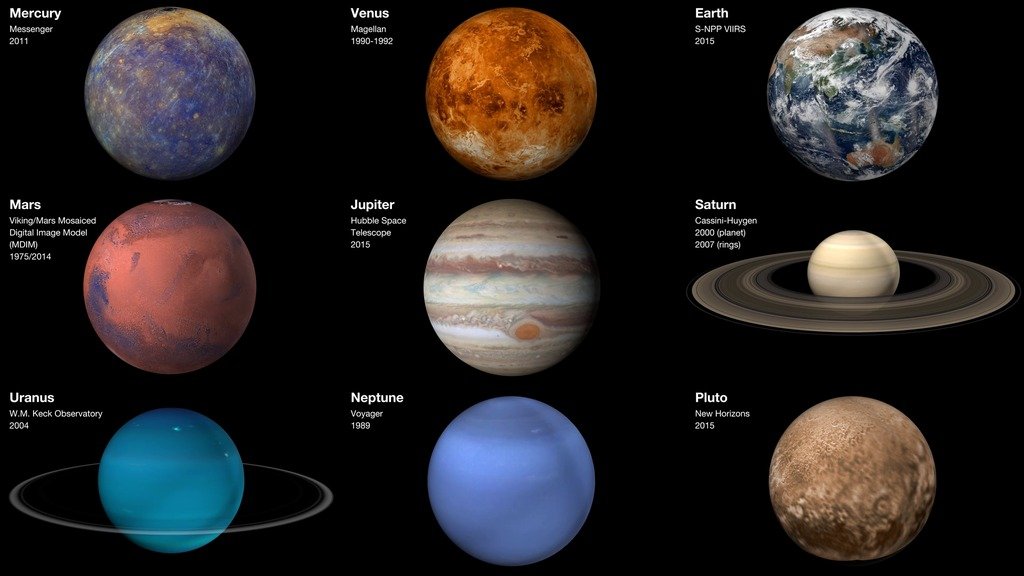
Flip through any old astronomy textbook and you’ll usually find the planets lined up in a neat row of bold, saturated colors, angry red Mars, deep blue Neptune, a swirling orange and cream Jupiter. Its a great visual, but its also not always the full picture. The real color planet Venus and its seven planetary neighbors actually show off is a little more nuanced than those textbook illustrations suggest, and the reasons behind each color turn out to be some of the more interesting chemistry lessons in the entire solar system.
Mercury: Slate Gray and Battered
Starting closest to the Sun, Mercury is a dull, slate gray world, not too different in appearance from our own Moon. Its surface is covered in a thick layer of dust and silicate rock, and with virtually no atmosphere to speak of, whatever color you see on Mercury’s surface is exactly what you’d get standing on it yourself. That grayish tone comes largely from the mix of minerals and the effects of billions of years spent getting pummeled by micrometeorites and solar radiation with no atmosphere around to protect it.
The Color Planet Venus Actually Shows Us
Venus tends to get a bit of a reputation makeover in popular images, often shown as a bright, almost cartoonish yellow orange ball. The real color planet Venus displays is actually much more subdued. Through an optical telescope, Venus appears as a pearly white world with just a faint hint of yellow mixed in, not the harsh, saturated yellow you’ll often see in processed photos online.
That subtle yellowish tint comes down to chemistry. Venus is wrapped in an incredibly thick atmosphere made mostly of carbon dioxide, topped with dense clouds of sulfuric acid. Those clouds are extremely reflective, bouncing back most of the sunlight that hits them, which is why Venus appears so bright overall. Scientists believe an unidentified compound in the upper atmosphere, sometimes referred to as the “unknown UV absorber,” is responsible for that faint yellow coloring, though the exact chemical behind it is still debated.
Its worth noting that some of the most famous, richly colored images of Venus you’ve probably seen, especially ones showing its surface in deep orange and brown tones, aren’t true color photos at all. Since Venus’s actual surface is completely hidden beneath its clouds, scientists rely on radar mapping missions like NASA’s Magellan probe to see through the haze, and those radar images get artificially colorized afterward to highlight geological features, not to represent what the human eye would actually see.
Earth: The Blue Marble
Our own planet earns its famous “Blue Marble” nickname for a good reason. Earth’s atmosphere scatters blue light more strongly than other colors, a phenomenon called Rayleigh scattering, which is the same effect responsible for making our sky look blue on a clear day. Seen from space, that scattering effect combined with our oceans covering roughly 70 percent of the surface gives Earth its unmistakable, vivid blue appearance, dotted with white swirling clouds and patches of green and brown landmass.
Mars: Earning the Red Planet Nickname
Mars doesn’t leave much room for debate, its red, and it earns that nickname honestly. The Martian surface is rich in iron oxide, essentially the same compound responsible for rust here on Earth. With only a thin atmosphere and no significant weather to hide the ground, that reddish, rust colored soil is exactly what you see whether you’re looking through a backyard telescope or a high resolution orbiter photo. Occasional planet-wide dust storms can temporarily shift Mars’s appearance to a hazier, more washed out tone, but the red generally returns once the storm clears.
If you’re curious how Mars compares to Earth in terms of surface gravity given its different composition, our weight on planets calculator lets you see exactly how much lighter you’d feel standing on the Red Planet.
Jupiter and Saturn: Beige, Cream, and Storm Bands
Once you move past the rocky inner planets, things get more complicated, since gas giants like Jupiter and Saturn don’t have a true solid surface at all, just endlessly swirling layers of gas. Jupiter typically shows off a mix of beige and cream tones, streaked with reddish brown belts caused by different chemical compounds and temperature bands churning through its atmosphere. Its famous Great Red Spot, an enormous storm that’s been raging for centuries, stands out as a deeper brick red against the paler background bands.
Saturn carries a similar color palette, generally a soft, pale gold or butterscotch tone, with much fainter and less dramatic banding compared to Jupiter. Both planets’ vivid, richly saturated colors that show up in a lot of popular photography are often enhanced using specific imaging filters designed to bring out atmospheric detail, so the true color version tends to look considerably softer and more muted than what you’ll typically find circulating online.
Uranus and Neptune: The Blue Twins
Way out at the edge of the solar system, Uranus and Neptune both show off a distinct blue hue, though for a very different reason than Earth’s blue oceans and scattered sunlight. Both ice giants contain methane gas in their upper atmospheres, and methane happens to absorb red light while reflecting blue light back out, giving both planets their signature cool toned appearance.
Interestingly, the two aren’t identical. Neptune typically appears as a richer, more vivid blue, while Uranus tends to look paler and more washed out, almost blue green in some photos. Scientists believe subtle differences in atmospheric composition and haze layers between the two planets account for that variation, even though they’re built from largely similar ingredients.
Why “True Color” Isn’t Always What You See Online
Its worth pointing out that a lot of the dramatic, vividly colored planetary photos circulating online, especially the ones that show up in space themed artwork or dramatic headlines, aren’t actually true color images. Spacecraft cameras often use specialized filters, including ultraviolet and infrared wavelengths invisible to human eyes, specifically to reveal atmospheric structure, geological features, or chemical composition that wouldn’t otherwise be visible. Once that data comes back, scientists frequently apply false color processing to make those hidden details easier to study and interpret.
None of that makes the images any less scientifically valuable, understanding a planet’s composition often depends on exactly those kinds of enhanced views. It just means the wildly colorful planet photos you scroll past online usually aren’t showing you what your own eyes would actually see if you happened to fly right past them yourself.
If comparing the planets in more detail interests you, our full rundown in Astronomy 101: A Beginner’s Guide to the Planets covers the size, orbit, and characteristics of each one beyond just their color.
A Solar System Full of Personality
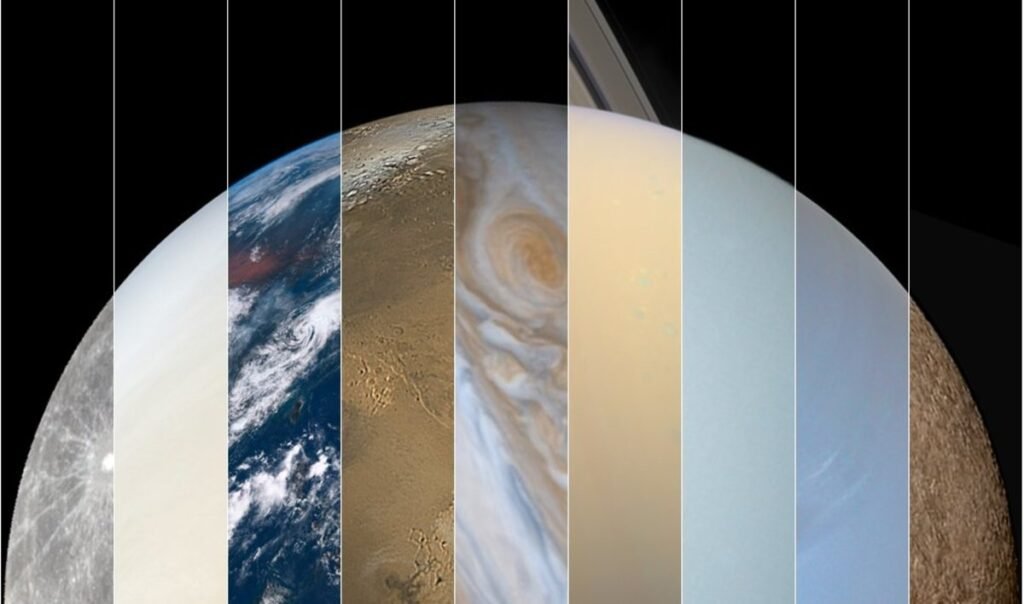
From Mercury’s battered gray surface to Neptune’s deep cobalt blue, each planet’s color tells its own small chemistry lesson, iron oxide, sulfuric acid clouds, scattered sunlight, or methane absorption, all playing out on wildly different worlds scattered across the same solar system. And the color planet Venus wears, that soft, pearly white with just a whisper of yellow, might not be as flashy as the internet’s favorite orange hued version, but it’s a genuinely fascinating reminder that even our closest planetary neighbors still have details worth getting right.
For more on the true colors of the planets and the science behind them, check out the detailed breakdown from The Planetary Society and the overview from Astronomy.com.
If you enjoyed this article, don’t forget to drop us a comment, it really helps support the site, and be sure to check out our other articles because we think you’re going to love them too.