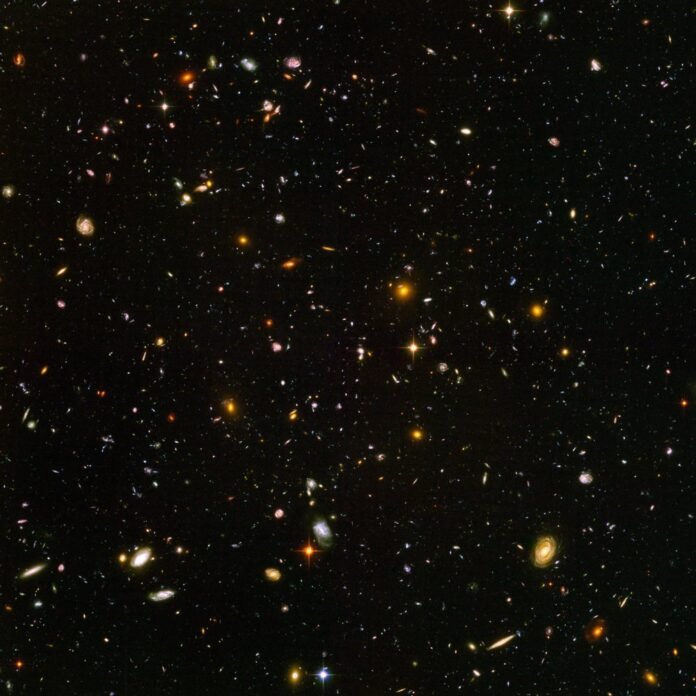

Try, just for a second, to actually picture the size of the universe. Most of us give up almost instantly, because honestly, our brains just aren’t built to process numbers this large. We can wrap our heads around a road trip across the country, maybe even the distance to the Moon if we squint hard enough. But the universe operates on a scale so far beyond that, it practically breaks the part of your brain thats used to thinking in miles. So lets actually try to understand how space is big, one mind bending comparison at a time.
Starting Close to Home
Before jumping to the universe as a whole, it helps to build up gradually. Light from the Sun takes about 8 minutes to reach Earth. Light from Neptune, the farthest official planet in our solar system, takes around 4 hours to reach us going the other direction. Already, thats a number most people can barely picture, and were still just talking about our own tiny solar system.
Step outside that bubble, and the next benchmark is Proxima Centauri, the closest star to our Sun. Its light takes about 4.24 years to reach Earth. So when astronomers say something is “light-years” away, thats the actual measuring stick they’re using, the distance light itself travels in a single year, which comes out to about 5.88 trillion miles.
Our Galaxy Alone Is Almost Incomprehensible
Zoom out from individual stars, and you land inside the Milky Way, our home galaxy. Its estimated to be somewhere around 100,000 light-years across, containing anywhere from 100 billion to 400 billion stars, depending on which estimate you go with. Our own solar system sits roughly 26,000 light-years from the galactic center, tucked into one of the Milky Way’s spiral arms.
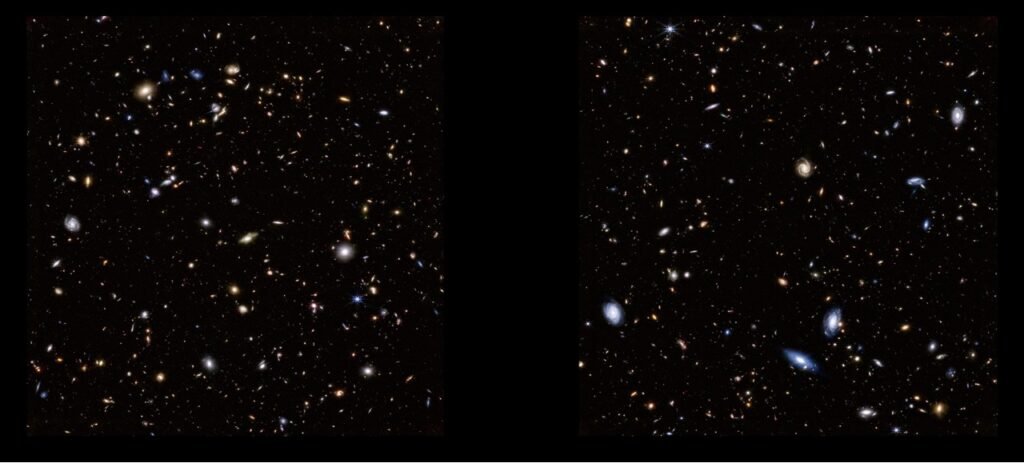
And the Milky Way is just one galaxy. Astronomers estimate there could be somewhere between 200 billion and 2 trillion galaxies in the observable universe alone, each one containing its own staggering count of stars, planets, and who knows what else. If you’re curious just how long light actually takes to cross these kinds of distances, our light travel time calculator is a solid tool for putting some of these numbers into perspective.
So How Space Is Big, Exactly?
Heres where things get genuinely strange. Scientists estimate the observable universe, meaning the portion we can actually detect and study, spans about 93 billion light-years across. At first glance, that number seems flat out impossible. The universe itself is only about 13.8 billion years old, so how could anything be 93 billion light-years wide if light hasn’t even had enough time to travel that far?
The answer comes down to one of the strangest facts in all of cosmology, space itself has been expanding this entire time, and its still expanding right now. When astronomers calculate that 93 billion light-year figure, theyre not measuring how far light has traveled, theyre measuring how far away those ancient light sources actually are today, after accounting for billions of years of the universe stretching outward in every direction. The light left those distant galaxies a long time ago, but the space between us and them kept growing the entire time it was in transit.
Its a genuinely mind bending idea, but it doesn’t break any laws of physics. Einstein’s theory of relativity says nothing can travel through space faster than light, but it never said space itself couldn’t expand faster than that. And it can, and does.
What’s Beyond the Part We Can See?
Heres the part that tends to blow people’s minds even further, that 93 billion light-year figure isn’t actually the size of the entire universe, its just the size of the observable universe, the portion where light has had enough time to reach us since the Big Bang. Beyond that boundary, known as the cosmic horizon, there could be vastly more universe stretching out, we just have no way to detect it, since no light from those regions has ever reached us and possibly never will.
Some cosmologists believe the universe could be many times larger than what we can observe, while others have proposed it might be infinite altogether. Honestly, nobody knows for certain, and that uncertainty is part of what makes this such an active area of ongoing research.
Putting the Scale Into Something Relatable
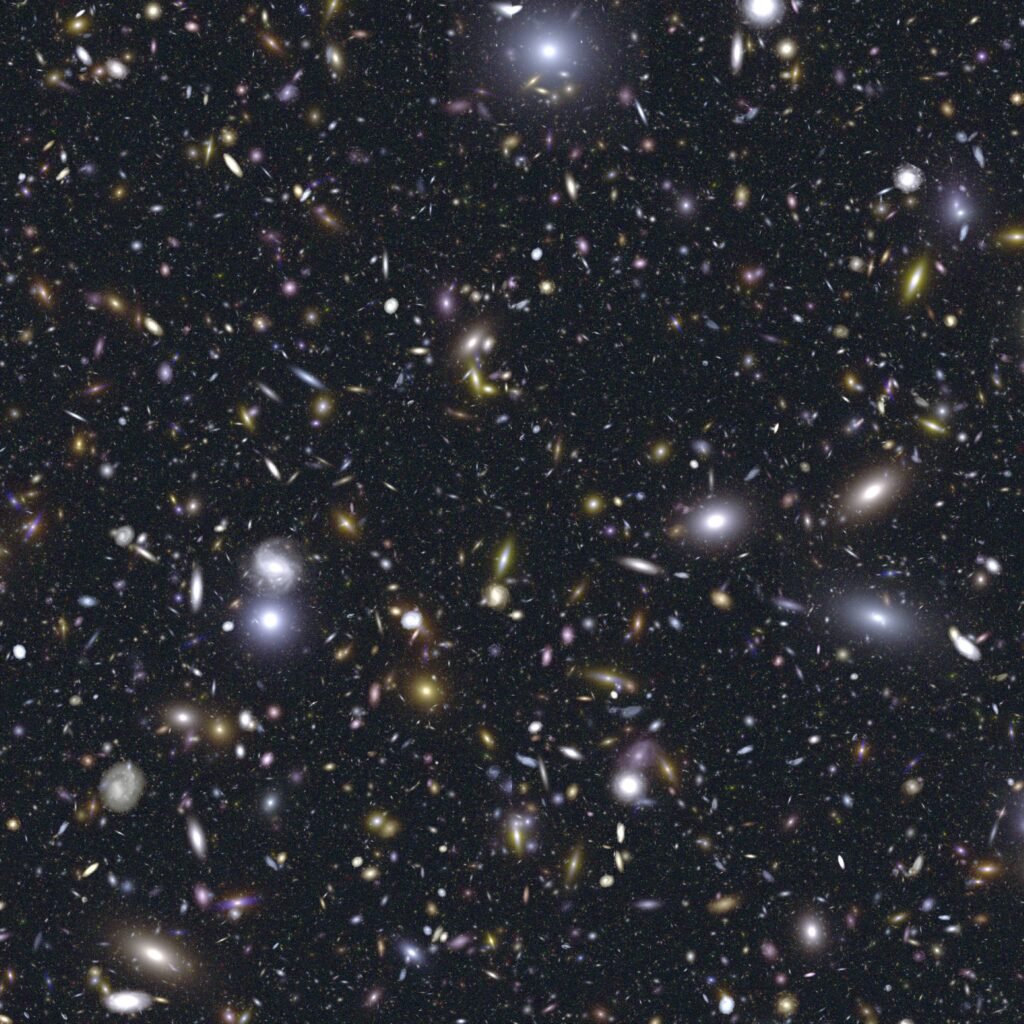
Numbers this large tend to lose all meaning pretty quickly, so astronomers and educators often lean on comparisons to make things click. If you shrunk the entire Milky Way down to the size of a dinner plate, our solar system would be smaller than a single grain of salt sitting somewhere on that plate. Stretch that same scale out to the observable universe, and the Milky Way itself would barely register as a speck of dust.
Another way to think about it, every single star you can see in the night sky with your naked eye belongs to our own Milky Way. Every one of them. The billions of other galaxies out there are so far away that, apart from a small handful of exceptions like the Andromeda Galaxy, they’re completely invisible without a telescope, despite each containing hundreds of billions of stars of their own.
If tracing constellations and getting familiar with what you can actually see from your own backyard sounds appealing, our guide on what you can see in the night sky without a telescope tonight is a great place to start before working your way up to deeper targets.
Why This Matters Beyond Just Feeling Small
Understanding how space is big isn’t just a fun party trick, it genuinely reshapes how you think about everything else in astronomy. Every discovery about a distant galaxy, every image captured by a telescope like Hubble or James Webb, is really a snapshot of the deep past, since the light in that photo has been traveling toward us for millions or even billions of years before ever reaching a camera lens. In a very real sense, studying the far reaches of the universe is the closest thing scientists have to actual time travel.
Its humbling, honestly, to think about just how small our entire planet, solar system, and even our galaxy really are on the scale of everything thats out there. But theres something oddly comforting in it too, the fact that we’ve figured out even a fraction of how vast the universe actually is says a lot about how far human curiosity has managed to reach.
For more on the science behind the universe’s scale and expansion, check out the detailed breakdown from Astronomy.com and the explainer from Discover Magazine.
If you enjoyed this article, don’t forget to drop us a comment, it really helps support the site, and be sure to check out our other articles because we think you’re going to love them too.