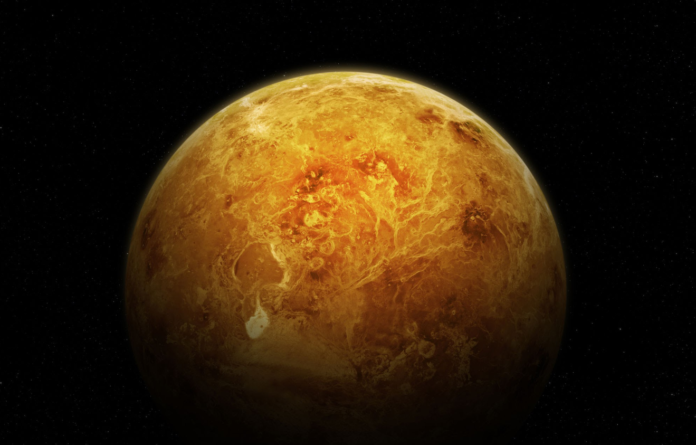

When most people guess which planet in our solar system is the absolute hottest, they almost always point to Mercury. It makes total sense on paper—Mercury is closest planet to the Sun, so shouldn’t it be baking the most?
Surprisingly though, that isn’t how planetary physics works out. Even though Mercury sits right next to the Sun, Venus steals the crown as the hottest planet in our solar system. In fact, Venus gets so scorching hot that its surface temperatures reach around 900 degrees Fahrenheit (475 degrees Celsius). Thats hot enough to melt solid lead in a matter of minutes.
So why is Venus hotter then Mercury? The answer comes down to one massive environmental disaster: a runaway greenhouse effect gone totally out of control.
A Super Thick Blanket of Carbon Dioxide
The primary reason Venus holds onto heat so aggressively is its atmosphere. While Mercury barely has any air at all to trap heat, Venus is wrapped in an incredibly dense layer of gas that is roughly 90 times heavier then Earth’s atmosphere. If you stood on the surface of Venus, the atmospheric pressure would crush you with the same force as being 3,000 feet underwater on Earth.
About 96 percent of this thick atmosphere consists of pure carbon dioxide. Carbon dioxide is a classic greenhouse gas. When sunlight passes through Venus’s heavy atmosphere, it hits the surface and heats up the ground. The ground then tries to radiate that heat back out into space as infrared light.
However, all that carbon dioxide acts like an inescapable thermal blanket. The heat gets trapped under the clouds, bouncing back down to the surface over and over again. Over millions of years, this created a permanent heat trap that just keeps building up with nowhere to go.
Sulfuric Acid Clouds and Insane Wind Speeds
To make matters worse, Venus doesn’t just have carbon dioxide—it also has thick yellow clouds made mostly of toxic sulfuric acid.
These dense cloud layers blanket the entire planet, reflecting a lot of sunlight back into space (which is why Venus looks so bright in our night sky), but also keeping every bit of warmth locked inside. Because the atmosphere is so heavy and thick, heat gets distributed almost evenly across the whole world.
On Mercury, the side facing away from the Sun drops to a freezing minus 290 degrees Fahrenheit because there’s no air to store heat. But on Venus, it doesn’t matter if its day or night, or weather you’re at the equator or the poles—it is almost the exact same scorching 900 degrees everywhere, all the time.
Could Earth Ever End Up Like Venus?
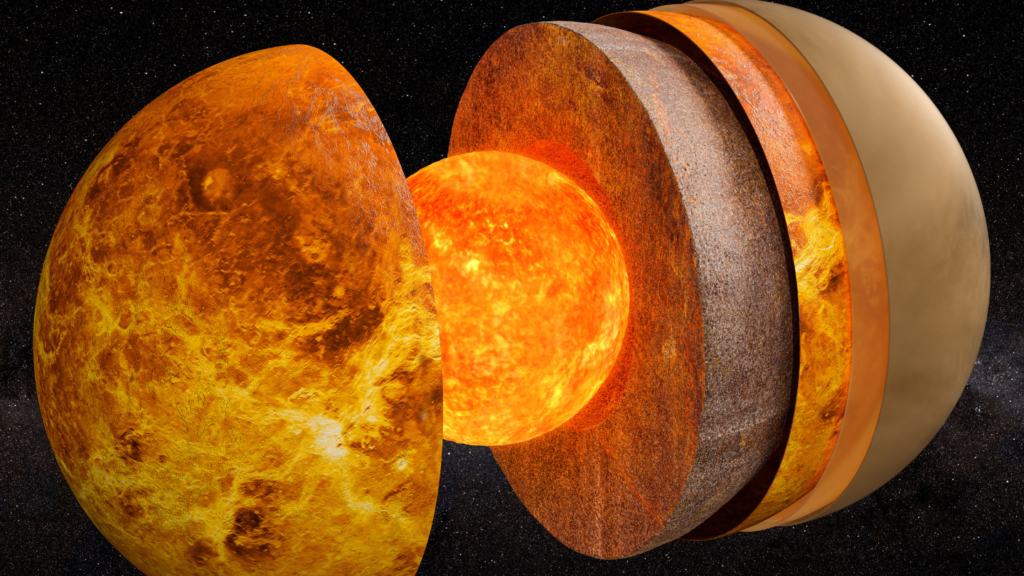
Scientists often refer to Venus as Earth’s “evil twin.” Both planets are nearly the same size, have similar mass, and are made of roughly the same rocky materials. Some climate models even suggest that billions of years ago, Venus might have had liquid water oceans and a much cooler surface climate.
Eventually, as the Sun grew hotter over time, Venus’s oceans evaporated. Without water to help absorb carbon from the atmosphere and lock it into rocks, all that carbon dioxide built up in the air untill the planet crossed a tipping point.
While Earth isn’t in danger of becoming Venus anytime soon, studying our neighbor gives scientists invaluable insights into how extreme greenhouse effects function and how planetary atmospheres evolve over time.
What Can You See in the Night Sky Without a Telescope Tonight