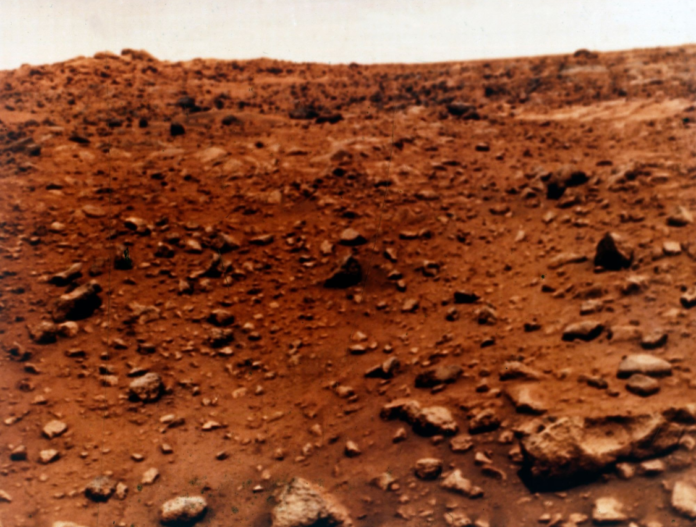

If you step outside on a clear night and look up at the right time, you might spot a bright reddish dot glowing in the night sky. That’s Mars, our celestial neighbor that’s fascinated humanity for thousands of years. Long before we had giant telescopes or NASA rover missions landing on its surface, ancient civilizations noticed its striking reddish tint. The Romans even named it after their god of war because the color reminded them of blood.
But what actually gives Mars that famous rusty, fiery look? The answer is a mix of chemistry, ancient geology, and a whole lot of dust.
The Short Answer: It’s Literally Rusted
To put it simply, Mars is red because its surface is covered in iron oxide. That’s the exact same compound you see on an old bicycle left out in the rain—rust.
The rocks and soil across the Martian surface are packed with iron. Over billions of years, that iron was exposed to tiny amounts of oxygen and atmospheric elements. Even though Mars has a super thin atmosphere today, back in the day it likely had liquid water and a much different air composition. When iron reacts with oxygen, it oxidizes and forms iron oxide, which absorbs blue and green wavelengths of light and reflects back red and orange hues to our eyes.
So when you look at a photo of Mars, you’re basically looking at a giant, planet-sized ball of rusty rock.
Why Is the Red Dust Everywhere?
It isn’t just the ground that’s rusted; it’s also the sky. Mars experiences massive dust storms—some of which can grow so huge they engulf the entire planet for weeks at a time.
Because Mars has weaker gravity than Earth (about one-third of ours), fine particles of iron-rich dust get kicked up into the air very easily. Once that red dust floats up into the atmosphere, it scatters sunlight in a way that gives the Martian sky a pinkish-red hue during the day.
If you were standing on Mars right now, the ground under your boots would look butterscotch or butter-yellow in some places, but from millions of miles away here on Earth, all that surface rust and floating atmospheric dust blend together into the iconic red planet we know.
Is Mars Actually Red All the Way Through?
Here’s a fun fact that surprises a lot of people: Mars is actually only red on the outside.
If you were to take a shovel to the surface or drill down just a few inches—which NASA’s Curiosity and Perseverance rovers have actually done—you’d find that the dust layer is surprisingly thin. Right beneath that top layer of iron oxide dust, the rocks are actually a dark grayish color. Scientists often refer to this as “fresh” rock that hasn’t been oxidized by atmospheric exposure yet.
So in reality, Mars is more like a dark gray basaltic rock wrapped in a thin red blanket.
Will Mars Ever Lose Its Red Color?
Not anytime soon. The rust on Mars has been sitting there for billions of years, and with no active oceans or thick atmosphere to wash it away or deeply erode the terrain, it’s pretty much locked in place.
So next time you look up at the night sky and catch that rusty gleam, you’ll know you’re looking at billions of years of cosmic chemistry—a frozen desert world that literally rusted over time.