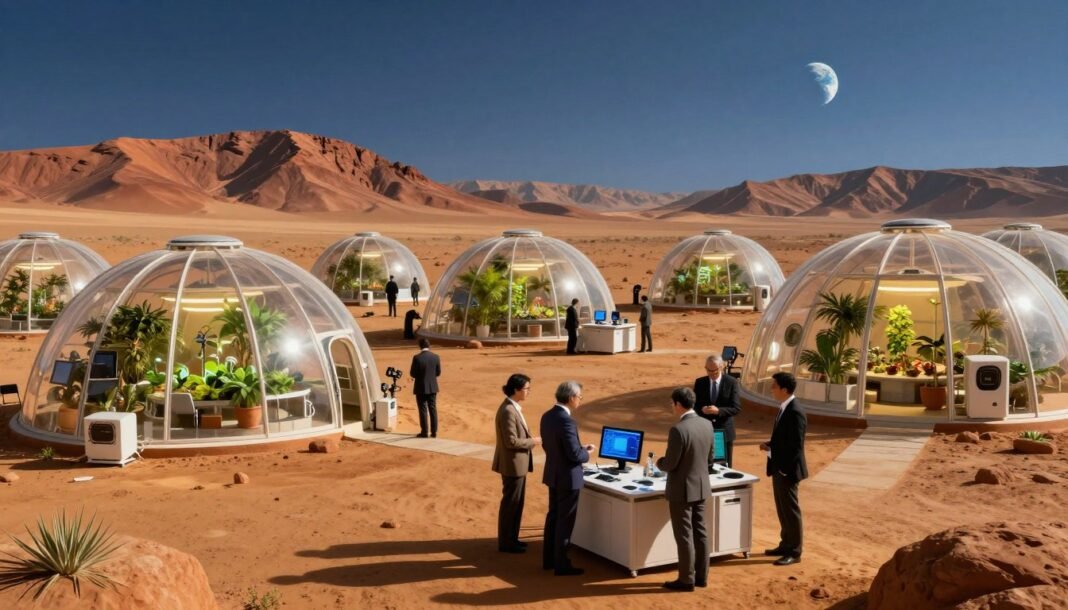

Carl Sagan once said, “Somewhere, something incredible is waiting to be known.” This quote captures our fascination with the fourth planet from the Sun.
Do we truly have what it takes to leave our home planet? The Red Planet, though cold and dusty, is our next great challenge.
I aim to look at the big challenges we face in space. By studying data from robots, I want to give a clear view of our chances to live on Mars.
Key Takeaways
- The Red Planet is a harsh, arid environment that requires advanced life-support technology.
- Robotic missions provide essential data regarding radiation and soil composition.
- Establishing a permanent base requires solving complex logistical challenges in deep space.
- Scientific progress suggests that interplanetary travel is moving from theory to reality.
- Balancing optimism with engineering constraints is vital for future mission success.
The Current Reality of Space Travel to Mars
Thinking about traveling to Mars shows just how big the challenge is. We’ve done well with trips to the Moon, but Mars is a whole different story. It needs new tech that we’re still working on.
The move from short trips to long ones is the biggest hurdle in space exploration today.

Technological Milestones in Deep Space Exploration
To get to Mars, we need better ways to travel. Our current rockets work for orbit, but not for long trips. Autonomous navigation systems are also key, since talking to Earth from Mars is too slow.
Now, scientists are testing new engines and ways to travel. They want to make trips faster and safer for people. Without these, going to Mars with people would be too risky.
The Distance and Duration of the Martian Journey
The trip to Mars is much longer than to the Moon. While the Moon is just a few days away, Mars takes years. This is a big test for how long humans can stay in space.
Because of the distance, teams must be self-sufficient for years. They need strong life support and mental toughness. Overcoming this challenge is crucial for space travel to mars.
What Is Dark Energy? A Friendly Guide to Cosmic Mystery
Can Humans Live on Mars? Understanding the Environment
Thinking about can humans live on mars? means looking at the harsh Martian surface. The planet is not just hard to live on; it’s actually dangerous for life as we know it. Understanding these challenges is key to a future on other planets.

Atmospheric Composition and Pressure Challenges
The Martian air is very thin, mostly carbon dioxide, nitrogen, and argon. The pressure is less than one percent of Earth’s. This means humans need pressurized suits to survive outside. Without protection, our bodies can’t function.
The thin air also doesn’t protect against solar radiation or meteorites. We need advanced shielding for any base on Mars. Habitats must be strong enough to keep out these dangers while staying safe inside.
Temperature Extremes and Seasonal Variations
The martian living conditions are extreme, with temperatures that drop fast. In just hours, it can get very cold. This makes keeping a place warm a big challenge for those planning missions.
We need good insulation and heating to keep a place warm. Standard heating won’t work in the Martian cold. We must find new ways to keep our future settlers warm, no matter the season.
The Critical Need for Sustainable Life Support Systems
To thrive on Mars, we must turn local resources into air and water. Relying on Earth’s supplies is not possible for a permanent human settlement on mars. We need In-Situ Resource Utilization (ISRU) to make Mars a habitable place.

Generating Breathable Oxygen on the Red Planet
The Martian atmosphere is mostly carbon dioxide, harmful to humans. NASA’s MOXIE instrument has made a big step. It shows we can make oxygen from carbon dioxide on Mars.
This breakthrough means we can make air for a human settlement on mars without Earth’s help. Scaling up these systems will keep our air supply steady.
Water Extraction and Recycling Technologies
Water is crucial for any long-term mission. Mars has water ice, but it’s hard to reach and tainted. We need advanced systems to clean this ice for drinking.
After extracting and purifying water, we must recycle it. Every bit of moisture must be reused. This is key for a sustainable human settlement on mars.
| Resource Type | Earth Source | Martian ISRU Method |
|---|---|---|
| Oxygen | Atmosphere | Electrolysis of CO2 |
| Water | Natural Reservoirs | Subsurface Ice Mining |
| Energy | Fossil/Renewable | Solar and Nuclear |
By improving these technologies, we’re getting closer to a permanent human settlement on mars. The shift from exploration to colonization relies on mastering these life support cycles.
Building Infrastructure for Martian Living Conditions
I believe that the future of living on mars depends on building sustainable infrastructure. We can’t just bring everything from Earth. We must adapt to martian living conditions for long-term survival.
Utilizing In-Situ Resource Utilization for Construction
To cut down on space travel costs, I focus on In-Situ Resource Utilization (ISRU). This method uses local materials for building. Researchers have created ‘StarCrete,’ a strong concrete substitute from starch and Mars soil simulant.
Using local regolith, we can print habitats without relying on Earth. This is essential for growing our presence on Mars. It turns the dusty surface into a valuable resource.
Radiation Shielding and Habitat Design
Protecting colonists from cosmic radiation is crucial. The thin atmosphere doesn’t shield well against high-energy particles. I recommend using lava tubes for natural shielding.
If lava tubes aren’t available, we can cover habitats with regolith. This engineering choice greatly reduces radiation risk. Below is a comparison of common construction materials for our future base.
| Material Type | Source | Primary Use | Durability |
|---|---|---|---|
| StarCrete | Local Regolith | Structural Walls | High |
| Steel | Earth-Imported | Frame Support | Very High |
| Regolith Pile | Local Surface | Radiation Shield | Moderate |
Designing for living on mars needs creativity and strict safety. By mixing advanced materials like StarCrete with smart site selection, we can build securely. My aim is to make every structure a fortress against the harsh environment.
The Psychological Toll of Living in Outer Space
Thinking about living in outer space means we must focus on the crew’s mental health. Physical survival is key, but the mind also needs special care. Keeping mental health strong is as important as having air or water.
Managing Isolation and Confinement
Living on mars means facing long periods of extreme isolation. Researchers studied this with the Mars 500 project. It kept six people in a simulated Mars environment for 17 months.
The study showed that teamwork is crucial for success. Crew members need to solve conflicts and keep a regular sleep schedule. Without these, stress and poor performance can quickly set in.
Communication Delays and Autonomy
One big challenge of living on mars is communication delays. Signals between Earth and Mars take up to 20 minutes each way. This makes getting help from Earth during emergencies impossible.
So, colonists must be able to solve problems on their own. They can’t count on Earth’s help when things go wrong. Each person must be trained to work independently, ensuring the mission goes on, even when they’re alone in space.
Nutritional Requirements and Martian Agriculture
Living on Mars poses a big challenge: finding a reliable food source. We can’t keep relying on Earth for food. We need new ways to grow food to ensure our survival.
Developing Hydroponic and Aeroponic Systems
Research on the International Space Station is key to our success. Scientists are working on hydroponic and aeroponic systems for growing food in space. These methods are crucial because they let us grow crops without soil.
These systems have many benefits for space colonies:
- Water Efficiency: They recycle water, reducing waste.
- Space Optimization: They use space well by growing vertically.
- Rapid Growth: They help plants grow faster with nutrient-rich solutions.
The Challenges of Martian Soil Toxicity
Hydroponics is a step in the right direction, but we also face environmental challenges. Martian soil is toxic due to perchlorates, making it hard to plant directly. These toxins are a major obstacle we must overcome.
“The path to a self-sustaining colony lies in our ability to transform the harsh Martian landscape into a productive garden through scientific ingenuity.”
I think we’ll use bioremediation to tackle these issues. Scientists are looking into using cyanobacteria to clean the soil. This could make the Martian soil safe for growing food over time.
Health Risks and Medical Preparedness for Colonists
My research into long-duration missions shows that living in outer space poses unique medical challenges. Our bodies are adapted to Earth’s gravity and magnetic field. To prepare, we need to monitor health closely and use advanced countermeasures.
The Impact of Low Gravity on Human Physiology
Adapting to low gravity changes our bodies a lot. Astronauts often lose bone density and muscle mass. These changes can affect our genes and heart health in ways we’re still learning about.
To fight these effects, we need to exercise a lot and eat right. Keeping our bodies strong is key for surviving the journey and working on Mars.
Managing Exposure to Cosmic Radiation
Radiation is a big problem in space. Astronauts on the International Space Station face radiation 250 times Earth’s. But, deep space missions face even higher levels, up to 700 times Earth’s.
“The challenge of deep space radiation is not just about shielding; it is about developing biological countermeasures that can repair cellular damage in real-time.”
Space Medicine Research Council
Medical teams must be ready with advanced shielding and drugs. The table below shows the main health risks and what we need to do to protect colonists.
| Health Risk | Primary Impact | Mitigation Strategy |
|---|---|---|
| Bone Density Loss | Skeletal fragility | Resistance training |
| Cosmic Radiation | Cellular DNA damage | Advanced habitat shielding |
| Muscle Atrophy | Reduced physical strength | Aerobic exercise regimens |
| Gene Expression | Systemic biological shifts | Continuous health monitoring |
The success of space travel to mars relies on keeping everyone healthy. By using the latest medical tech and strict safety rules, we can face the dangers of space.
Economic and Ethical Considerations of Mars Colonization
The dream of becoming a multi-planetary species brings up big costs and big ethical questions. The tech push is clear, but the path ahead is full of tough choices. We must think about our global priorities.
The Cost of Establishing a Permanent Settlement
Creating a permanent base on Mars is a huge financial task that will take decades. It makes me question how we balance these huge costs with our own planet’s needs. Like fighting climate change and reducing poverty.
The funding needed for mars colonization requires a new look at international cooperation. We must figure out if it’s a job for private companies or a global effort.
| Factor | Economic Impact | Ethical Priority |
|---|---|---|
| Infrastructure | High Capital | Safety Standards |
| Resource Use | Sustainable Growth | Planetary Integrity |
| Global Funding | Public-Private Split | Equitable Access |
Planetary Protection and Ethical Stewardship
There’s more than just money to consider. We have a big job in planetary protection. We must make sure our arrival doesn’t harm any Martian life or pollute the planet with Earth germs.
“We have a responsibility to treat other worlds with the same care we wish for our own, ensuring that our curiosity does not become a catalyst for ecological destruction.”
— Anonymous Space Ethicist
Being responsible means setting up strict rules before we start mars colonization. We must find a balance between our drive for progress and keeping the Martian world untouched. This is a key challenge for humanity’s future.
Private Sector Contributions to Human Settlement on Mars
To have a permanent human settlement on Mars, we need teamwork between governments and private companies. The way we explore space is changing. Now, it’s more about private companies than governments. This change is key to making space travel cheaper.
SpaceX and the Starship Development Program
SpaceX is leading the charge in mars colonization. They’re working on the Starship, a system for heavy transport to Mars. Their goal is to make space travel cheaper by using reusable rocket technology.
This new tech makes sending lots of stuff to Mars affordable. Being able to refuel in space is a big deal. Without it, sending tons of equipment to Mars would be too expensive.
Collaborations Between NASA and Commercial Partners
Now, NASA and private companies are working together for space missions. NASA brings the science and funding, while companies offer speed and efficiency. This teamwork makes sure taxpayer money is used wisely.
The table below shows how missions are changing with the new approach:
| Feature | Traditional Model | Commercial Model |
|---|---|---|
| Funding Source | Public/Government | Public-Private Mix |
| Rocket Design | Expendable | Fully Reusable |
| Development Speed | Slow/Bureaucratic | Rapid/Iterative |
| Primary Goal | Scientific Discovery | Settlement & Commerce |
I’m sure this partnership will shape the next decade of space travel. Together, we’re making a human settlement on Mars a reality. It’s no longer just science fiction.
Conclusion
I see a clear path toward establishing a permanent human presence on the Red Planet. The hurdles involving biology and engineering remain steep. Yet, the rapid pace of space exploration proves that these barriers are not insurmountable.
The drive to reach Mars serves as a catalyst for global technological growth. Innovations developed for survival in harsh Martian environments will provide direct benefits to life on Earth. I believe that sustainable resource management and advanced life support systems will transform how we approach sustainability at home.
The dream of becoming a multi-planetary species moves closer to reality with every successful launch by SpaceX and NASA. I encourage you to follow these developments as we enter a new era of discovery. Your interest in space exploration helps fuel the momentum needed to turn these ambitious goals into historical achievements for all of humanity.
Moon Phase & Supermoon Calculator
FAQ
Can humans live on Mars given the current technological landscape?
NASA and SpaceX data suggest humans can live on Mars. We’ve already made oxygen on Mars with the MOXIE instrument. This is a big step towards making Mars home.
How long does space travel to Mars actually take for a human crew?
Space travel to Mars takes six to nine months. This is because of the long distance and the need for the right alignment. SpaceX’s Starship will likely be the main way to get there. But, we need strong life-support systems to keep the crew safe.
What are the primary Martian living conditions that threaten human survival?
The main dangers are extreme radiation, low air pressure, and wild temperature changes. The thin Martian air means we’d face deadly radiation. To stay safe, we might live underground or in shielded structures.
Can we grow food on the Red Planet to support a permanent human settlement on Mars?
Martian soil has what we need for growing food, but it’s toxic. The best way to grow food is in controlled environments like hydroponics. Using cyanobacteria could also clean the soil for farming later.
How will colonists manage the psychological hurdles of living in outer space?
Living in space is tough, especially with long delays in communication. To stay mentally healthy, we need to give crew members control and teach them how to solve conflicts. Keeping our minds strong is as important as our technology.
What role does In-Situ Resource Utilization (ISRU) play in space exploration?
ISRU is key for a sustainable Mars settlement. Using Martian materials for construction and fuel means we don’t rely on Earth. This is crucial for a long-term Mars presence.
What are the health risks associated with the low gravity on Mars?
Martian gravity is only 38% of Earth’s. This can lead to bone loss and muscle shrinkage. NASA is working on solutions, like exercise and medicine, to counter these effects.
Is the private sector essential for the future of Mars colonization?
Yes, the private sector is crucial. Companies like SpaceX and Blue Origin have sped up our progress. NASA provides the science and safety, while private companies make travel to Mars affordable.