
If you’ve ever tried picking up a telescope, downloading a stargazing app, or looking through a night sky map, you have probably run into two pretty weird terms: declination and right ascension. Declination sounds reasonable enough since it works kinda like latitude on Earth. But right ascension? That one always raises eyebrows.
Why the word “right”? Was there ever a “left ascension”? And honestly, why not just drop the extra word and call it “ascension”?
To understand why astronomers use this mouthful of a term, we have to take a quick trip back in time to ancient Greece, look at how the sky moves, and figure out how early astronomers mapped out the universe before smartphones or modern math even existed.
Understanding the Celestial Sphere
Before getting into the origin of the name, we need to picture how ancient astronomers viewed the night sky. When you stand outside at night away from city lights, the sky looks like a massive dark bowl or sphere surrounding Earth. Astronomers call this the celestial sphere.
Just like we use latitude and longitude to find any house or city on Earth, astronomers needed a grid system to pin down stars, planets, and galaxies.
- Declination acts like celestial latitude, measuring how far north or south an object is from the celestial equator in degrees.
- Right Ascension acts like celestial longitude, measuring how far east an object is along the celestial equator.
Instead of degrees, right ascension is usually measured in hours, minutes, and seconds because the Earth rotates once every 24 hours. So as the Earth spins, the sky seems to move past us at a steady rate.
The Ancient Greek Origins of “Right” and “Ascension”
The roots of the term go all the way back to ancient Greek astronomers like Hipparchus and Claudius Ptolemy. Back then, they didn’t have GPS or digital star charts. They tracked stars by watching when they rose above the horizon—a moment called the star’s “ascension.”
In Latin translations of old Greek texts, the rising of a star or constellation was translated as ascensio. But why add “right”?
The word “right” here doesnt mean correct, and it definitely doesnt mean the opposite of left. In classical geometry and old English translations, “right” comes from the Latin word rectus, which means straight, direct, or right-angled.
When astronomers talked about “right ascension” (ascensio recta in Latin), they were referring to how a star rises when viewed from the Earth’s equator. At the equator, celestial objects rise straight up at a right angle (90 degrees) relative to the horizon.
What About Oblique Ascension?
Believe it or not, there actually used to be another term called “oblique ascension” (ascensio obliqua).
When you observe the sky from anywhere north or south of the equator—like in New York, London, or Los Angeles—stars don’t rise straight up at a 90 degree angle. They rise at a slant or an oblique angle. Ancient astronomers used “oblique ascension” to calculate when stars would rise from their specific location on Earth.
So historically, there were two concepts:
- Oblique Ascension: The time a star rises at a slanted angle for a specific observer on Earth.
- Right Ascension: The standardized time a star rises straight up along the celestial equator, independent of where you are standing on Earth.
Over time, as spherical trigonometry improved and global standards were established, astronomers realized that oblique ascension was way too complicated because it changed depending on your location. Right ascension, however, stayed constant everywhere. So oblique ascension was dropped from modern astronomy, leaving us with just right ascension!
Why Don’t We Just Call It “Ascension” Today?
Since oblique ascension isn’t used anymore in modern science, it seems logical to just shorten it to “ascension,” right?
Well, astronomers are pretty big on tradition, but there is also a practical reason. In navigation and positional astronomy, precision matters. The full term “right ascension” specifically tells anyone reading a star catalog that the measurement is tied to the right-angled celestial equatorial coordinate system, measured eastwards from the vernal equinox.
Using the word “ascension” by itself could cause confusion with historical texts or other astronomical rising calculations, like heliacal risings of stars. Keeping “right ascension” ensures everyone across the globe uses the exact same reference frame.
Frequently Asked Questions
What is the symbol for right ascension in star charts?
Right ascension is commonly abbreviated as RA on star maps, telescope hand controllers, and astronomy software. It is also represented by the Greek letter alpha ($\alpha$).
How is right ascension measured?
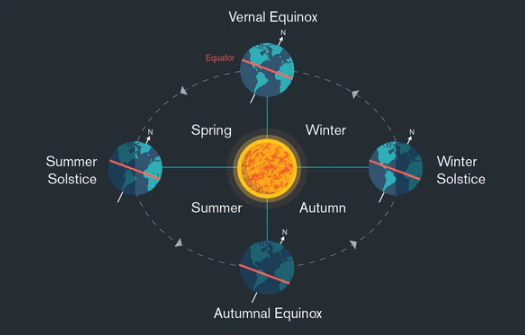
Unlike longitude which is measured in degrees, right ascension is measured in hours, minutes, and seconds. Zero hours begins at the vernal equinox (the point where the Sun crosses the celestial equator in spring), and it goes up to 24 hours around the celestial sphere.
What is the difference between right ascension and declination?
Right ascension measures coordinate positions east-west around the sky in time units (hours/minutes), while declination measures coordinate positions north-south from the celestial equator in degrees.
The next time you set up your backyard telescope or tweak your favorite stargazing app, you’ll know that “right ascension” isn’t just a quirky phrase—it’s a 2,000-year-old remnant of ancient Greek geometry that still helps us navigate the vast expanse of space today.
If you enjoyed this article, don’t forget to leave us a comment to encourage us, and check out our other articles because you’re going to love them!