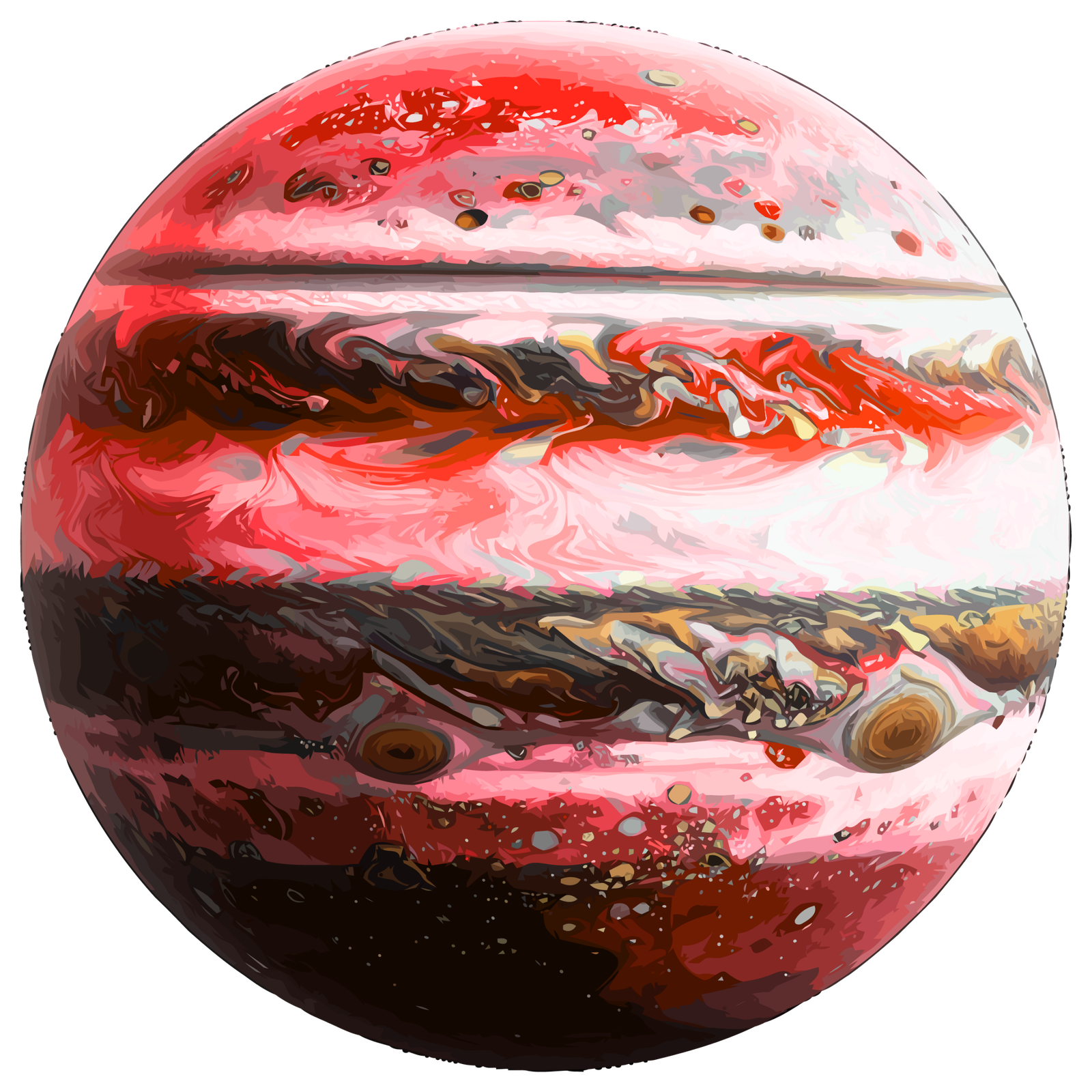

Betelgeuse just made headlines again this July, when astronomers finally captured a direct image of its long-suspected companion star after a century of searching. But Betelgeuse itself is the real star of this story, a red giant, and its swollen, reddish glow represents a stage almost every star in the universe eventually reaches, including our own Sun.
When a Star Runs Low on Fuel
A star spends most of its life fusing hydrogen into helium in its core, a stable stretch astronomers call the main sequence. Once that core hydrogen runs out, fusion shifts to a shell surrounding the now inert helium core, and that shell burning causes the star’s outer layers to swell dramatically outward. The star cools as it expands, shifting from white or yellow toward a deep red, and its overall brightness actually increases even as its surface temperature drops.
Our own Sun will follow this exact path in roughly 5 to 6 billion years, expanding to more than 200 times its current size, likely swallowing Mercury and Venus in the process. Betelgeuse, sitting about 650 light-years away in the constellation Orion, is a red supergiant, an even more extreme version of the same process, already around 700 to 1,000 times the Sun’s radius despite being only a few million years old.
A Century-Old Mystery Finally Solved
Astronomers had suspected for about 100 years that something was orbiting Betelgeuse, based on strange periodic dimming patterns observed for over a thousand years. In late July 2026, a team led by Miguel Montargès finally captured a direct image of that companion using the SPHERE instrument on the European Southern Observatory’s Very Large Telescope in Chile. The companion, now informally named Siwarha, turned out to have two to three times the mass of our Sun, considerably bigger than anyone had predicted.
Researchers now believe Betelgeuse’s own gravity is expected to eventually swallow its small companion, possibly within the next 10,000 years, a genuine eyeblink on stellar timescales.
What Comes After the Red Giant Stage
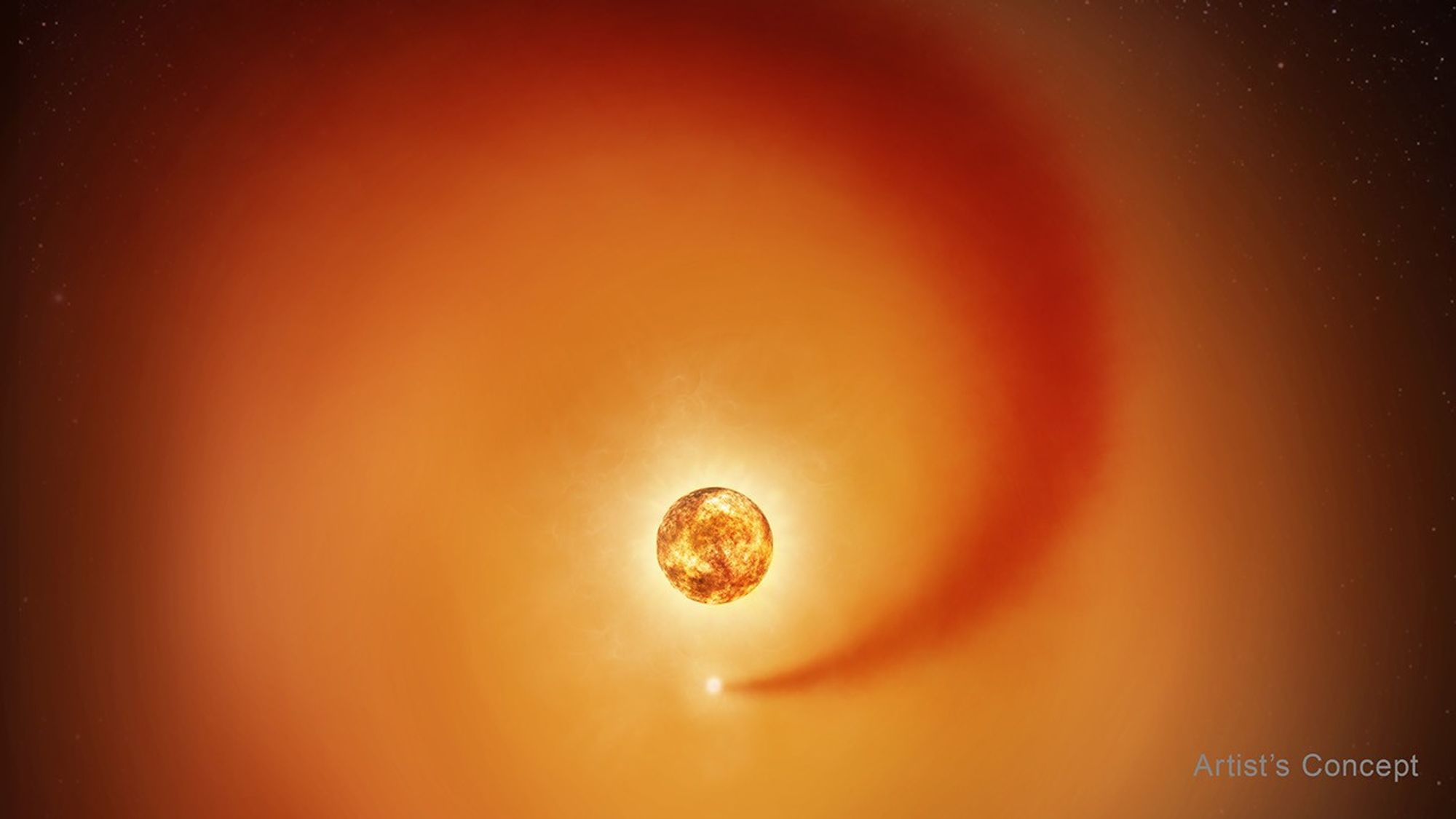 An artist’s concept of Betelgeuse and its newly confirmed companion star, generating a dusty wake as it orbits within the red supergiant’s enormous, extended atmosphere. (Image: NASA, ESA, Elizabeth Wheatley/STScI)
For a star like our Sun, the red giant phase eventually ends with the outer layers drifting away entirely as a planetary nebula, leaving behind a dense white dwarf core. Betelgeuse’s fate will be far more violent, its far greater mass means it’s expected to end in a supernova explosion, likely sometime in the next 100,000 years, astronomically speaking, any moment now. When it happens, Betelgeuse is expected to briefly shine as bright as the full moon, visible even in broad daylight.
If you’re curious what that final white dwarf stage actually looks like for smaller stars like our own, our recent piece on what a white dwarf is covers that compact, cooling remnant in more detail.
For more on the Betelgeuse companion discovery, check out the original coverage from Space.com and the research summary from Science News.
If you enjoyed this article, don’t forget to drop us a comment, it really helps support the site, and be sure to check out our other articles because we think you’re going to love them too.