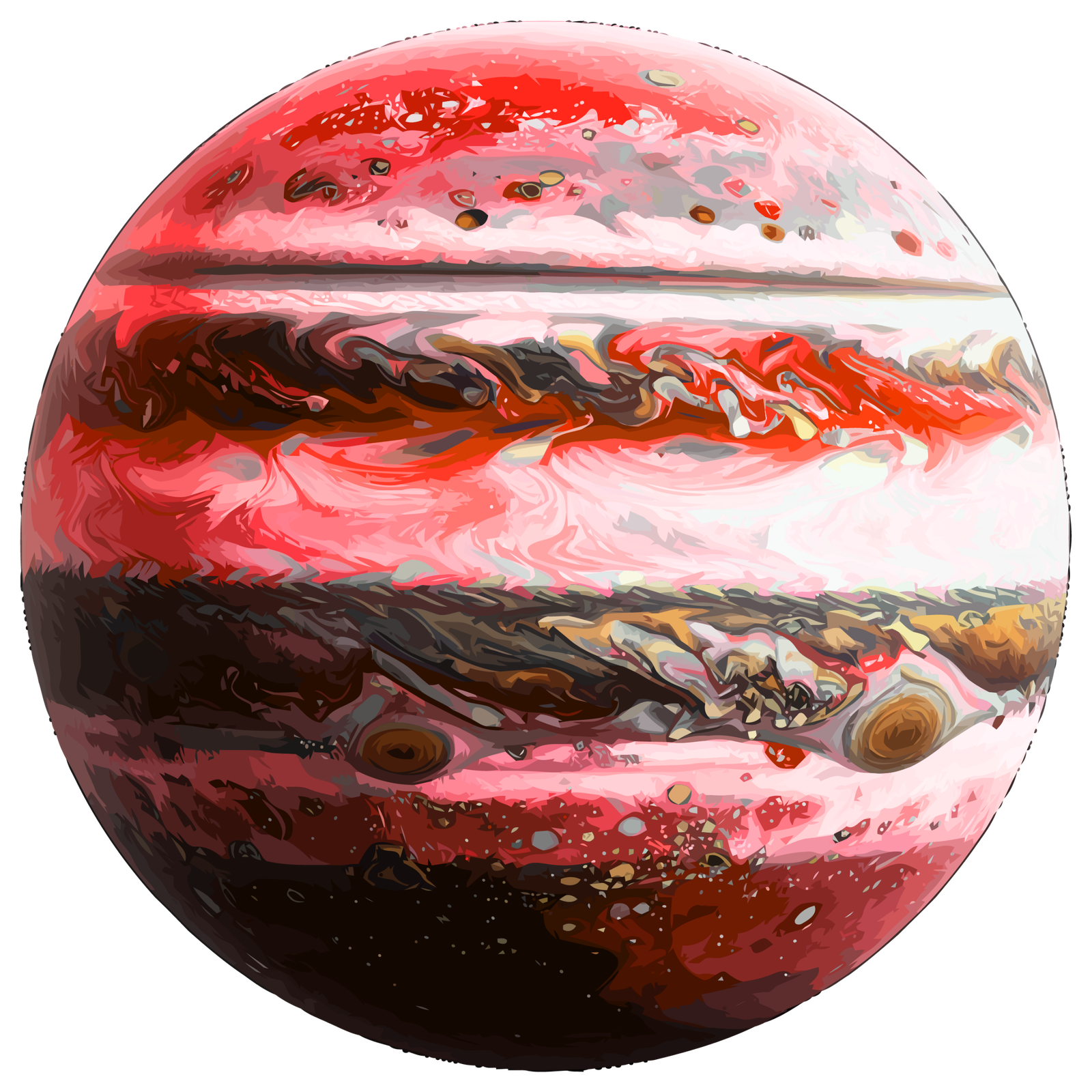

Stephen Hawking once remarked, “Look up at the stars and not down at your feet.” This simple advice invites us to ponder the vast mysteries hidden within our galaxy. Among these wonders, few objects capture our imagination quite like the enigmatic gravitational traps found in deep space.
What Is a Black Hole? These regions represent areas where gravity pulls so intensely that nothing can escape their grasp. Even light, the fastest traveler in the universe, finds itself trapped within these dense boundaries.
Understanding what is a black hole? does not require a degree in physics. By exploring these cosmic phenomena, we can appreciate the sheer power of nature. Let us embark on this journey to uncover how these invisible giants shape the fabric of our reality.
Key Takeaways
- Gravity within these regions is so intense that light cannot escape.
- These objects act as extreme gravitational traps in deep space.
- They represent some of the most mysterious phenomena in our universe.
- Learning about these cosmic giants helps us understand spacetime.
- Space exploration allows us to demystify complex scientific concepts.
Defining What Is a Black Hole?
To truly grasp the mysteries of the cosmos, we must first establish a clear black hole definition. At its simplest, this object is a region in space where gravity is so intense that nothing, not even light, can escape its pull.
These cosmic giants form when massive amounts of matter are packed into a tiny area. Because the gravitational force is so strong, it creates a profound distortion in the fabric of space and time.

The Concept of Infinite Density
Deep within the center of these objects lies the singularity. This is a point where matter is crushed into a state of infinite density.
At this specific location, our current understanding of physics begins to break down. The laws of nature as we know them simply cannot describe a point where so much mass occupies zero volume.
Scientists often view this as a mathematical limit. It serves as a vital part of any accurate black hole definition, highlighting the extreme nature of these gravitational wells.
Understanding the Event Horizon
Surrounding the singularity is a boundary known as the event horizon. This is often described as the “point of no return” for anything that gets too close.
Once an object or light crosses this invisible threshold, the gravitational pull becomes impossible to overcome. Even the fastest thing in the universe, light, finds itself trapped forever inside this boundary.
By studying this edge, researchers gain insights into how these objects interact with the surrounding galaxy. It remains a cornerstone of the modern black hole definition, marking the divide between the observable universe and the hidden core.
The Life Cycle of Stars and Black Hole Formation
The journey toward creating a black hole begins deep within the colorful clouds of a stellar nursery. These vast regions of gas and dust serve as the birthplace for stars that will eventually grow to immense sizes. While most stars live quiet lives, the most massive ones are destined for a dramatic conclusion.

From Stellar Nursery to Supernova
Stars begin their lives by fusing hydrogen into helium within their cores. Massive stars burn through their fuel supply at an incredible rate, shining with intense brilliance. This rapid consumption of energy is necessary to counteract the crushing force of their own gravity.
Eventually, the star runs out of nuclear fuel. Without the outward pressure of fusion, the star can no longer maintain its structural integrity. This instability leads to a violent explosion known as a supernova, which scatters heavy elements across the galaxy.
The Gravitational Collapse Process
After the supernova explosion, the remaining core begins a final, irreversible descent. If the core is sufficiently massive, nothing can stop the inward pull of gravity. This stage is the critical moment for black hole formation, as the matter is crushed into an infinitely small point.
The density becomes so extreme that the laws of physics as we know them begin to change. The core vanishes from the visible universe, leaving behind a region where gravity is so strong that not even light can escape. This process marks the successful transformation of a once-bright star into a dark, mysterious entity.
| Stellar Remnant | Initial Mass | Final State |
|---|---|---|
| White Dwarf | Low to Medium | Stable Cooling |
| Neutron Star | High | Dense Core |
| Black Hole | Very High | Singularity |
Understanding the mechanics of black hole formation helps astronomers map the history of our universe. By studying these remnants, we gain insight into the life cycles of the most powerful objects in space.
Different Types of Black Holes in the Universe
Exploring the different types of black holes reveals the incredible diversity hidden within deep space. While these objects are often grouped together, they vary significantly in their mass, origin, and overall influence on their surroundings.
Stellar-Mass Black Holes
Stellar-mass black holes are the most common variety found throughout the galaxy. These objects typically form when a massive star reaches the end of its life and undergoes a dramatic supernova explosion.
The remaining core collapses under its own gravity, creating a dense point in space. These stellar-mass black holes usually contain between five and several dozen times the mass of our Sun.
Supermassive Black Holes at Galactic Centers
At the heart of almost every large galaxy, including our own Milky Way, lies a supermassive black hole. These giants are millions or even billions of times more massive than the Sun.
Scientists believe these massive entities play a crucial role in shaping the evolution of their host galaxies. Their immense gravitational pull influences the movement of stars and gas clouds in their immediate vicinity.
Intermediate and Primordial Varieties
Beyond the well-known categories, researchers are hunting for intermediate-mass black holes. These elusive objects bridge the gap between stellar-mass and supermassive varieties, though they remain difficult to detect.
Finally, there is the theoretical class of primordial black holes. These are thought to have formed in the chaotic moments immediately following the Big Bang. Unlike their stellar counterparts, these could be as small as an atom or as large as a planet, offering a unique window into the early history of the cosmos.
Key Characteristics and Physical Properties
At the heart of every black hole lies a set of defining features that govern its existence. While these objects seem incredibly complex, physicists often rely on the no-hair theorem to simplify their study. This theory suggests that most black hole characteristics can be boiled down to just three measurable quantities.
Mass, Spin, and Electric Charge
According to the no-hair theorem, once a black hole forms, it loses almost all other information about the matter that created it. The remaining identity is defined entirely by these core traits:
- Mass: This determines the gravitational pull and the size of the event horizon.
- Spin: Known as angular momentum, this describes how the object rotates in space.
- Electric Charge: This represents the net electromagnetic property of the singularity.
These three factors are the primary black hole characteristics that scientists use to model their behavior. By measuring these, researchers can predict how the object interacts with its surroundings.
“The black hole has no hair, meaning it is characterized only by its mass, charge, and angular momentum.”
John Wheeler
The Role of Spacetime Curvature
Beyond these basic traits, the most profound impact of a black hole is how it warps the fabric of the universe. Because of their immense density, these objects create extreme curvature in spacetime.
This distortion acts like a deep well, forcing nearby light and matter to follow curved paths. It is this intense gravitational warping that dictates the motion of stars and gas clouds orbiting the center. Understanding these black hole characteristics helps us map the invisible influence these giants exert on the cosmos.
How Scientists Detect Invisible Objects
Finding a black hole is like trying to spot a ghost in a dark room using only the movement of furniture. Since these cosmic giants do not emit light, they remain hidden from traditional telescopes. Astronomers must act as cosmic detectives, looking for the subtle clues left behind in the surrounding environment.
Observing Accretion Disks and X-ray Emissions
When matter gets too close to a black hole, it does not simply vanish immediately. Instead, it forms a swirling structure known as an accretion disk. As gas and dust spiral inward, they rub against each other at incredible speeds.
This friction generates immense heat, causing the material to glow brightly in the X-ray spectrum. Scientists use specialized space-based telescopes to capture these high-energy signals. Key indicators of a nearby black hole include:
- Sudden, intense bursts of X-ray radiation.
- Rapid flickering of light from a specific point in space.
- The presence of superheated gas moving at a significant fraction of the speed of light.
Tracking Stellar Orbits Near the Center
Another clever method involves watching the behavior of stars that happen to be nearby. If a star appears to be orbiting an empty patch of space, it is likely being pulled by a massive, invisible object.
By tracking these orbits over many years, researchers can calculate the mass of the hidden object with surprising accuracy. If the star is moving at high speeds in a tight, elliptical path, the central object must be incredibly dense. This method has provided some of the most compelling evidence for the existence of supermassive black holes at the hearts of galaxies.
The Physics of Time Dilation Near a Singularity
The intense gravitational pull near a singularity creates a phenomenon that sounds like science fiction but is rooted in hard physics. When mass becomes incredibly dense, it warps the fabric of spacetime to an extreme degree. This distortion does not just affect space; it fundamentally alters the flow of time itself.
General Relativity and Time Perception
Albert Einstein’s theory of general relativity teaches us that gravity is the curvature of spacetime caused by matter. Near a massive object, this curvature becomes so steep that clocks literally tick slower compared to those in weaker gravitational fields. This effect is known as gravitational time dilation.
To understand this, consider the following key impacts of extreme gravity on time:
- Clock Synchronization: Clocks closer to the mass will always record less elapsed time than those further away.
- Spacetime Stretching: The closer you get to the singularity, the more “stretched” the seconds become.
- Universal Perspective: Time is relative to the observer’s position within the gravitational well.
The Theoretical Experience of an Observer
If you were to approach a black hole, your experience would be quite different from that of a friend watching you from a safe distance. To your friend, your movements would appear to slow down as you neared the event horizon. Eventually, you would seem to freeze in place, fading away as the light from your journey shifts toward the red end of the spectrum.
However, from your own perspective, time would feel perfectly normal. You would not notice your watch slowing down or your heart rate changing. The universe outside would appear to speed up, with stars and galaxies evolving rapidly before your eyes.
| Observer Location | Perception of Time | Relative Speed |
|---|---|---|
| Distant Space | Standard Flow | Normal |
| Near Event Horizon | Significantly Slower | Appears Frozen |
| Inside the Singularity | Theoretical Limit | Undefined |
This mind-bending reality highlights how gravity dictates the rhythm of the cosmos. While we perceive time as a steady, ticking clock, the universe reveals that time is flexible and deeply connected to the presence of matter. It is a humbling reminder of how much we still have to learn about the nature of our reality.
Famous Black Hole Discoveries in Modern Astronomy
The quest to capture a black hole discovery on camera has transformed our understanding of the universe. For decades, these objects remained purely mathematical concepts hidden in the dark. Today, thanks to the Event Horizon Telescope (EHT), we have moved from theoretical models to seeing the unseeable.
Seeing is believing, and the global scientific community has finally witnessed the true nature of these gravitational titans. These images provide the first visual confirmation that our theories about spacetime were correct all along.
The First Image of Sagittarius A*
In 2022, researchers unveiled the first image of Sagittarius A*, the supermassive black hole at the center of our own Milky Way. This black hole discovery was particularly challenging because the object is relatively small and surrounded by a chaotic, swirling environment.
The EHT network acted like a giant, Earth-sized camera to peer through the thick dust of our galaxy. It captured the glowing ring of gas orbiting the event horizon, confirming that a massive, dark void sits at the heart of our home.
“We were stunned by how well the size of the observed ring agreed with predictions from Einstein’s Theory of General Relativity.”
— Geoffrey Bower, EHT Project Scientist
Mapping the Shadow of M87
Before the Milky Way breakthrough, the world was captivated by the first-ever image of a black hole in the galaxy M87. This black hole discovery occurred in 2019 and showed a massive, glowing orange halo surrounding a dark, circular center.
The shadow of M87 is much larger than our own galactic center, making it a perfect target for early imaging efforts. This milestone proved that we could map the extreme physics of gravity across vast cosmic distances.
| Feature | Sagittarius A* | M87* |
|---|---|---|
| Location | Milky Way Center | M87 Galaxy |
| Distance | 26,000 Light Years | 55 Million Light Years |
| Mass | 4 Million Suns | 6.5 Billion Suns |
| Discovery Year | 2022 | 2019 |
These achievements represent a monumental leap in modern astronomy. Every new black hole discovery brings us closer to unlocking the deepest secrets of the cosmos.
Current Black Hole Theories and Scientific Debates
Deep within the heart of cosmic giants, current black hole theories are pushing the boundaries of what we know about the universe. These massive objects act as natural laboratories where the laws of physics are tested to their absolute limits. Researchers are working hard to reconcile the rules of gravity with the strange behavior of quantum particles.
The Information Paradox Explained
One of the most famous puzzles in modern science is known as the information paradox. It centers on a fundamental conflict between two pillars of physics: general relativity and quantum mechanics. According to quantum theory, information about the physical state of an object can never be truly destroyed.
However, if an object falls into a black hole, it seems to vanish from the observable universe forever. This creates a significant dilemma for physicists who believe that the history of matter must be preserved. Several proposed solutions to this mystery include:
- The idea that information is encoded on the surface of the event horizon.
- The possibility that quantum gravity allows information to escape in a scrambled form.
- The radical theory that black holes might not be as “bottomless” as they appear.
Hawking Radiation and Evaporation
Stephen Hawking changed the landscape of black hole theories when he introduced the concept of Hawking radiation. He suggested that these objects are not entirely black but actually emit a faint glow of particles. This process occurs because of quantum effects near the event horizon, where energy is slowly siphoned away from the black hole.
“Black holes ain’t as black as they are painted. They are not the eternal prisons they were once thought to be.”
— Stephen Hawking
Over vast timescales, this radiation causes the object to lose mass and shrink. Eventually, the black hole may evaporate completely, leaving behind only a burst of energy. This groundbreaking discovery suggests that even the most massive structures in the cosmos are subject to the slow, steady march of time and decay.
The Role of Black Holes in Galaxy Evolution
Far from being mere cosmic voids, black holes play a vital role in shaping the evolution of entire galaxies. These massive objects are not just passive inhabitants of space; they act as dynamic architects that influence the structure and lifespan of their host systems. By interacting with surrounding matter, they dictate how galaxies grow and change over billions of years.
Regulating Star Formation Rates
One of the most surprising discoveries in modern astrophysics is how supermassive black holes control the birth of new stars. When gas falls toward a black hole, it releases immense amounts of energy in the form of radiation and powerful jets. This process heats the surrounding interstellar medium, making it too hot to collapse into dense clouds.
Without this cooling process, gas cannot clump together to form new stars. Consequently, the black hole effectively acts as a thermostat for the galaxy. It prevents the system from burning through its fuel supply too quickly, ensuring that the galaxy remains active for a much longer period.
“The supermassive black hole at the center of a galaxy is not just a passenger; it is a fundamental regulator of the galaxy’s destiny.”
The Relationship Between Galaxies and Their Cores
There is a profound, symbiotic connection between the size of a central black hole and the properties of its host galaxy. Observations show that larger galaxies typically house more massive black holes at their centers. This suggests a co-evolutionary process where the growth of the galaxy and the growth of the black hole are deeply intertwined.
This feedback loop ensures that the energy output from the core remains balanced with the mass of the galaxy. If the black hole grows too large, it can shut down star formation entirely, leading to a “quiescent” or dormant galaxy. The following table highlights how different galactic environments interact with their central engines.
| Galaxy Type | Black Hole Activity | Star Formation Rate |
|---|---|---|
| Spiral Galaxy | Moderate | High |
| Elliptical Galaxy | Low/Dormant | Very Low |
| Active Galaxy | High | Variable |
Understanding this relationship helps us appreciate the delicate balance required for a galaxy to thrive. By regulating the flow of matter and energy, these invisible giants ensure that the universe maintains its complex and beautiful structure over cosmic time.
Technological Advancements in Black Hole Exploration
Modern technology is finally allowing us to pull back the curtain on the dark, dense hearts of distant galaxies. These breakthroughs in black hole research have transformed theoretical physics into a field of observational science. By combining massive computing power with global networks, we are seeing the invisible for the first time.
The Event Horizon Telescope Network
The Event Horizon Telescope (EHT) represents a monumental achievement in international cooperation. By linking radio telescopes across the globe, scientists created a virtual Earth-sized lens capable of capturing unprecedented detail.
“The EHT project proves that when humanity works together, we can overcome the limitations of our own planet to see the impossible.”
This network relies on a technique called Very Long Baseline Interferometry. It allows researchers to synchronize data from multiple sites to form a single, high-resolution image. Key benefits of this approach include:
- Increased angular resolution beyond the capability of any single dish.
- The ability to map the shadow cast by a singularity.
- Enhanced data collection for studying accretion disk dynamics.
Future Space-Based Interferometry Missions
While ground-based arrays are impressive, the next frontier for black hole exploration lies in space. Future missions aim to place interferometers in orbit to avoid the interference of Earth’s atmosphere. This shift will provide much clearer images of the dark hearts of galaxies.
By moving these instruments into space, scientists expect to achieve even higher sensitivity. This will allow us to track matter as it spirals into the void with stunning precision. As we look toward the future, these technological leaps will continue to redefine our understanding of the cosmos.
Common Misconceptions About Cosmic Voids
Understanding the truth about these mysterious objects requires us to clear away some popular misunderstandings. While movies often portray them as dangerous monsters, learning the actual black hole facts helps us appreciate their true role in the universe. Let’s look at how these objects really behave in the dark reaches of space.
Are They Really Cosmic Vacuum Cleaners?
A very common myth suggests that these objects act like giant cosmic vacuum cleaners that actively suck up everything nearby. In reality, they do not reach out and pull matter toward them from great distances. If our Sun were suddenly replaced by a black hole of the same mass, Earth would continue to orbit it just as it does now.
Gravity works the same way regardless of the object’s density. These regions only consume matter that crosses their event horizon, which is a specific point of no return. It is a passive process rather than an active hunting mechanism.
Distinguishing Between Wormholes and Black Holes
Science fiction frequently confuses the public by blending the concepts of black holes and wormholes. While both involve extreme gravity and warped spacetime, they are fundamentally different structures. A black hole is a collapsed star, whereas a wormhole is a theoretical bridge connecting two distant points in the universe.
We have observed many black holes through their gravitational effects on nearby stars. Conversely, wormholes remain purely mathematical possibilities that have never been detected in nature. Keeping these black hole facts straight is essential for anyone interested in modern astrophysics.
| Feature | Black Hole | Wormhole |
|---|---|---|
| Scientific Status | Confirmed Reality | Theoretical Concept |
| Primary Origin | Stellar Collapse | Spacetime Geometry |
| Observed Evidence | Strong | None |
| Function | Gravitational Sink | Spacetime Shortcut |
Conclusion
Black holes represent the most extreme frontiers of our physical reality. These gravitational giants shifted from mere mathematical puzzles to essential components of modern astrophysics. We now understand that these objects shape the very structure of galaxies across the vast expanse of space.
Our journey through the physics of these dark voids reveals a universe far more dynamic than once imagined. Every discovery by the Event Horizon Telescope team brings us closer to grasping the nature of gravity and spacetime. We continue to push the boundaries of human knowledge with every new observation.
The study of these phenomena remains a vital pursuit for astronomers and curious minds alike. You play a part in this exploration by staying informed about the latest breakthroughs in space science. Keep looking toward the stars as we work to decode the deepest secrets of our expanding universe.
FAQ
What is a black hole?
A black hole is a fascinating region in space where gravity is so incredibly strong that nothing, not even light, can escape its pull. This happens because matter has been squeezed into a tiny, dense space, creating a cosmic object that challenges our traditional understanding of physics. According to the standard black hole definition, these objects consist of a core called a singularity surrounded by a “point of no return” known as the event horizon.
How does black hole formation occur?
The most common black hole formation process begins with the life cycle of a massive star. When a star much larger than our Sun runs out of fuel, it can no longer support its own weight and collapses under its own gravity. This often triggers a massive explosion called a supernova. If the remaining core is heavy enough, it continues to shrink until it becomes a black hole. Scientists also theorize that primordial black holes may have formed during the high-density environment of the very early universe.
What are the different types of black holes?
Astronomers generally categorize these objects into four types of black holes based on their size and mass. Stellar-mass black holes are the most common and are formed by dying stars. Supermassive black holes, like Sagittarius A* at the center of our Milky Way, can be millions or even billions of times more massive than the Sun. There are also intermediate-mass black holes, which are the “middle children” of the cosmos, and theoretical primordial black holes that might have existed since the Big Bang.
What are the most important black hole characteristics?
Based on the “no-hair theorem,” the primary black hole characteristics are mass, spin, and electric charge. Beyond these three traits, black holes are remarkably simple in their physical description. However, their presence is felt through their extreme spacetime curvature, which dictates how nearby stars and gas clouds move. They also possess an event horizon, the invisible boundary that marks the threshold where the escape velocity exceeds the speed of light.
How do scientists conduct black hole research if they are invisible?
Since these objects don’t emit light, black hole research relies on observing how they affect their surroundings. Astronomers look for accretion disks—swirling clouds of gas and dust that heat up and glow brilliantly in X-rays before being swallowed. Scientists also track the rapid orbits of stars near galactic centers; if a star is orbiting nothing at high speeds, it’s a clear sign of a hidden giant. Recently, the Event Horizon Telescope has revolutionized our field by capturing direct visual evidence of these objects.
What was the most significant black hole discovery in recent years?
The most groundbreaking black hole discovery occurred in 2019 when the Event Horizon Telescope (EHT) collaboration released the first-ever image of a black hole’s shadow in the galaxy M87. This was followed by the 2022 imaging of Sagittarius A*, the supermassive black hole at the heart of the Milky Way. These images provided the first direct visual confirmation of the event horizon, proving that Albert Einstein’s theories of general relativity hold up even in the most extreme conditions.
What are some famous black hole theories regarding their eventual fate?
One of the most famous black hole theories is Hawking Radiation, proposed by the late physicist Stephen Hawking. He suggested that black holes aren’t completely black but emit tiny amounts of radiation due to quantum effects near the event horizon. Over trillions of years, this causes them to lose mass and eventually evaporate. Another major topic of debate is the Information Paradox, which questions whether the information about matter falling into a black hole is lost forever or somehow preserved.
Is it true that black holes act like cosmic vacuum cleaners?
One of the most common black hole facts to clarify is that they are not cosmic vacuum cleaners. They don’t go around “sucking” up everything in the universe. Gravity works the same way around a black hole as it does around a star; if our Sun were replaced by a black hole of the same mass, Earth would continue to orbit it just as it does now. You only get into trouble if you cross the event horizon.
How does black hole exploration help us understand the universe?
Ongoing black hole exploration is vital because these objects act as the “architects” of galaxies. Supermassive black holes regulate star formation by heating up the surrounding gas, which prevents it from cooling and forming new stars too quickly. By studying them through projects like the James Webb Space Telescope and future space-based interferometry missions, we learn how the large-scale structures of our universe evolved over billions of years.