
Every so often, a new image comes along that completely resets what we thought we knew about something we’ve been staring at our entire lives. That’s exactly what just happened with the Sun. Scientists working with the world’s most powerful solar telescope just released what is, without exaggeration, the most detailed real picture sun surface has ever been captured in, and it’s revealing patterns nobody had ever actually seen before, even though they’d been theorized about for over 150 years.
The Telescope Behind the Image
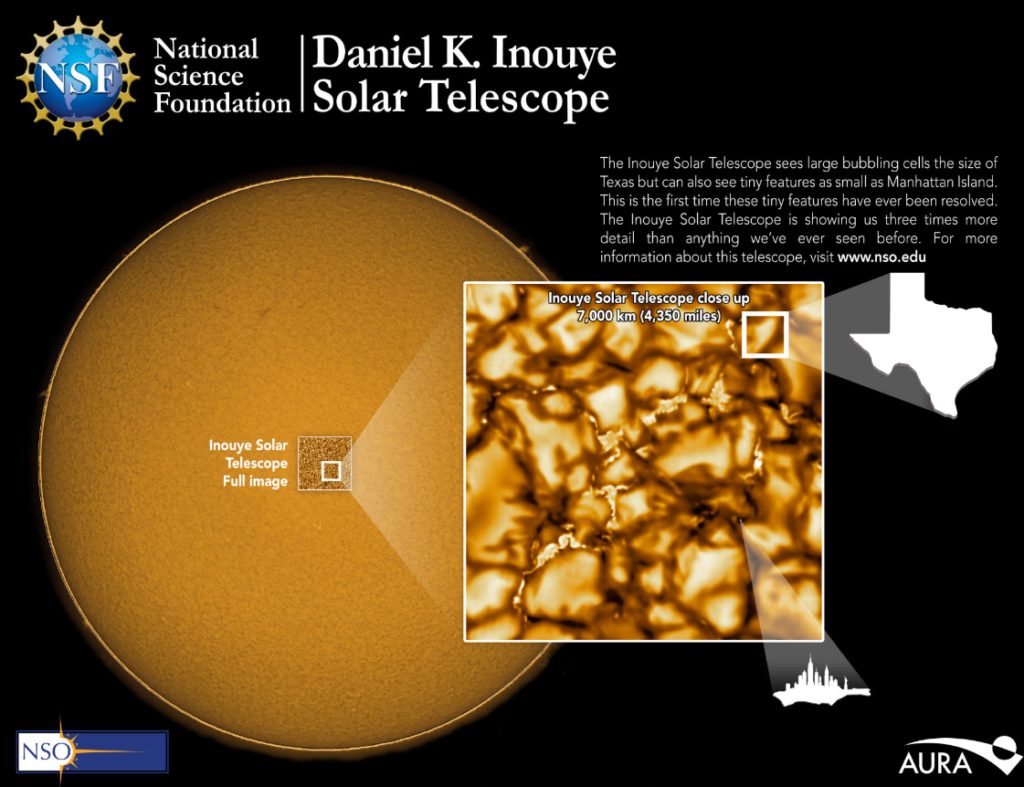
The picture comes courtesy of the Daniel K. Inouye Solar Telescope, sitting near the summit of Haleakalā, a volcano on the Hawaiian island of Maui. Its the largest solar telescope on Earth, built around a massive 13 foot, or 4 meter, mirror that collects about seven times more sunlight than any other solar telescope out there. That extra light gathering power is exactly what allows it to produce images with a level of sharpness nothing else can currently match.
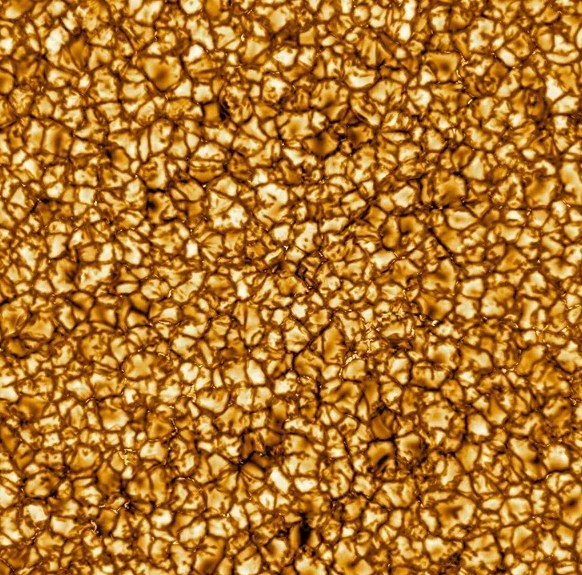
The newest image, taken at a wavelength of 416 nanometers, is officially the highest resolution picture ever captured of the Sun’s photosphere, which is the thin, visible outer layer where sunlight actually escapes into space. Researchers weren’t even trying to break a record when they captured it, they were originally just testing and calibrating the telescope’s instruments. It wasn’t until they looked closely at the results that they realized they’d photographed the Sun’s surface in more detail than anyone in history.
What the Picture Actually Shows
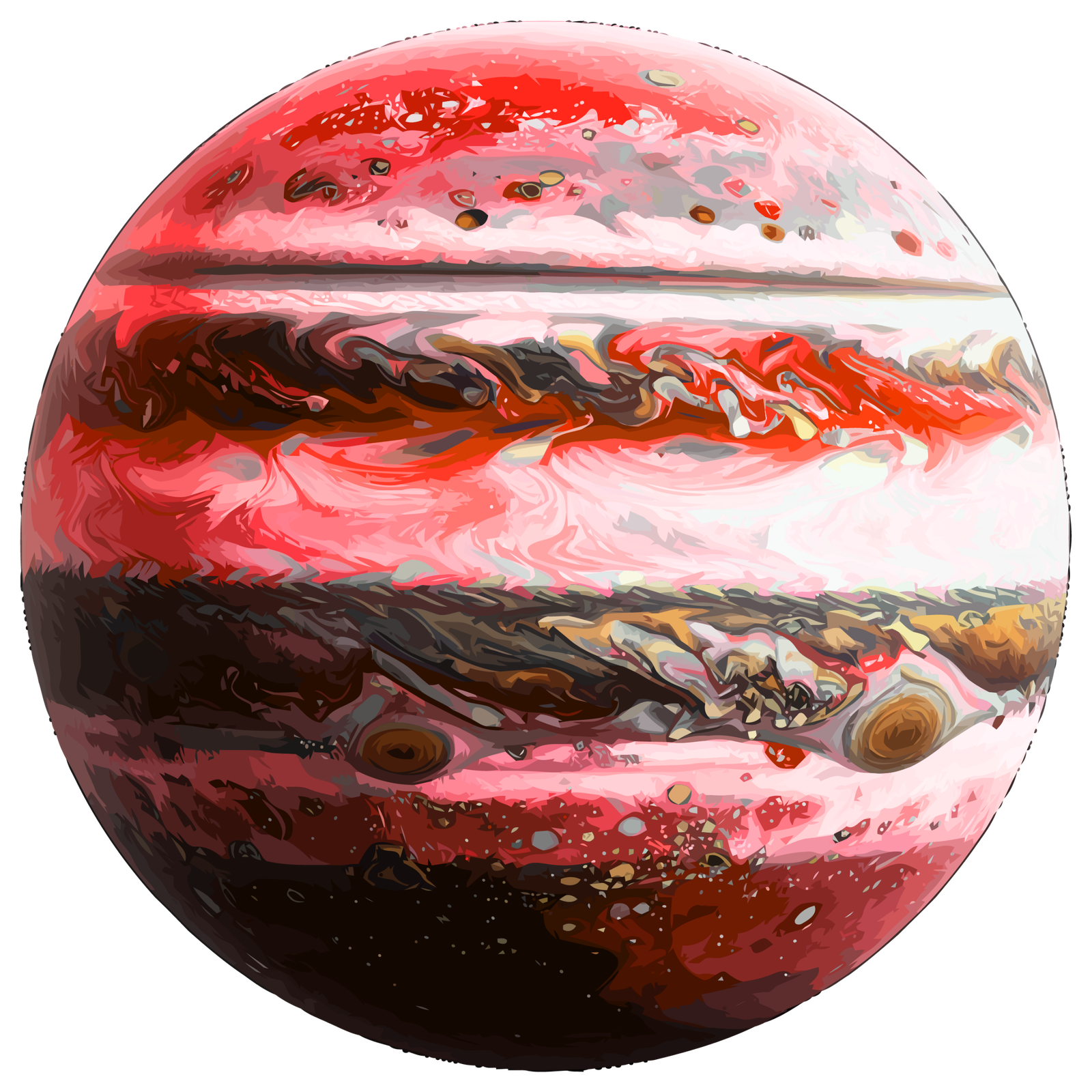
Zoom into this real picture sun researchers captured and you’ll find something strange, thousands of tiny, swirling whirlpools rippling across the boundaries between different magnetic regions. Scientists are calling this the Kelvin-Helmholtz instability, a phenomenon first described mathematically all the way back in the 1870s by physicists Lord Kelvin and Hermann von Helmholtz. It shows up in all kinds of places here on Earth, ocean currents, cloud formations, even the bands on Jupiter and Saturn, but until now, nobody had ever actually observed it happening directly on the surface of the Sun.
The instability occurs when two layers of plasma flow past each other at noticeably different speeds. Along the boundary where they meet, tiny disturbances start to grow, eventually curling into small vortex shapes, kind of like the swirl pattern that shows up when cream gets poured into coffee and starts to spiral before it fully mixes in. Except on the Sun, these swirls are made of scorching plasma tangled up in powerful magnetic fields.
Why This Discovery Actually Matters
This isn’t just a pretty picture for the sake of a pretty picture. Scientists believe these newly observed whirlpools could help explain one of the most stubborn mysteries in solar physics, why the Sun’s outer atmosphere, called the corona, is dramatically hotter than the surface sitting right underneath it. That doesn’t sound like it should make sense, you’d expect temperature to drop as you move away from the source, not skyrocket, but the corona somehow reaches temperatures of over a million degrees while the surface below sits at a comparatively cooler several thousand degrees.
Researchers think these Kelvin-Helmholtz whirlpools might be an important piece of that puzzle, since this kind of turbulence is very good at dissipating magnetic energy, potentially funneling heat upward in a way scientists are only now able to actually observe and study directly. The findings, published in the journal Nature, mark what solar physicists are calling a genuinely major step forward in understanding what drives the Sun’s behavior.
Beyond pure curiosity, understanding what happens on the Sun’s surface has real practical stakes here on Earth. Solar activity drives space weather, and space weather can mess with satellites, power grids, and communication systems back home. Getting a clearer real picture sun researchers can actually study in this kind of detail gives scientists a much better shot at predicting solar storms before they cause problems.
If you want to get a sense of just how far away the Sun actually is compared to the level of detail captured here, our distance sun jupiter calculator is a fun way to put solar system scales into perspective.
A New Era for Solar Science
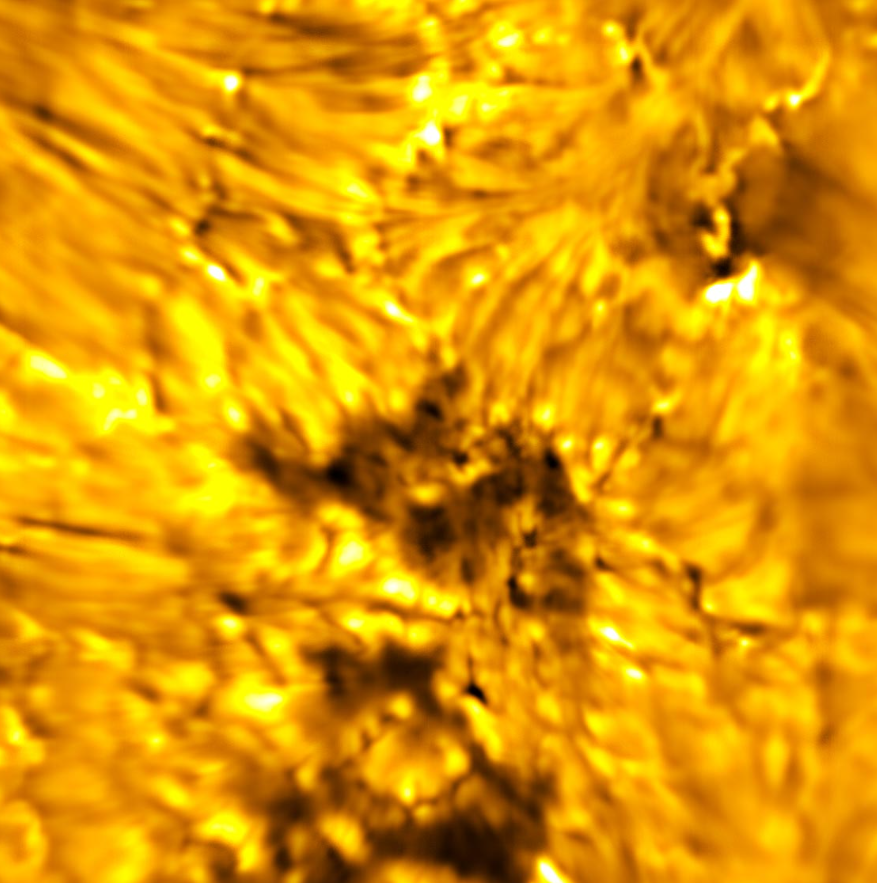
The National Science Foundation’s National Solar Observatory, which operates the Inouye Solar Telescope, says this is only the beginning. With this level of resolving power now available, researchers are already planning to build automated systems that can scan future images and pick out these same swirling signatures across other active regions of the Sun, hopefully building a much clearer picture of how energy actually moves through the star that keeps our entire solar system running.
Its a pretty remarkable reminder that even something as constantly observed as the Sun still has secrets left to reveal, we just needed a big enough mirror and a clear enough vantage point from the top of a Hawaiian volcano to finally see them.
For more on the discovery and additional images from the Inouye Solar Telescope, check out the full coverage from CNN and the detailed breakdown from Sky & Telescope.
If you enjoyed this article, don’t forget to drop us a comment, it really helps support the site, and be sure to check out our other articles because we think you’re going to love them too.