
It’s one of those questions that sounds simple until you actually try to answer it. How many solar systems are in the Milky Way? The honest response starts with a small technicality that trips up a lot of people, but stick with it, because the real numbers underneath that technicality are genuinely staggering.
Wait, Technically There’s Only One Solar System
Here’s the twist most people don’t realize, “solar system” is technically a proper noun. It refers specifically to our own star and everything orbiting it, Mercury, Venus, Earth, Mars, and the rest, because our star is named Sol, the Latin word for Sun. Every other star with planets orbiting it is properly called a planetary system, or sometimes just a star system, not a “solar system” in the strict astronomical sense.
Its a minor point, and most people, including plenty of scientists in casual conversation, use “solar system” loosely to mean any star with orbiting planets. But its worth knowing the distinction exists, because it actually helps clarify exactly what question you’re asking, how many stars are there, and how many of them have planets orbiting them.
So How Many Stars Are We Even Talking About?
The Milky Way is home to somewhere between 100 billion and 400 billion stars, astronomers still don’t have an exact count, since we’re stuck viewing our own galaxy from deep inside it, with huge amounts of gas and dust blocking clear views of much of it. Every single one of those stars is, at minimum, a candidate for hosting its own planetary system.
Research over the past couple decades has pushed scientists toward a genuinely remarkable conclusion, planets around stars appear to be the rule, not the exception. A long running microlensing survey concluded that the average number of planets per star is actually greater than one, meaning there could easily be more planets in the Milky Way than there are stars. Some estimates suggest more than 10 billion Earth-sized, rocky planets alone could exist scattered across the galaxy, before even counting gas giants and everything in between.
What We’ve Actually Confirmed So Far
Estimates are one thing, confirmed discoveries are another, and the gap between the two is enormous. As of mid-2026, astronomers have confirmed 6,316 individual exoplanets, organized into 4,725 distinct planetary systems, with 1,055 of those systems confirmed to host more than one planet. Compare that to the estimated hundreds of billions of stars in the galaxy, and it becomes obvious just how much of the Milky Way remains completely unexplored, we’ve only definitively confirmed planets around a tiny sliver of one percent of the galaxy’s total stars.
That gap exists mainly because detecting planets around other stars is genuinely difficult. Planets don’t produce their own light, and they sit incredibly close to stars that are millions of times brighter, similar to trying to spot a firefly hovering directly next to a lighthouse. Most confirmed exoplanets have been found using indirect methods, watching for a tiny dip in a star’s brightness as a planet passes in front of it, or measuring the subtle gravitational wobble a planet causes in its host star. If you’re curious exactly how these detection methods work, our full breakdown of what an exoplanet is covers the transit and radial velocity techniques responsible for the vast majority of these discoveries.
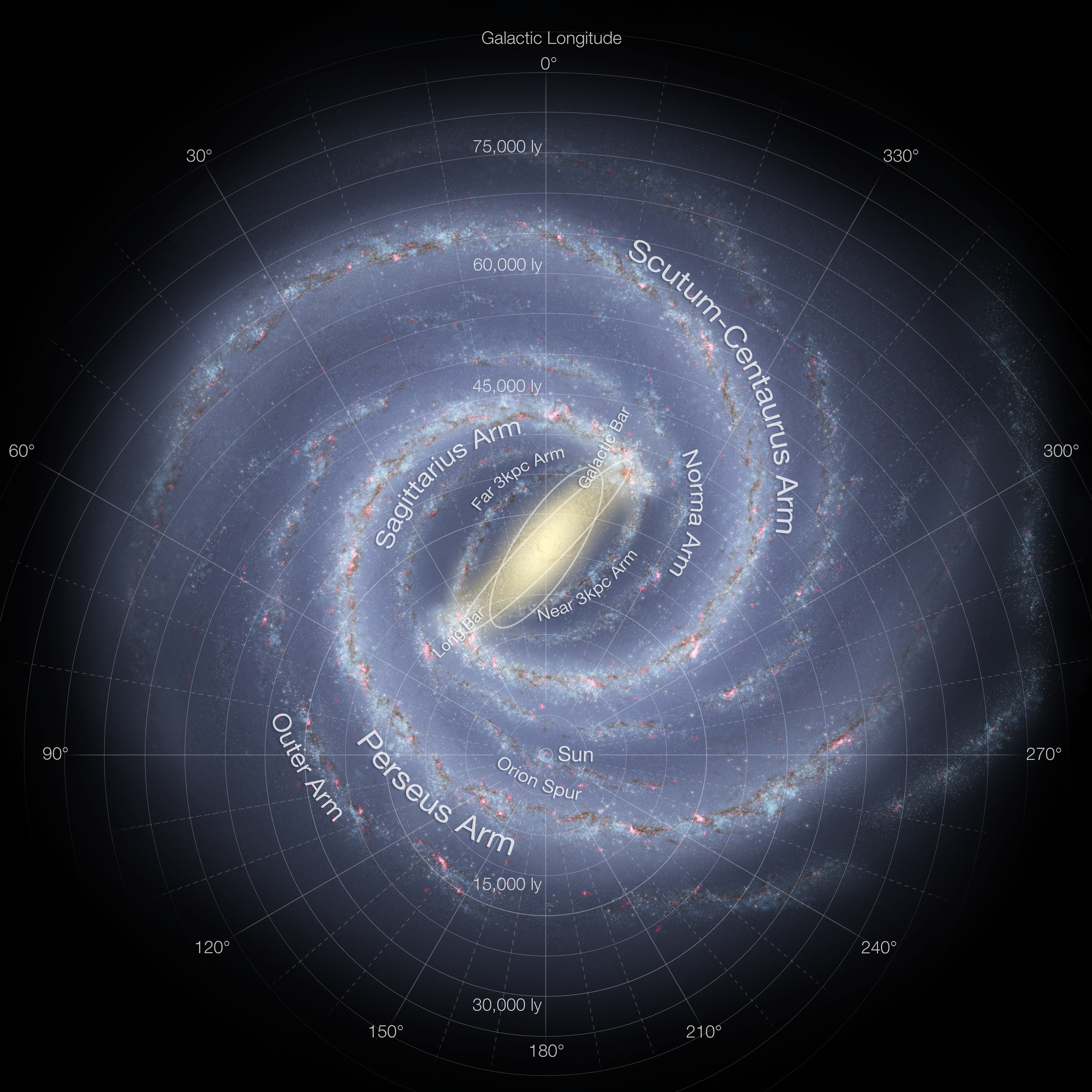 An illustration of the Milky Way’s spiral structure, showing our Sun’s location within a minor spiral arm called the Orion Spur. Our entire solar system is just one of hundreds of billions of star systems scattered throughout the galaxy. (Image: NASA-JPL, Caltech, ESO, Robert Hurt)
Some Genuinely Wild Systems Already Confirmed
A handful of the planetary systems astronomers have already confirmed are strange enough to sound like science fiction. TRAPPIST-1, a small, cool red dwarf star, hosts seven roughly Earth-sized planets packed into an unusually compact system, several sitting in a range where liquid water could theoretically exist. Kepler-16b made headlines for orbiting two stars at once, meaning a sunset there would show two suns dipping below the horizon together. And right in our own cosmic backyard, Proxima Centauri, the closest star to our Sun, hosts its own confirmed planet sitting in its habitable zone, though the star’s violent flares raise real doubts about whether that planet could actually support life. Our detailed profile of Proxima Centauri b digs deeper into exactly that question.
Why the Real Number Will Always Stay an Estimate
Given how far away most of the galaxy actually is, and how faint and difficult planets are to detect even around relatively nearby stars, theres no realistic way astronomers will ever individually confirm every single planetary system in the Milky Way. What they can do is keep refining the statistical estimates, using missions like NASA’s Kepler and TESS, along with data from the European Space Agency’s Gaia mission, to sample enough stars that the broader pattern becomes clear.
Right now, that pattern points toward a genuinely humbling conclusion, planetary systems aren’t rare, they might be closer to universal. Every star you can see in the night sky, and billions more you can’t, are increasingly likely candidates for hosting worlds of their own, some rocky, some gas giants, and a still unknown number that might actually resemble the one we call home.
For more detailed data on confirmed discoveries and the ongoing search, check out NASA Space Place’s overview of solar systems in our galaxy and the continuously updated statistics from NASA’s Exoplanet Archive.
If you enjoyed this article, don’t forget to drop us a comment, it really helps support the site, and be sure to check out our other articles because we think you’re going to love them too.