
“Exploration is in our nature,” said Neil Armstrong. This urge drives us to explore the cosmos. But, we face biological challenges when we leave Earth for long periods.
Spending 365 days in space is a big challenge. Scientists are studying how space travel affects our bodies. They want to keep future space travelers healthy on long missions. We need to know what happens to the human body after a year in space? to prepare for deep space travel.
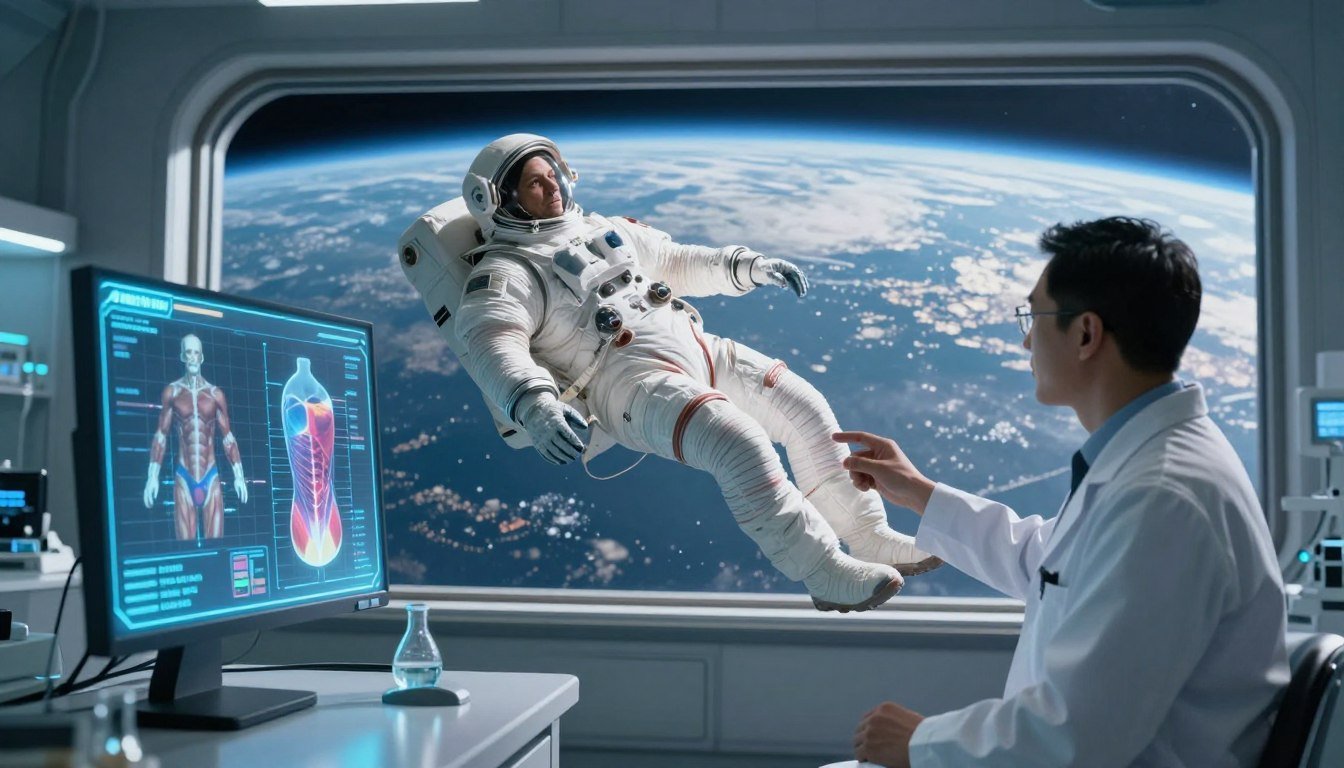
Being in space changes our bones, muscles, and even how we see things. Our bodies are strong, but space life takes a toll. We need to watch our health closely. We’re looking into how these changes affect our journey to the stars.
Key Takeaways
- Extended orbital missions trigger significant physiological shifts.
- Microgravity impacts bone density and muscle strength over time.
- Vision changes represent a critical area of ongoing medical research.
- Psychological well-being remains vital for long-duration crew success.
- Advanced exercise protocols help mitigate physical degradation during flight.
The Physiological Toll of Microgravity
When astronauts enter a weightless environment, their bodies undergo quick physiological changes. They must adjust to not having Earth’s gravity. This spaceflight impact on health is crucial for keeping astronauts safe on long missions.

Muscle Atrophy and the Loss of Strength
Muscles start to weaken without the need to fight gravity. This is called atrophy. It hits the muscles that keep us standing the hardest.
- Less muscle mass means less strength overall.
- Astronauts must exercise a lot to stay strong.
- They need to do resistance training to fight physiological changes in space.
Bone Density Changes and Calcium Redistribution
Bones need stress to stay strong. Without gravity, bones lose minerals, making them weaker.
Astronauts can lose 1% to 1.5% of bone density each month. This calcium can lead to kidney stones. To manage these zero gravity health impacts, astronauts need special diets and lots of exercise.
Fluid Shifts and Cardiovascular Adjustments
Gravity pulls fluids down on Earth, but in space, they move to the head and chest. This causes the “puffy face, bird leg” look.
This change makes the heart work harder. Over time, the heart might shrink. Fixing these muscle and bone deterioration in space issues is key for Mars missions.
What Happens to the Human Body After a Year in Space?
Spending a year in space changes the body in many ways. You can see changes like muscle loss. But the internal physiological shifts are just as important for success in space.

Vision Changes and Intracranial Pressure
Spaceflight can harm the eyes. In microgravity, fluids move to the head, raising pressure. This can change the shape of the eyeball and cause swelling of the optic nerve.
These vision changes are a big concern. Without the right treatments, astronauts might lose their vision. Doctors are working hard to prevent this.
Immune System Suppression in Orbit
Living in space weakens the immune system. Long missions can make it harder for the body to fight off infections. This is because the immune system is not as strong.
“The environment of space is inherently hostile to human biology, requiring constant vigilance to maintain the delicate balance of our internal systems.”
Even small infections can be serious in space. Scientists are looking for ways to keep astronaut health in space strong. They are testing new diets and exercise plans.
Microbiome Alterations During Long-Term Missions
The gut microbiome changes a lot in space. The stress of space and different diets can upset the balance of good bacteria. This can affect how we absorb nutrients and our mood.
| System | Primary Concern | Health Impact |
|---|---|---|
| Ocular | Intracranial Pressure | Vision Impairment |
| Immune | Suppression | Infection Risk |
| Digestive | Microbiome Shift | Nutrient Absorption |
Keeping the microbiome healthy is key for long missions. Researchers are looking into probiotics and special diets. By protecting the gut, we can help astronauts stay healthy in space.
The Impact of Space Radiation on Cellular Health
When we leave Earth’s magnetic field, our bodies face high-energy particles. These can change how our cells work. While we often talk about the effects of weightlessness, astronaut health in space is also at risk from radiation. This is a big challenge for missions to the Moon or Mars.
Understanding Cosmic Rays and Solar Particle Events
Space radiation comes from two main sources. Galactic cosmic rays come from outside our solar system. They are made of high-energy protons and heavy nuclei that are extremely difficult to stop. These rays are always there and pose a constant risk.
Solar particle events, on the other hand, are sudden bursts of radiation. They are caused by solar flares or coronal mass ejections. Being ready for these sudden spikes is key to keeping astronauts safe.
DNA Damage and Long-Term Cancer Risks
The effects of space radiation on our cells are serious and can add up over time. When high-energy particles hit our bodies, they can damage DNA or create harmful molecules. This raises the risk of getting cancer later on.
Also, radiation can cause cataracts in astronauts. The eyes are very sensitive to these particles. Keeping the body’s delicate tissues safe is a major concern for medical teams.
Shielding Technologies and Protective Measures
Engineers are working on new ways to protect us from space radiation. Traditional aluminum shielding works for some particles but can create more radiation when hit by heavy cosmic rays. So, they are looking at hydrogen-rich materials like polyethylene. These materials are better at absorbing energy without causing harm.
Future spacecraft might use active electromagnetic shielding. This would work like Earth’s magnetic field to deflect charged particles. These new technologies are crucial to reduce the zero gravity health impacts and radiation risks. With these protections, we can keep the next group of space explorers safe on their journey.
Psychological Challenges of Long-Duration Missions
Space travel is not just about physical strength. It also requires deep mental toughness. As astronauts go further from Earth, the long-term space mission effects on their minds are a big concern. Keeping them mentally sharp and emotionally stable is key for any long journey.
The Effects of Isolation and Confinement
Astronauts often feel a deep sense of being away from home. Living in a small space for months can make them irritable and cause tension with others. These long-term space mission effects need careful handling by those on the ground.
Without fresh air or a big social circle, astronauts must rely on each other. Building a strong team is crucial to avoid the downsides of being isolated for so long. Talking to family back on Earth helps keep their spirits up.
Circadian Rhythm Disruptions and Sleep Quality
In space, the lack of sunlight messes with the body’s clock. This often leads to bad sleep, affecting how well they think and feel. Poor sleep can also increase the chance of mistakes during important tasks.
To fix this, space agencies use special lights to mimic Earth’s day-night cycle. These lights help control melatonin and keep the crew’s body clocks in sync. Managing these long-term space mission effects is essential to keep everyone alert and focused.
Maintaining Mental Well-being in Extreme Environments
Astronauts stick to strict routines to feel some sense of normalcy. They do hobbies, exercise, and share meals to stay connected. These activities help them cope with the stress of being in a tight, high-stress space.
They also have access to counseling to support their mental health. By focusing on mental well-being, space agencies help astronauts stay effective and united. The table below shows common stressors and how to deal with them during space travel.
| Psychological Stressor | Primary Impact | Mitigation Strategy |
|---|---|---|
| Social Isolation | Loneliness and tension | Family video calls |
| Sleep Deprivation | Reduced cognitive focus | Artificial light therapy |
| Confinement | Increased irritability | Structured daily routines |
| Lack of Privacy | Emotional fatigue | Personal quiet time |
Recovery and Readaptation to Earth’s Gravity
The journey home for astronauts is more than just landing. It’s a complex biological transition. After months in space, the body must adjust to Earth’s gravity. This requires careful medical attention to reverse physiological changes in space safely.
Immediate Post-Flight Physical Therapy
After landing, the main concern is helping astronauts regain balance and coordination. The inner ear and nervous system adapt to microgravity. Physical therapists help stabilize gait and prevent falls in these critical hours.
Exercises target muscle and bone deterioration in space. Medical teams focus on weight-bearing activities. This helps the body support its mass against gravity again. Immediate action is key to restoring strength and mobility.
The Timeline for Full Physiological Recovery
Recovery is not quick. The body needs time to adjust. While some functions return quickly, others take longer. NASA’s Twins Study found 7% of gene expression changes lasted six months after returning.
This shows the resilience and long-term sensitivity of the human body to space. Scientists monitor these effects to understand long-term health impacts. Patience and consistent medical monitoring are crucial for recovery.
Lessons Learned for Future Mars Missions
Planning for Mars missions requires understanding muscle and bone deterioration in space over long periods. Current recovery protocols help design better countermeasures. It’s important for astronauts to be healthy enough for complex tasks on arrival.
Studying physiological changes in space helps plan for human exploration. Each successful return gives us data for protecting our explorers. Preparation is the key for safe and sustainable Mars missions.
Conclusion
Living in orbit for a year is a big step for humans. It shows how strong our bodies can be. It also shows how well we can adapt to new environments.
NASA and other countries are working hard to keep astronauts safe in space. They learn a lot from each mission. This knowledge helps them plan for trips to Mars.
We’re figuring out how to handle life in space. This knowledge makes the idea of living on other planets seem possible. It’s a dream that’s becoming more real.
We need to keep improving our technology and health checks. Your interest in space helps us move forward. Stay excited for what’s next as we head to Mars.
FAQ
What happens to the human body after a year in space?
Spending a year in space changes the body in many ways. Fluids move to the upper body, causing a “puffy face.” Bones and muscles weaken without Earth’s gravity. NASA’s Twins Study showed that long space stays affect genes and eye shape.
How severe is muscle and bone deterioration in space during long missions?
In space, bones lose mineral fast. Astronauts can lose 1% to 1.5% of bone density each month. To prevent muscle loss, they do intense exercises daily.
What are the primary space radiation effects on the human body?
Astronauts face high-energy rays in space. These can damage DNA, increase cancer risk, and cause cataracts. Shielding spacecraft is key to protecting astronauts on Mars trips.
Does spending a year in orbit affect an astronaut’s vision?
Yes, astronauts often get Spaceflight Associated Neuro-ocular Syndrome (SANS). It causes eye changes that can affect vision. These changes can be permanent if not managed.
How do zero gravity health impacts affect the cardiovascular system?
In space, blood moves to the upper body. This makes the heart work differently. Astronauts may feel dizzy when standing after returning to Earth.
What are the long-term space mission effects on mental health and sleep?
Living in space is tough on the mind. Astronauts see 16 sunrises and sunsets daily, disrupting sleep. Psychological support helps them cope with isolation.
Can the immune system be compromised by space travel effects on the human body?
Space travel can weaken the immune system. It can reactivate viruses and change the gut microbiome. NASA focuses on studying the microbiome to protect astronauts.
How long does it take for the body to recover after a year-long mission?
Recovery starts when astronauts land. Some effects go away quickly, but others take months. Scott Kelly’s mission showed that some changes last even after returning.