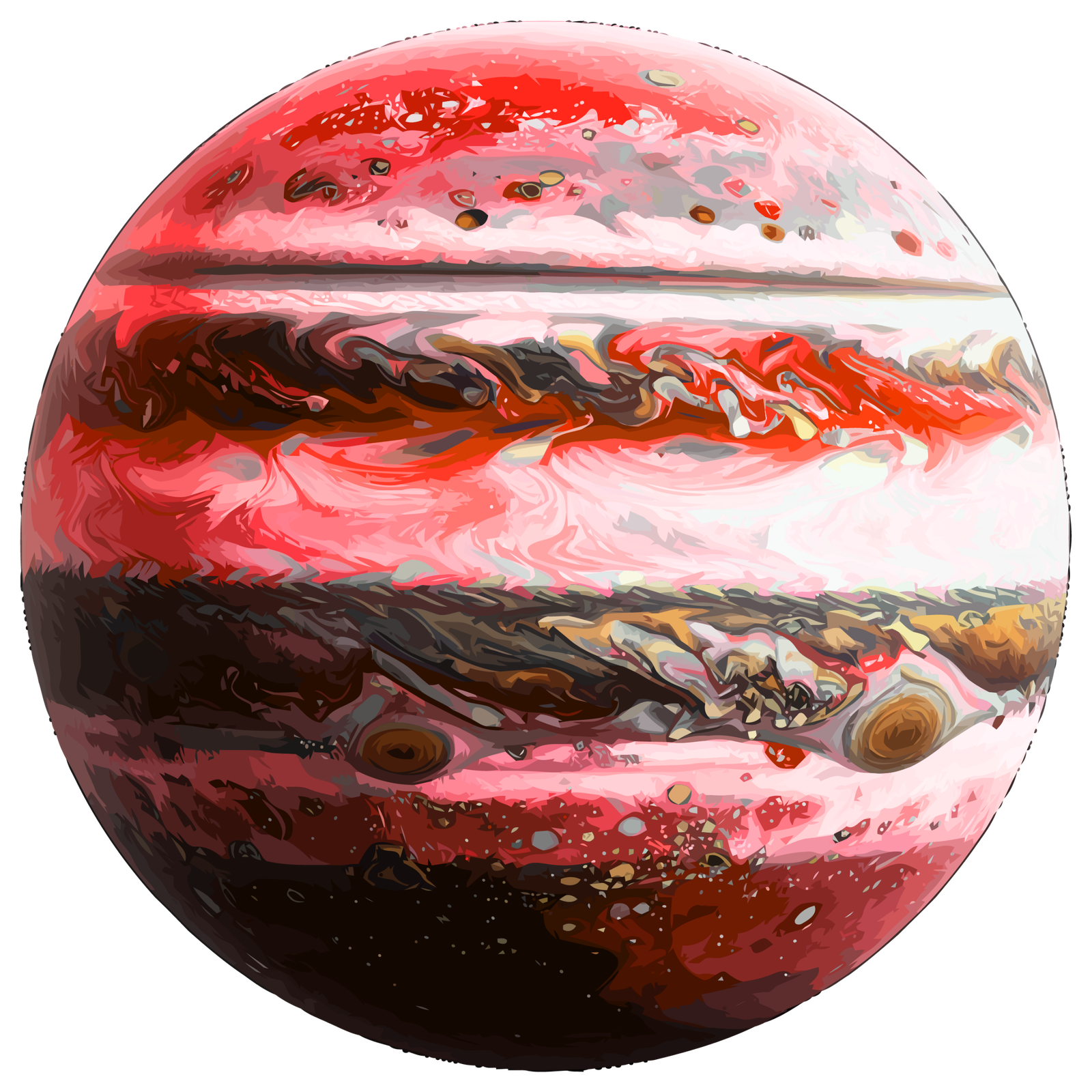

Ever thought a planet could just tip over? Our solar system looks like a predictable dance of spheres. But one world breaks the rules. Why Does Uranus Rotate on Its Side is a big mystery in astronomy.
Most planets spin like tops, but Uranus spins at a 90-degree angle. This extreme tilt makes us question how solar systems form. It’s like a cosmic accident that makes us rethink our neighborhood’s violent past.
In this article, we’ll look at the main theories for Uranus’s odd spin. We’ll check out the evidence for big collisions and gravity shifts that shaped it. Let’s explore the secrets of this cold, mysterious planet together.
Key Takeaways
- The planet exhibits an extreme axial tilt of nearly 98 degrees.
- Standard planetary formation models struggle to explain this unique orientation.
- Astronomers believe a massive collision likely caused the shift.
- This behavior makes the planet a vital subject for studying solar system history.
- Understanding this tilt helps us learn about the chaotic nature of early space development.
The Unique Nature of Uranus in Our Solar System
To understand why Uranus is so different, we must look at its unique features. It stands out from other planets in our solar system. This is because of its solar system planet characteristics that are unlike any other.

Defining the Ice Giant Category
Many people confuse Uranus with Jupiter and Saturn. But, Uranus is actually an ice giant. It has a different makeup than the gas giants, with more “ices” like water, ammonia, and methane.
These icy materials are in a dense, hot state deep inside Uranus. This affects its magnetic field and planetary rotation patterns. Knowing these differences helps us understand why Uranus is so unique.
| Planet | Primary Composition | Classification |
|---|---|---|
| Jupiter | Hydrogen/Helium | Gas Giant |
| Saturn | Hydrogen/Helium | Gas Giant |
| Uranus | Water/Ammonia/Methane | Ice Giant |
Historical Observations of the Seventh Planet
William Herschel discovered Uranus in 1781, a major breakthrough in astronomy. This event changed our view of the universe. It showed us that there was more to explore beyond what was known before.
At first, it was hard to understand Uranus because it’s so far away. It took years to figure out its anomalous tilt was real. Today, we see how this discovery led to new insights in planetary science.
Understanding the Axial Tilt of Uranus
Studying the outer solar system, I find Uranus’ odd orientation fascinating. Its axial tilt of uranus is so extreme that it rolls like a ball in space. This makes it unique among the Sun’s major bodies.

Measuring the 98-Degree Inclination
Astronomers use light reflection to find the uranus rotation axis. They track light curves to map the planet’s wobble. Radio emissions also help, showing the magnetic field’s alignment with the planet’s rotation.
These methods confirm Uranus’ tilt at 98 degrees. This extreme tilt means one pole faces the Sun for most of the year. It’s a remarkable geometric anomaly that challenges our understanding of how planets form.
How Uranus Compares to Earth and Other Planets
Earth’s tilt is about 23.5 degrees, causing our seasonal changes. In contrast, Uranus’ tilt leads to decades-long seasons.
The table below shows how Uranus’ uranus rotation axis is different from other planets. It’s clear that Uranus is a true outlier in our solar system.
| Planet | Axial Tilt (Degrees) | Rotation Style |
|---|---|---|
| Earth | 23.5 | Upright |
| Jupiter | 3.1 | Nearly Vertical |
| Uranus | 98.0 | Rolling |
| Neptune | 28.3 | Moderate |
Why Does Uranus Rotate on Its Side: The Leading Scientific Theories
Understanding why Uranus rotates on its side takes us back to the violent start of our solar system. Unlike most planets, Uranus spins differently. This ice giant’s unique spin is a big mystery for scientists.

The Catastrophic Collision Hypothesis
Many scientists think a huge, Earth-sized protoplanet hit Uranus long ago. This colossal impact could have tilted the planet so much.
This crash was very messy. It likely scattered debris that formed Uranus’s rings and moons. This theory fits well with the planet’s tilt and its moons’ orbits.
Gravitational Interactions During Early Solar System Formation
Another idea is the early solar system’s chaotic phase. During this time, planets moved a lot, pulling on each other. These pulls might have tilted Uranus.
The Role of Protoplanetary Disk Dynamics
The young planet was surrounded by gas and dust. This created a disk that pulled on the planet. I think this disk’s pull helped shape Uranus’s tilt.
Testing Models Through Computer Simulations
Experts use computer simulations to test these theories. They run many scenarios to see if a collision or gravitational pull could cause Uranus’s tilt. These simulations help us understand why Uranus rotates on its side.
The Impact of Giant Impacts on Planetary Formation
I find it fascinating to think about how the early solar system’s chaos shaped our planets. Back then, giant impacts were not just possible; they were common. These events were key in defining the solar system planet characteristics we see today.
Evidence for Massive Collisions in the Early Solar System
Looking at the geological records of other worlds, I see signs of a violent past. Many moons and planets have heavy cratering, showing a period of intense bombardment. This supports the idea that large protoplanets collided as they competed for space and material.
These massive collisions likely stripped away atmospheres or created debris disks. They offer a strong explanation for the causes of uranus unique rotation. By studying these remnants, researchers can piece together our cosmic home’s turbulent history.
Could a Single Large Object Tilt a Planet?
The physics of momentum transfer suggests a single, massive impact could tilt a planet. If a body the size of Earth hit a young planet, the energy released would be huge. This catastrophic event could change the planet’s rotational orientation.
But, this theory needs very specific conditions to be true. The impactor’s angle and velocity must be perfectly aligned. While mathematically possible, it’s a topic of debate among planetary scientists.
Alternative Theories: Multiple Smaller Impacts
Some researchers think a series of smaller impacts could have tilted a planet. Instead of one giant blow, a planet might have been nudged by several smaller objects. This approach offers a more gradual view of solar system planet characteristics.
This theory suggests the causes of uranus unique rotation might be due to a long-term process, not a single disaster. Below is a comparison of these two theories on the planet’s current state.
| Theory Type | Primary Mechanism | Likelihood | Impact Evidence |
|---|---|---|---|
| Single Giant Impact | High-energy collision | Moderate | High orbital disruption |
| Multiple Small Impacts | Cumulative momentum | High | Gradual axis shift |
| Hybrid Model | Combined forces | Low | Complex orbital data |
Comparing Uranus to Other Gas Giants and Ice Giants
I find it fascinating to compare the spin of our gas giants with Uranus’ unique tilt. Most planets spin upright, but Uranus stands out. This shows us the violent history of our solar system.
Rotation Patterns of Jupiter and Saturn
Jupiter and Saturn spin fast and steadily. Their axes are almost straight up and down. This consistent gas giants rotation behavior keeps them steady as they orbit the Sun.
These planets formed from a lot of gas and dust. Their spin has stayed the same. They show us what we expect from big, distant planets. Their upright spin shows they formed calmly, unlike Uranus.
“The diversity of our solar system is not a flaw, but a window into the chaotic and beautiful history of planetary formation.”
Why Neptune Maintains a More Conventional Tilt
Neptune is like Uranus in size and makeup. But Neptune has a tilt of about 28 degrees. This shows how different gas giants can be.
Why did Neptune and Uranus form differently? Uranus’ tilt is likely due to a unique, localized event. Neptune’s steady spin shows it missed the big impacts that tilted Uranus.
How Uranus Orbit Deviation Affects Its Climate and Seasons
The tilt of Uranus leads to extreme seasonal changes. This tilt is key to the planet’s climate. It makes Uranus’s climate unlike anything on Earth.
The Extreme Seasonal Cycle of Uranus
Uranus’s seasonal cycle is truly unique. Its tilt causes each pole to get 21 years of constant sunlight. Then, it gets 21 years of total darkness.
At equinoxes, the Sun shines over the equator, balancing light. But for most of its 84-year orbit, one side is in a deep freeze. This leads to huge temperature swings.
Atmospheric Dynamics and Heat Distribution
The tilt affects how heat moves in Uranus’s atmosphere. Summer at the poles creates strong winds and storms. These winds help spread heat around the planet.
Despite having less internal heat than other gas giants, Uranus still has active weather. The table below shows how the tilt affects Uranus’s seasons:
| Seasonal Phase | Sunlight Exposure | Primary Climate Effect |
|---|---|---|
| Solstice | One pole in constant light | Maximum heat imbalance |
| Equinox | Sun over the equator | Increased atmospheric turbulence |
| Transition | Gradual shift in light | Changing wind velocity |
The tilt of Uranus is crucial for its climate. Without this tilt, Uranus’s weather would be much more stable. Instead, it’s a world constantly trying to balance its heat.
The Role of Moons and Rings in Planetary Stability
Looking at Uranus, I see more than just a tilted planet. It’s a complex dance of gravity. The planet’s satellites and rings give us clues about its history. Understanding the uranus rotation axis involves seeing how these smaller bodies interact with the giant planet.
Could Moons Have Influenced the Tilt?
It’s interesting to think if Uranus’ moons helped stabilize or disrupt the planet. Some scientists believe massive satellite migrations early on could have changed its tilt. This gravitational interplay is key in studying planetary system evolution.
The moons of Uranus orbit in the same plane as the planet’s equator. This suggests they formed from debris after a major event that tilted the planet. So, the moons likely adapted to the planet’s new tilt rather than causing it.
The Relationship Between Rings and Rotational Axis
The ring system of Uranus is another important piece of the puzzle. These rings are thin and dark, tracing the planet’s equator perfectly. This shows the gas giants rotation behavior, where rings settle into the equatorial plane due to gravity.
By looking at these rings, I see that Uranus’ rotation is stable. The rings act as a visual guide to the uranus rotation axis. They show the entire system is locked into this extreme tilt. This helps me understand how Uranus is different from other gas giants in our solar system.
| Feature | Uranus | Saturn | Jupiter |
|---|---|---|---|
| Axial Tilt | 98 Degrees | 27 Degrees | 3 Degrees |
| Ring Alignment | Equatorial | Equatorial | Equatorial |
| Primary Influence | Catastrophic Impact | Internal Dynamics | Internal Dynamics |
Modern Astronomical Observations and Future Missions
My interest in the seventh planet grows with each passing day. We’ve made big steps in space, but much remains unknown. Looking back at our past achievements helps us prepare for the future.
What Voyager 2 Taught Us About the Planet
In 1986, Voyager 2 gave us our first close look at Uranus. This historic flyby is still our main source of data. It showed us a complex world with a unique magnetic field and surprising rings.
This data helped us learn a lot about Uranus:
- It revealed ten new moons orbiting the planet.
- It showed us the extreme temperatures in the atmosphere.
- It gave insights into the planet’s strange magnetic field.
The Need for Dedicated Uranus Orbiter Missions
Despite Voyager 2’s success, we still know very little. We only saw one side of Uranus briefly. A dedicated orbiter is needed to solve the mysteries of Uranus’s orbit.
A new mission would let us study Uranus’s interior and atmosphere in detail. By watching astronomy planetary movements for longer, we could learn about Uranus’s history. This mission is crucial for understanding how planets form and change in our solar system.
Conclusion
The story of Uranus shows us how much we still don’t know about space. Its tilted axis is a big mystery in modern astronomy. By studying it, we learn about the violent history of our solar system.
The idea that a massive impact caused Uranus’s tilt is the most popular theory. I think future missions will help prove if this really happened. Each new discovery brings us closer to understanding how our sun and planets were born.
I hope this story about Uranus makes you want to look up at the stars. Learning about these distant worlds shows us how connected we are in the universe. Share your thoughts on what might have caused Uranus to tilt. Your curiosity keeps the spirit of discovery alive for all of us.
FAQ
Why does Uranus rotate on its side compared to its neighbors?
My study of astronomy planetary movements shows that Uranus likely suffered a catastrophic collision with an Earth-sized protoplanet. This impact was so strong that it knocked the planet over. Now, Uranus rolls through space, unlike other planets that spin upright.
What is the specific measurement of the axial tilt of Uranus?
The axial tilt of Uranus is about 98 degrees. Earth’s tilt is only 23.5 degrees. This extreme tilt makes Uranus’ poles where other planets have equators, making it unique.
How does the Uranus orbit deviation influence its seasonal cycles?
Uranus’ tilt creates extreme seasons. Each pole gets 21 years of continuous sunlight followed by 21 years of darkness. This unique tilt affects the planet’s atmospheric dynamics and heat distribution.
Is Uranus classified alongside gas giants like Jupiter and Saturn?
While Uranus shares some traits with gas giants, it’s actually an ice giant. It has more “ices” like water and methane than hydrogen and helium. This makes it different from Jupiter and Saturn.
Did William Herschel notice the tilt when he discovered the planet?
A: William Herschel discovered Uranus in 1781 but didn’t notice its tilt right away. It took years of astronomical observations to confirm the planet’s tilt. Our understanding has grown a lot since then.
Could there be other reasons for why Uranus rotates on its side besides a collision?
Besides the giant impact theory, other models exist. Some think gravitational interactions with other planets or a lost moon could have tilted Uranus. Computer simulations are testing these ideas.
How do the rings of Uranus relate to its tilted axis?
The rings of Uranus orbit around the planet’s tilted equator. They likely formed from debris after the massive collision that tilted Uranus. This keeps the rings and moons aligned with the planet’s new rotation axis.
What did the Voyager 2 mission reveal about the planet?
The Voyager 2 flyby in 1986 gave us detailed data on Uranus’ magnetic field. It confirmed the magnetic field is also tilted, adding to the mystery of Uranus. A future Uranus Orbiter mission could reveal more secrets.