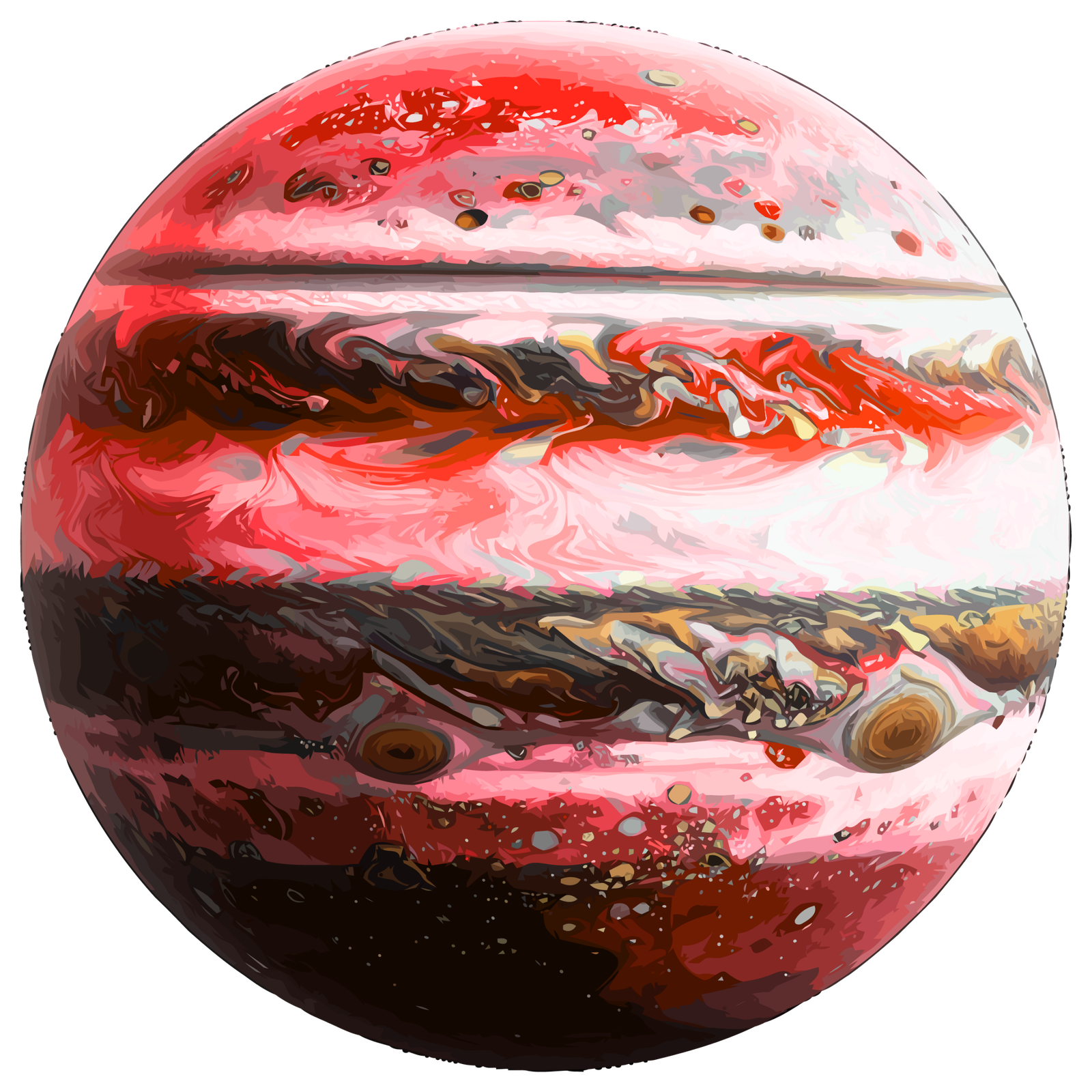

Jupiter has 115 officially recognized moons as of August 2026, according to NASA and the International Astronomical Union. That number has climbed fast, and it’s still growing, here’s the current count and why it keeps changing.
From 4 to 115 in Four Centuries
Jupiter’s moon story starts in January 1610, when Galileo Galilei pointed a telescope at the planet and spotted four bright points of light orbiting it, Io, Europa, Ganymede, and Callisto. Those four remain Jupiter’s largest and most famous moons today, together accounting for the vast majority of all the mass orbiting the planet. For centuries afterward, new discoveries came slowly, one or two at a time, as telescope technology improved bit by bit.
That pace changed dramatically in recent years. Jupiter sat at 79 confirmed moons in 2018, climbed to 95 by 2023, and has since pushed past 100, reaching 115 as of August 2026, with the most recent batches confirmed by the Minor Planet Center in March and April alone.
Why the Count Keeps Climbing
Most of Jupiter’s moons aren’t the dramatic, headline-grabbing kind, they’re small, irregular chunks of rock just a few kilometers across, far too faint for older telescopes to ever catch. Modern survey campaigns, particularly work led by Scott Sheppard’s team at the Carnegie Institution, have gotten dramatically better at spotting these tiny, dim objects and confirming their orbits actually circle Jupiter rather than the Sun.
That confirmation process is genuinely painstaking, each candidate needs its orbit tracked over multiple observations before the Minor Planet Center will grant it a permanent designation. Because of that lag, moon counts you find published even a year or two apart can look surprisingly different, and it’s not because astronomy got something wrong, it’s because the search keeps getting better.
Two Very Different Groups of Moons
Jupiter’s moons split cleanly into two categories. The eight innermost moons, including all four Galilean giants, likely formed alongside Jupiter itself from the same disk of gas and dust, and they orbit in neat, circular paths close to the planet’s equator. The rest, the overwhelming majority of that 115 total, are irregular outer moons, thought to be captured asteroids or comet fragments that wandered too close to Jupiter’s enormous gravity and got trapped in distant, eccentric orbits.
If you’re curious how Jupiter’s moon count stacks up against the current leader, our piece on how many moons Saturn has covers the planet that recently overtook Jupiter for the solar system’s crown, currently sitting well ahead with nearly 300 confirmed moons of its own.
A Number That Won’t Stay Fixed for Long
Given how quickly Jupiter’s count has grown just over the past few years, 115 almost certainly won’t be the final answer for long. NASA itself frames the moon count less as a fixed fact and more as a live measurement, one that keeps rising as survey technology keeps improving and astronomers keep confirming what’s already quietly orbiting out there.
For the most current, official count straight from the source, check out NASA’s Jupiter Moons page and the discovery announcements from the International Astronomical Union’s Minor Planet Center.
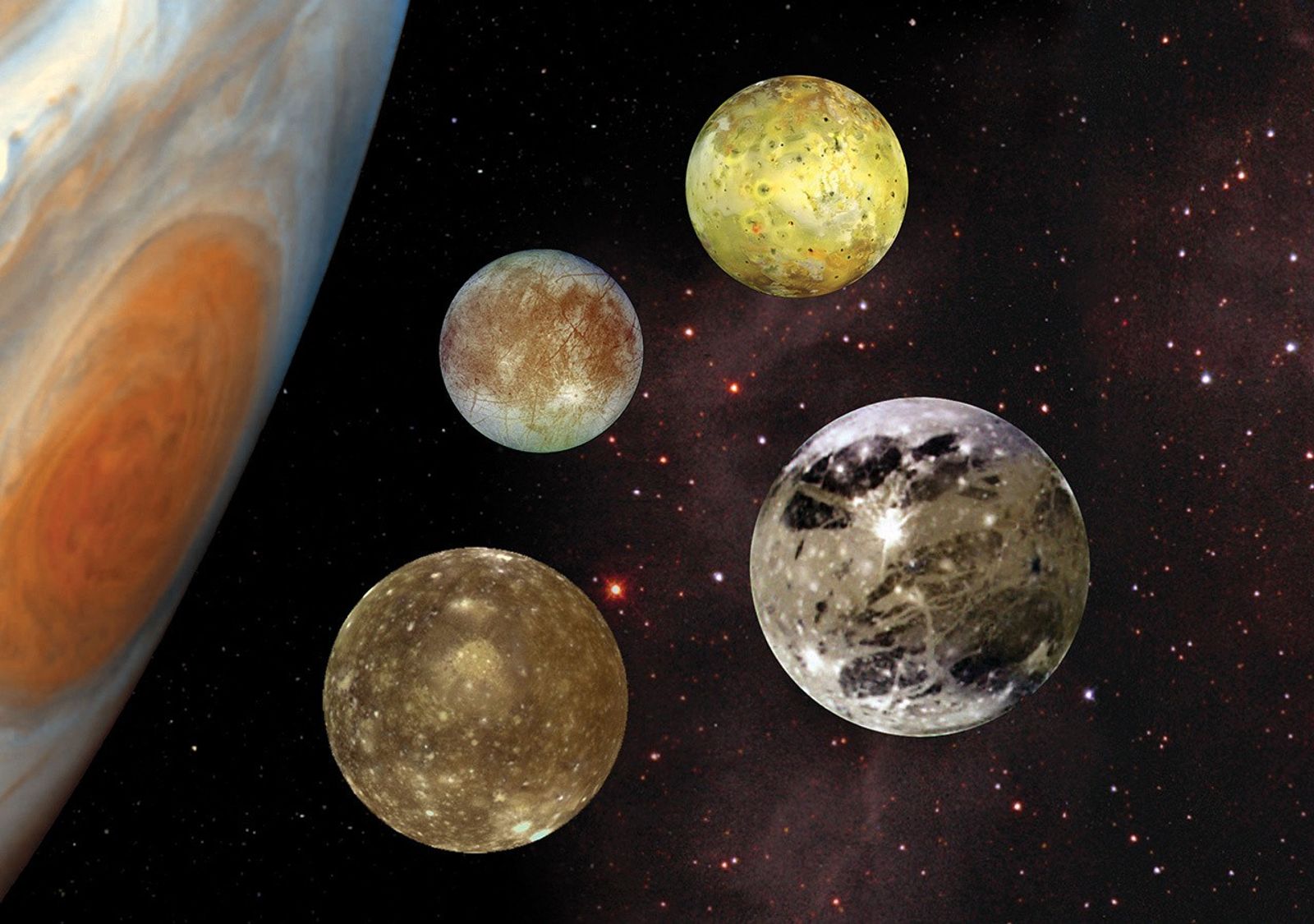 A composite portrait of Jupiter and its four largest moons, Io, Europa, Ganymede, and Callisto, the same four Galileo discovered in 1610. (Image: NASA)
If you enjoyed this article, don’t forget to drop us a comment, it really helps support the site, and be sure to check out our other articles because we think you’re going to love them too.