

On Wednesday, August 12, the Moon’s shadow swept across Greenland, Iceland, and northern Spain, giving mainland Europe its first total solar eclipse in 27 years. For a fleeting two minutes over towns like León and Zaragoza, day turned briefly to twilight, and the Sun’s ghostly corona blazed into view.
A Rare Guest Over the Iberian Peninsula
The path of totality entered from the Arctic, crossed Greenland’s east coast and a sliver of Iceland, then swept diagonally across northern Spain before dipping into the Mediterranean near sunset. Spain hadn’t hosted a major total eclipse since 1905, making this a genuinely historic event for skywatchers there. Because totality arrived so close to sunset, observers got a rare “golden hour” eclipse, with the darkened Sun hanging low over the western horizon rather than high overhead.
In León, the partial phase began at 7:32 p.m. local time, with totality itself starting around 8:28 p.m. and lasting roughly two minutes before the eclipsed Sun slipped below the horizon entirely.
Catching the Corona
During totality, the Moon blocked the Sun’s blinding disk completely, revealing the corona, the Sun’s wispy outer atmosphere that’s normally far too faint to see. Photos from the ground captured something even rarer, a glowing loop of solar plasma called a prominence, visible extending off the Sun’s edge into the corona itself, some prominences can stretch many times taller than Earth is wide.
NASA didn’t just watch from the ground. A WB-57 high-altitude jet chased the Moon’s shadow over Iceland at 50,000 feet, using an instrument called SAMI to photograph the corona in nine wavelengths from visible light to infrared. Scientific balloons launched through the NASA-supported Nationwide Eclipse Ballooning Project also measured how Earth’s atmosphere shifted as the Sun briefly vanished.
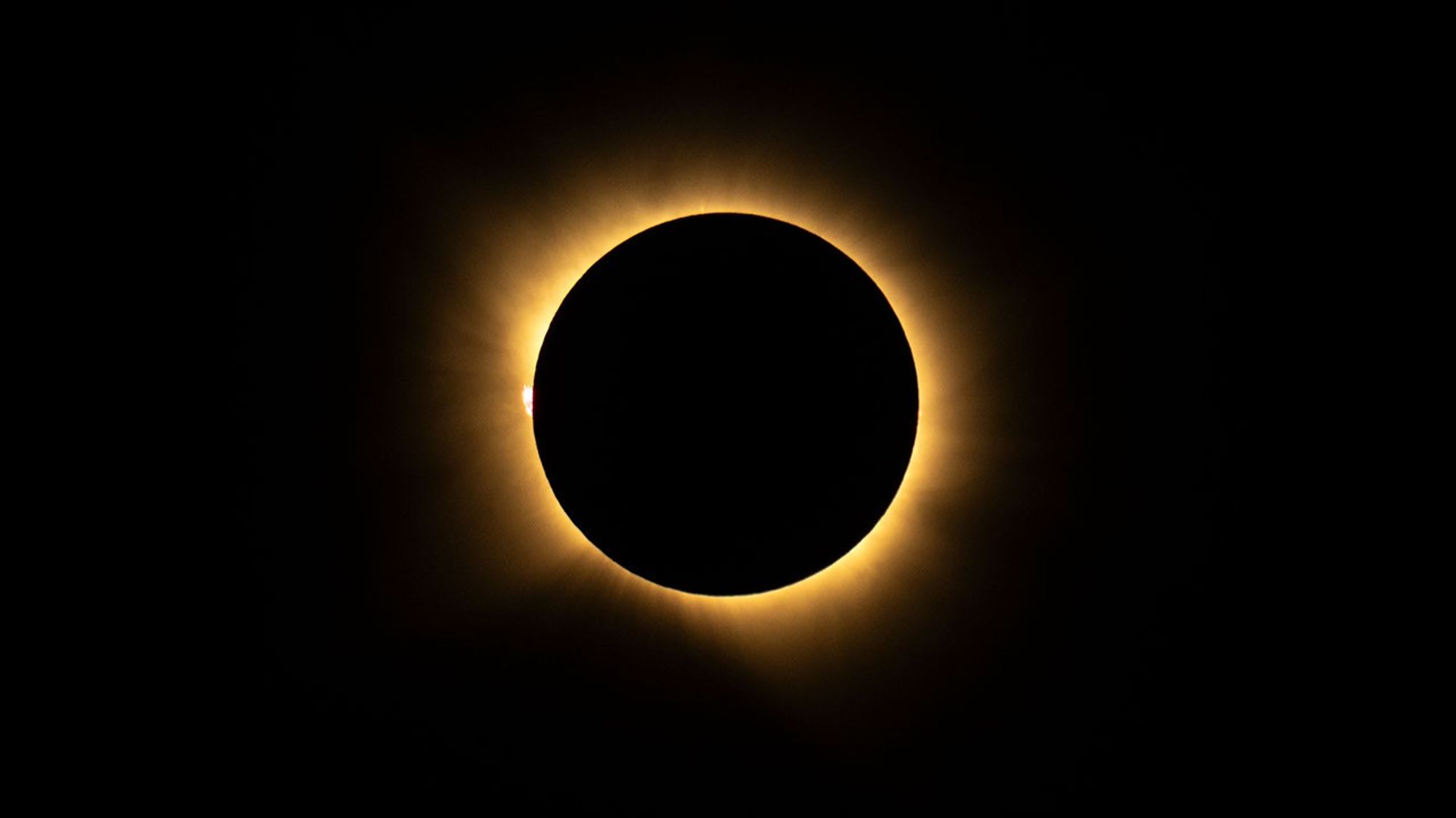 The Sun’s corona blazes around the silhouette of the Moon during totality, seen from San Millán de los Caballeros, Spain. A solar prominence is visible extending outward on the left. (Image: NASA/Bill Ingalls)
Why Scientists Chase These Moments
Total eclipses give researchers a genuinely unique window into the Sun, its corona is millions of degrees hotter than the visible surface beneath it, and scientists still don’t fully understand why. Studying the corona during the brief seconds it’s naturally exposed, without the Sun’s overwhelming glare washing everything else out, remains one of the few ways to observe it directly from Earth’s surface. If you’re curious about the physics behind how often events like this line up at all, our explainer on how frequently solar eclipses actually occur breaks down the orbital mechanics involved.
Missed It? Mark Your Calendar
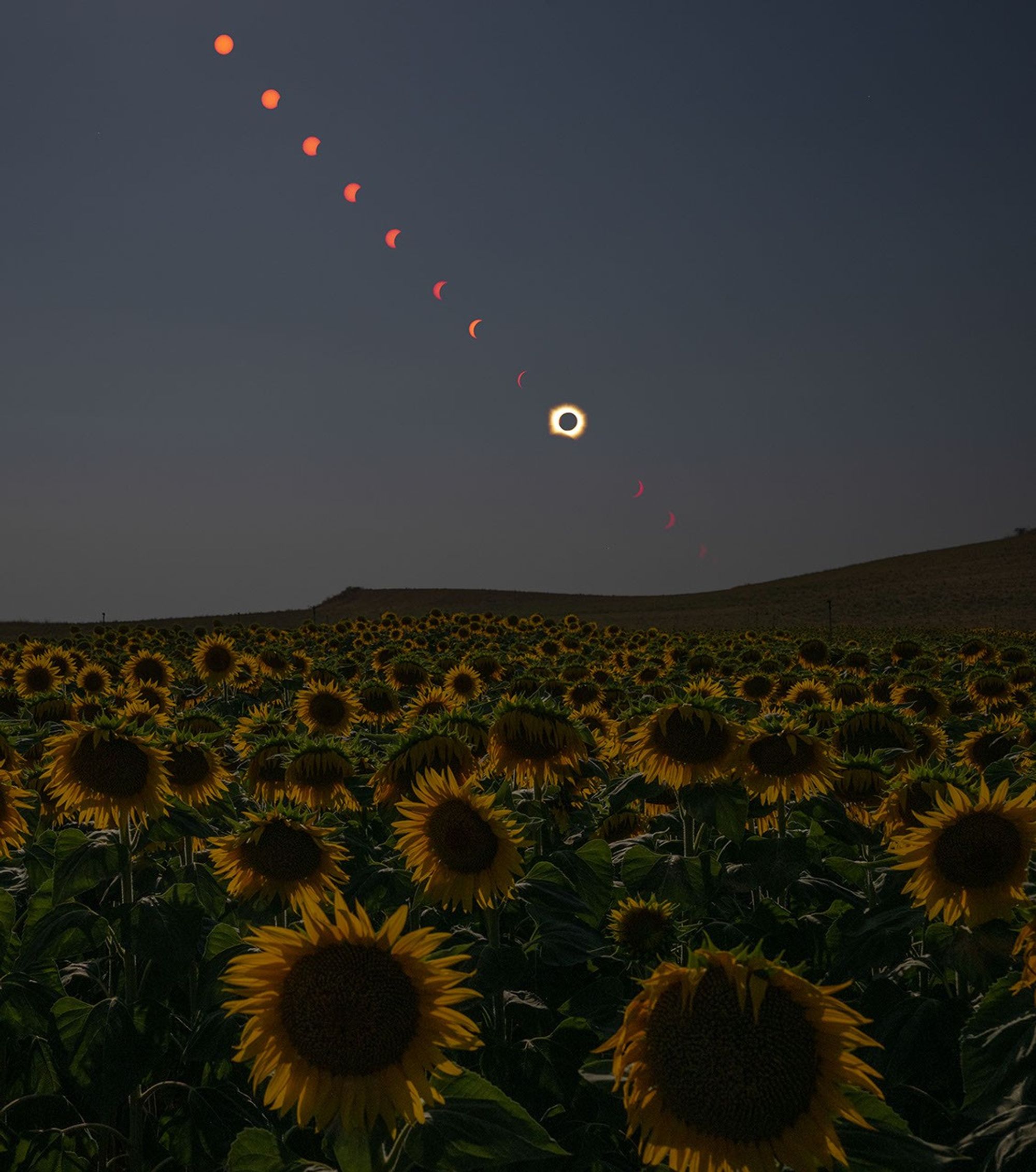 A composite image shows the progression of the total solar eclipse over a sunflower field in San Millán de los Caballeros, Spain, on August 12, 2026. (Image: NASA/Bill Ingalls)
Most of Europe, along with parts of Canada, North Africa, and the northern United States, caught a partial eclipse instead of full totality. If you missed the main event, the wait isn’t too long, the next total solar eclipse arrives August 2, 2027, tracing a path across southern Spain, North Africa, Saudi Arabia, and Yemen, followed by an annular eclipse visible from Portugal and Spain in January 2028.
For more photos and video from the eclipse, check out NASA’s image library and the detailed viewing guide from BBC Sky at Night Magazine.
If you enjoyed this article, don’t forget to drop us a comment, it really helps support the site, and be sure to check out our other articles because we think you’re going to love them too.