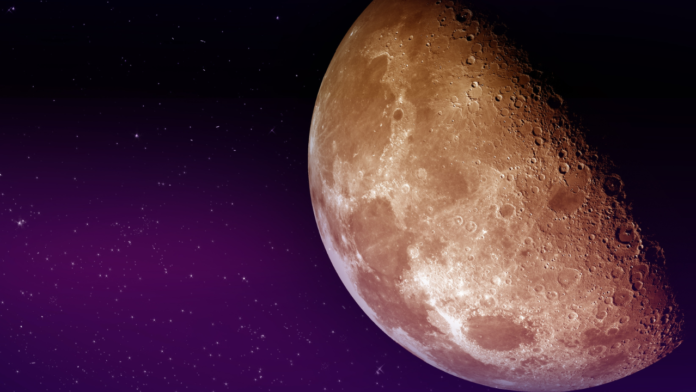

Its easy to take the Moon for granted. It’s up there almost every night, it doesn’t put on a dramatic show like a meteor shower or an eclipse, and most of us stopped really looking at it sometime after childhood. But the Moon is genuinely one of the strangest and most important objects in our entire solar system, and once you start digging into the diameter of our moon and how it actually got there, its hard not to see it differently every time you glance up.
Just How Big Is the Moon?
The diameter of our moon comes out to about 2,159 miles, or roughly 3,474 kilometers. To put that into perspective, thats a little more than a quarter the diameter of Earth itself, making the Moon proportionally one of the largest moons compared to its home planet anywhere in the solar system. Most moons orbiting other planets are tiny compared to their parent world, but our Moon breaks that pattern in a big way.
That size difference matters more than it might seem. Because the Moon is so large relative to Earth, some scientists don’t even like calling it a simple satellite, they argue Earth and the Moon function almost like a double planet system, orbiting a shared center of mass thats actually located inside Earth itself, just not at its exact core.
If you want to compare the Moon’s size against other objects across the solar system, our weight on planets calculator is a fun way to see how gravity changes once you factor in something the Moon’s size compared to a full sized planet.
Where Did the Moon Even Come From?
For most of the 20th century, scientists debated a handful of competing theories about how the Moon formed. One idea suggested the Moon and Earth simply formed together out of the same cloud of material. Another proposed Earth was once spinning so fast that a chunk of it broke off and became the Moon. A third theory argued Earth’s gravity just captured a wandering object that happened to pass close by.
Then the Apollo missions changed everything. Astronauts brought back hundreds of pounds of actual lunar rock and soil, and once scientists got their hands on that material, most of the older theories fell apart pretty quickly. What emerged instead is known today as the Giant Impact Hypothesis, and its still the leading explanation astronomers rely on.
The theory goes like this, about 4.5 billion years ago, when the solar system was still young and chaotic, a Mars sized object, now commonly named Theia, slammed into the early Earth. The collision was violent enough to blast a massive amount of debris, vaporized rock, molten material, and dust, into orbit around Earth. Over time, that debris cloud gradually clumped together through gravity, eventually forming the Moon we see today.
This theory does a remarkably good job explaining some of the Moon’s stranger characteristics. For one, the Moon has surprisingly little iron compared to Earth, only about 1.6 to 1.8 percent of its total mass, versus roughly 30 percent for Earth. Under the Giant Impact Hypothesis, that makes sense, most of Theia’s iron core would have merged with Earth’s own core during the collision, while the debris that eventually formed the Moon came largely from the outer, iron poor layers of both bodies.
The Impact That Never Really Stopped
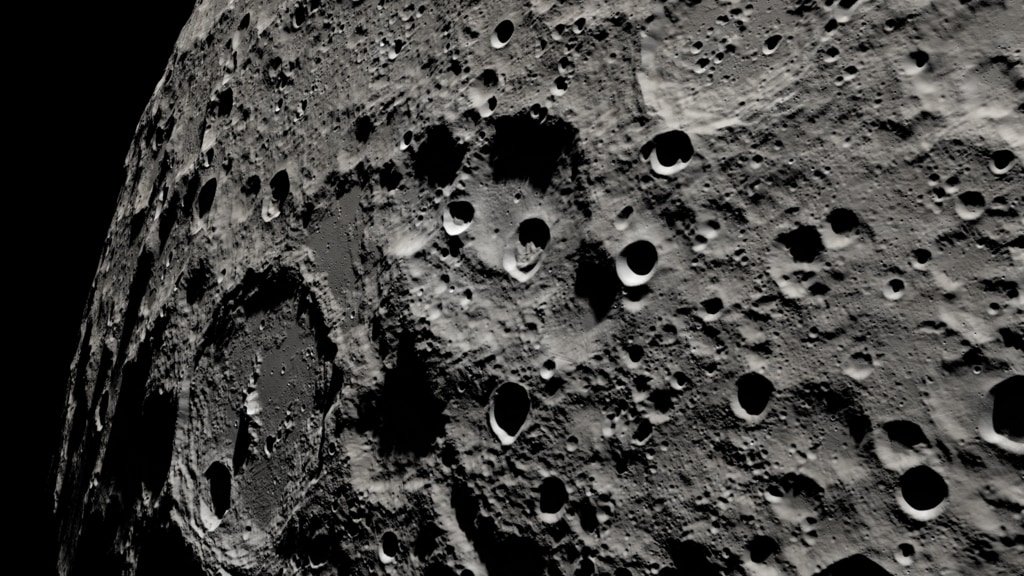
The word “impact” in Giant Impact Hypothesis refers to that one massive founding collision, but its worth knowing the Moon kept getting hit long after it first formed. For its first several hundred million years, the young Moon endured a relentless bombardment of asteroids and debris left over from the solar system’s chaotic early days. Thats exactly why the Moon’s surface is so heavily cratered today, unlike Earth, which has active geology like plate tectonics, erosion, and weather constantly erasing old scars, the Moon has almost none of that. Craters that formed billions of years ago are still sitting there today, essentially frozen in time.
That’s actually part of why scientists care so much about studying the Moon in the first place. Because Earth’s surface constantly resets itself, evidence of our planet’s earliest history has mostly been wiped away. The Moon, on the other hand, still holds onto that record, making it one of the best places to actually study what the early solar system was like.
Why the Moon’s Size and Distance Matter to Us
Beyond the history lesson, the diameter of our moon and its relatively close distance from Earth, about 238,855 miles on average, directly shape life here on our own planet. The Moon’s gravity is the primary driver behind Earth’s ocean tides, pulling water toward itself as it orbits and creating the rhythmic rise and fall coastal communities depend on every single day.
The Moon also plays a quiet but critical role in stabilizing Earth’s tilt. Without the Moon’s gravitational influence, scientists believe Earth’s axial tilt could wobble unpredictably over long timescales, potentially causing wild, chaotic swings in climate. Instead, the Moon acts almost like a gyroscope, helping keep Earth’s tilt relatively steady, which in turn helps keep our seasons consistent and predictable year after year.
A Slow Departure
Heres a detail that surprises a lot of people, the Moon isn’t actually staying put. Thanks to those same tidal forces, the Moon is slowly spiraling outward, drifting away from Earth by about an inch and a half every year. Its a pace so slow it’s completely unnoticeable in a human lifetime, but scientists have confirmed it using reflectors the Apollo astronauts left behind on the lunar surface decades ago, bouncing laser beams off them to measure the Moon’s exact position over time.
If you want to track exactly where the Moon sits in its cycle on any given night, our moon phase and supermoon calculator is a great tool for planning your next night of stargazing.
Looking at the Moon a Little Differently
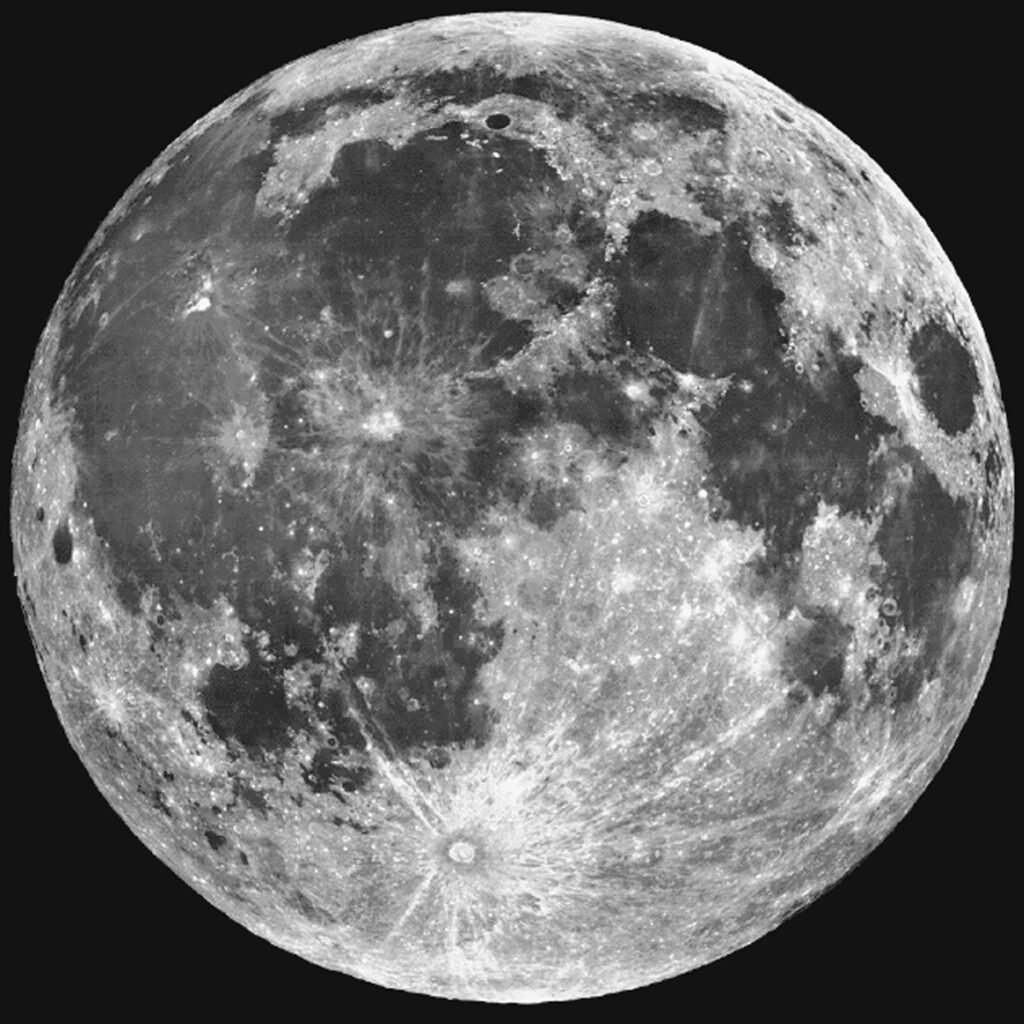
Next time you catch the Moon hanging in the sky, its worth remembering there’s a genuinely violent, ancient story behind that quiet glow, a planet sized collision, billions of years of bombardment, and a slow gravitational dance that still shapes our tides and seasons today. At about 2,159 miles across, the diameter of our moon might not sound massive on paper, but its size, origin, and proximity to Earth make it one of the most quietly influential objects in the entire solar system.
For more on the science behind the Moon’s formation, check out the detailed research from NASA Science and the explainer from the Natural History Museum.
If you enjoyed this article, don’t forget to drop us a comment, it really helps support the site, and be sure to check out our other articles because we think you’re going to love them too.