
Most years, skywatchers have to pick their moments. You wait for a meteor shower, you circle a planet conjunction on the calendar, and if you’re lucky an eclipse rolls around every few years for your part of the world. August 12, 2026 breaks that pattern completely. On this single day, the sky is lining up three separate events back to back, starting before sunrise and running well past midnight. If you’ve ever wanted a reason to actually go outside and look up, this is the day.
Before sunrise: six planets spread across the sky
The day starts early, and we mean early. In the hours before dawn on August 12, six planets, Mercury, Mars, Jupiter, Saturn, Uranus, and Neptune, will all be visible above the horizon at the same time. Don’t picture a neat little row of dots lined up like beads on a string, though. This is a wide alignment, stretching across a big chunk of the sky rather than clustering together in one spot. Mars and Saturn will be the easiest to pick out with just your eyes, bright and steady compared to the twinkle of background stars. Jupiter should be easy too, it’s usually one of the brightest things in the morning sky besides the Moon. Uranus and Neptune are much fainter, so if you want to actually track those two down, bringing binoculars or a small telescope will make a real difference.
The best strategy here is simple. Find an open spot with a clear view toward the eastern horizon, get there while it’s still properly dark, and give your eyes a solid twenty or thirty minutes to adjust before you start scanning around.
Midday into the afternoon: a partial solar eclipse
While Europe gets the headline version of this event, with a full total solar eclipse crossing Greenland, Iceland, and northern Spain, folks in the United States and Canada aren’t left out entirely. A partial solar eclipse will be visible across much of the northern and eastern parts of North America during the midday and afternoon hours. This isn’t a dramatic sky-goes-dark moment like a total eclipse. Instead, it’ll look like the Moon has taken a small bite out of the edge of the Sun, and how big that bite looks depends heavily on where you’re standing. Skywatchers up in the northeast, places like Maine and parts of Atlantic Canada, will see the deepest coverage, while folks farther south and west will catch a much smaller nibble, if they catch anything at all.
Here’s the part that really matters if you plan on watching. You should never look directly at the Sun during any part of a partial eclipse, not even for a second, not even when it looks like just a sliver is covered. Regular sunglasses do nothing to protect your eyes here. You need proper solar eclipse glasses that meet the ISO 12312-2 safety standard, or a solar filter designed specifically for your camera or telescope. If you don’t have eclipse glasses on hand, a simple pinhole projector made from a couple pieces of cardboard lets you view the eclipse safely by watching its projected image rather than staring at the Sun itself.
After dark: the Perseids peak under a perfectly black sky
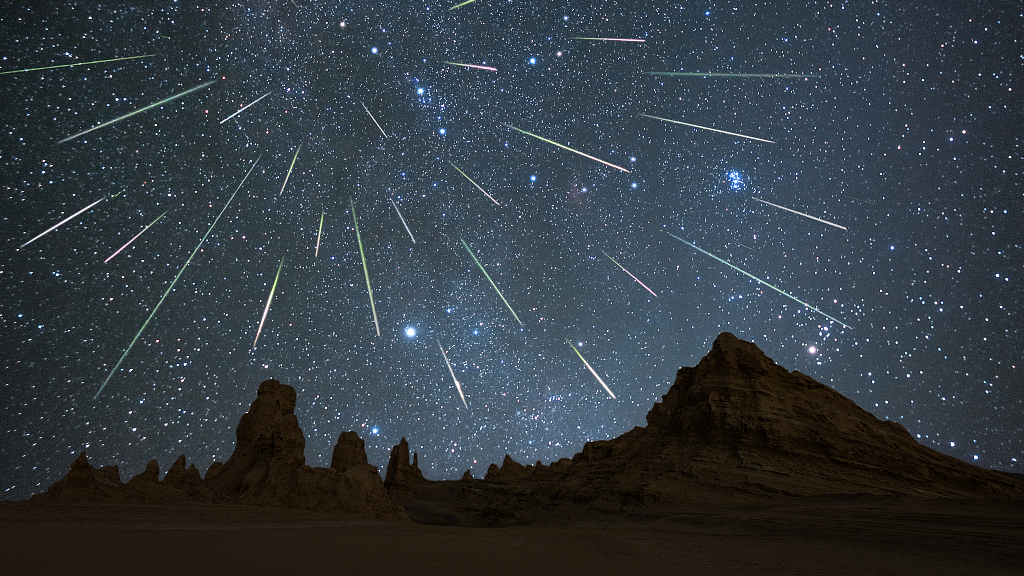
Then comes the part most people have been waiting for. Once the Sun sets and the sky finally goes dark, the Perseid meteor shower reaches its peak, and 2026 happens to be an unusually good year for it. The Perseids show up every summer when Earth plows through a trail of dust left behind by Comet Swift-Tuttle, and those tiny bits of comet debris burn up in our atmosphere as fast, bright streaks of light. Under a clear, dark sky far from city lights, this shower can produce somewhere around 50 to 100 meteors an hour at its best.
What makes this particular year special is timing. The peak lands almost exactly on a New Moon, which means there’s no moonlight washing out the sky. That’s a genuinely rare bit of luck, since the Moon ruins the view more often than not, and the next time the Perseid peak lines up this well with a New Moon won’t happen again until 2045. So if you’ve been putting off a meteor shower for years thinking you’ll catch the next one, this is the one to actually show up for.
To watch, look toward the northeast after full darkness sets in and try to spot the constellation Perseus climbing up from the horizon. That’s roughly where the meteors appear to radiate from, but don’t fixate on staring at one spot. The meteors can streak across any part of the sky, so it actually helps to lie back, relax your gaze, and take in as much of the sky as possible at once. No telescope needed here, and honestly a telescope would just narrow your field of view and make it harder to catch anything. Just your eyes, some patience, and ideally a blanket to lie on while you wait. The shower tends to get better the later you stay out, with the highest rates usually showing up in the hours right before dawn.
Making the most of a once in a generation kind of day
Realistically, very few people will catch all three of these events in full. You’d need clear skies from before dawn until well past midnight, plus a location where the partial eclipse is actually visible. But even catching one or two pieces of this lineup, the planets at sunrise, a partial bite out of the Sun in the afternoon, or a sky full of shooting stars after dark, makes August 12, 2026 a day worth planning around. Days like this, where multiple celestial events genuinely stack up rather than just happening to fall in the same week, don’t come around often. Check the weather forecast for your area, find the darkest spot you can reasonably get to, and give yourself the whole day to just keep looking up.