
Look up at the night sky sometime and it’s hard not to wonder how long all of this has actually been going on. Not just how far away those stars are, but how far back in time. It’s one of those questions that feels almost too big to answer, and yet astronomers actually have a pretty solid number for it. The universe is about 13.8 billion years old.
That number isn’t a guess or a rough estimate pulled out of thin air. It comes from decades of careful observation, several completely independent methods that all point to roughly the same answer, and some of the most sensitive instruments humanity has ever built. So let’s talk about what that number actually means, how scientists figured it out, and why a few researchers are starting to ask whether it might need a second look.
What “13.8 billion years” really means
When astronomers say the universe is 13.8 billion years old, they mean that’s how much time has passed since the Big Bang, the moment our universe began expanding from an incredibly hot, dense state. A lot of people picture the Big Bang as some kind of explosion going off in empty space, like a firework. That’s actually not quite right. There was no “empty space” waiting around for it to happen in. The Big Bang was the beginning of space itself expanding, and it’s been expanding ever since, carrying galaxies further and further apart as it goes.
Time as we understand it started right along with that expansion. This is part of why the question “what happened before the Big Bang” doesn’t really have a clean answer in modern physics. If time itself began with the universe, then “before” may not be a meaningful concept at all. It’s a strange thing to wrap your head around, but that’s where the science currently stands.
How do we even measure something like this?
There’s no giant cosmic stopwatch sitting somewhere in space, so scientists had to get creative. Two main approaches have given us the age of the universe, and the fact that they agree with each other is a big part of why astronomers trust the 13.8 billion year figure.
The first method looks at the cosmic microwave background, sometimes just called the CMB. This is leftover radiation from about 380,000 years after the Big Bang, back when the universe had cooled enough for light to travel freely for the first time. It’s basically the oldest photograph of the cosmos we could ever hope to take, and it shows up as a faint microwave glow that fills the entire sky. Missions like NASA’s WMAP spacecraft and the European Space Agency’s Planck satellite mapped this glow in incredible detail. By studying tiny temperature fluctuations in that ancient light and plugging the numbers into Einstein’s equations, scientists can essentially run the cosmic clock backward to the very beginning. Planck’s data pointed to an age of roughly 13.8 billion years, and WMAP landed on a very similar number.
The second method is almost the opposite approach. Instead of looking at the earliest light in the universe, it looks at how fast the universe is expanding right now, a value called the Hubble constant. Astronomers measure the distances and speeds of galaxies moving away from us, then work backward to figure out when everything must have started from the same point. This method also lands in the same general neighborhood, somewhere around 13 to 14 billion years, although it tends to give a slightly different number than the CMB method does, and that mismatch has become a genuinely interesting puzzle in cosmology.
There’s actually a third, low-tech way to double check all of this. Astronomers can study the oldest stars in our own galaxy. Stars aren’t eternal, they burn through their fuel at predictable rates, and by studying their composition and brightness, researchers can estimate how long they’ve been shining. A recent study looking at more than 150,000 stars in the Milky Way estimated the oldest of them to be around 13.7 billion years old, which lines up beautifully with the CMB measurements. Since nothing in the universe can be older than the universe itself, this kind of stellar archaeology acts as a nice sanity check on the numbers.
The Hubble tension, and why 2026 has been an interesting year for cosmology
Here’s where things get a little messier, in a good way. Remember those two main methods, the early universe approach using the cosmic microwave background and the local universe approach using nearby galaxies? They don’t quite agree on how fast the universe is expanding today. The CMB method points to an expansion rate around 67 kilometers per second per megaparsec, while measurements based on nearby supernovae tend to land closer to 73. That difference might sound small, but it’s statistically significant, and nobody has fully explained it yet. Scientists call this mismatch the Hubble tension, and it’s one of the more genuinely unresolved problems in modern astrophysics.
Some researchers think it points to a flaw in our instruments or our calibration. Others think it might be hinting at something deeper, maybe an extra ingredient in the early universe we haven’t accounted for, or some new twist on dark energy. There was even a notable Methuselah star, HD 140283, that once appeared to be older than the universe itself, clocking in at an estimated 14.5 billion years. That sounds like a contradiction, but the original measurement carried a large margin of error, and refined estimates have since brought its age comfortably back under the 13.8 billion year limit.
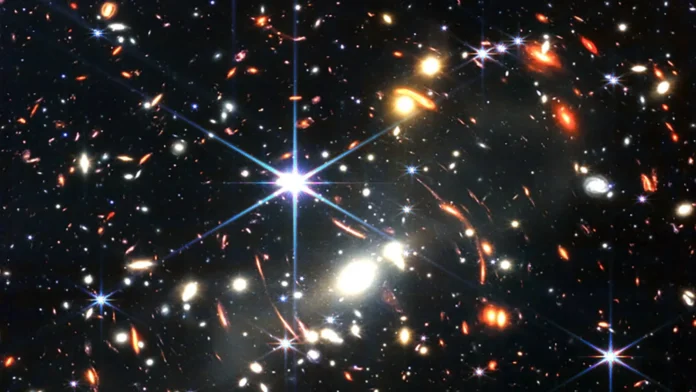
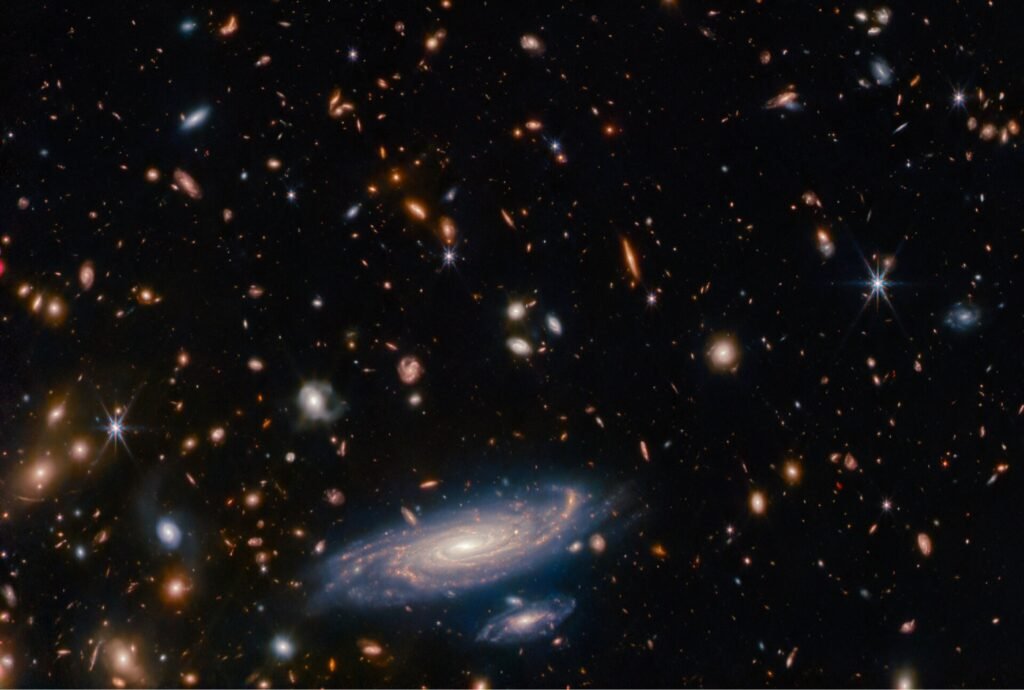
Meanwhile, the James Webb Space Telescope has been stirring up its own share of questions. Since it started operating, Webb has spotted galaxies from the very early universe that look surprisingly mature and well formed for their age, more developed than most models predicted they should be that soon after the Big Bang. It doesn’t mean the 13.8 billion year age is wrong. Most cosmologists still consider it the best supported number we have. But it does mean our understanding of exactly how galaxies formed and grew in that first billion years is still very much a work in progress.
So, is 13.8 billion years the final answer?
For now, yes, that’s the figure the overwhelming majority of evidence supports, and it’s the number you’ll see in textbooks, planetarium shows, and NASA fact sheets. What’s changed isn’t the headline number so much as our appreciation for how much we still don’t fully understand about the details underneath it. Science rarely closes the book completely, and that’s honestly part of what makes it exciting. Every new telescope and every new survey has the potential to sharpen this number, or to reveal something about the early universe nobody expected.
It’s a strange kind of comfort, knowing that when you look up at the stars, you’re looking at light that in some cases has been traveling for over 13 billion years just to reach your eyes. The universe has been around long enough to build galaxies, stars, planets, and eventually someone standing in their backyard, tilting their head back, wondering how old it all really is. As it turns out, we actually have a pretty good idea.