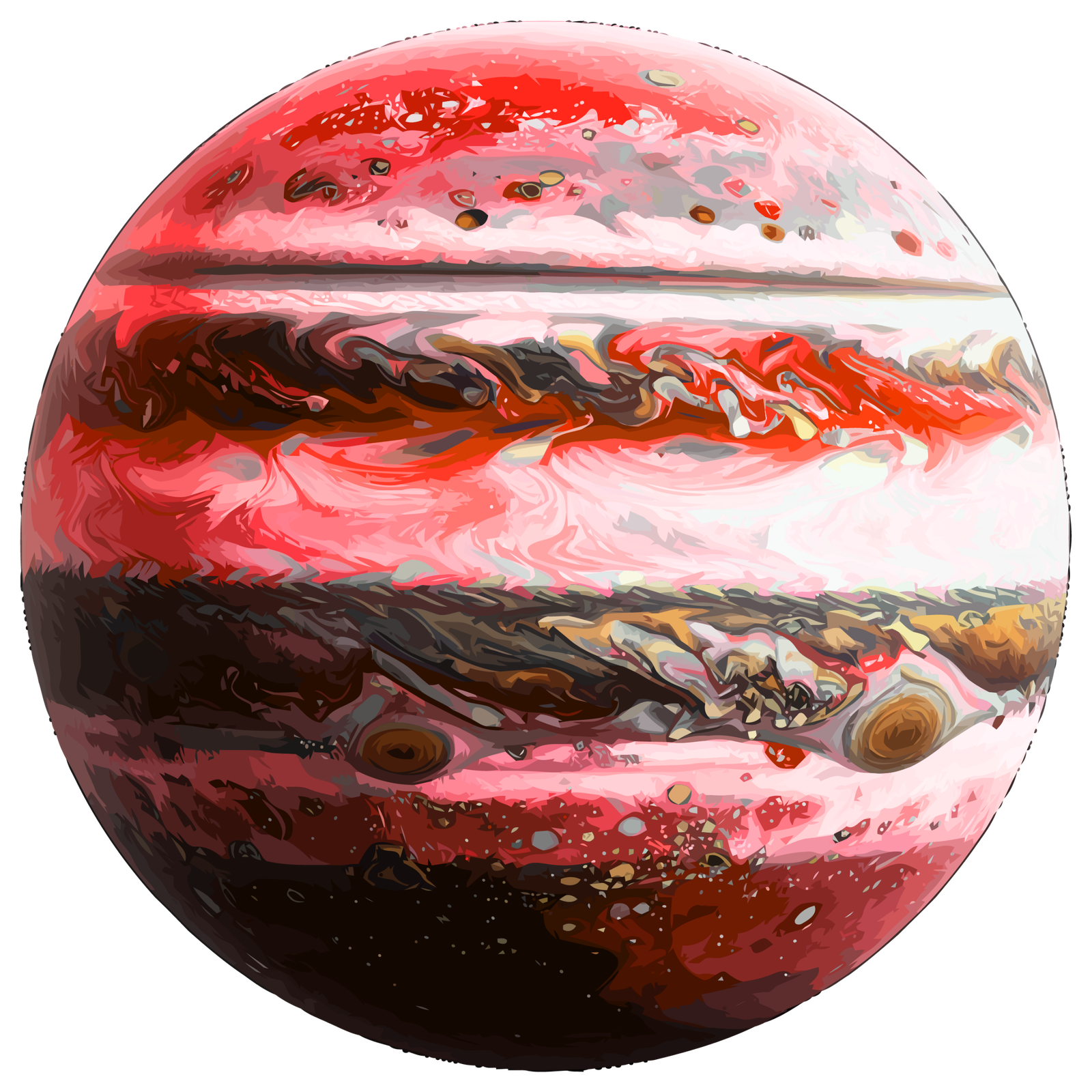
Escape Velocity Calculator: How Fast Do Rockets Need to Fly to Leave Planets?
Have you ever wondered why space agencies like NASA and SpaceX need massive multi-stage rockets filled with hundreds of tons of fuel just to put a satellite into space? Earth’s gravity acts like an invisible tether pulling everything back down. To break completely free from that gravitational grip, an object must reach a specific minimum speed known as escape velocity. That’s precisely why we built the Escape Velocity Calculator here at Galaxy Chronicle.
Whether you’re a physics student double-checking homework formulas or just curious how fast a rocket has to fly to leave Mars or Jupiter, our Escape Velocity Calculator breaks down the numbers instantly.
How to Use the Escape Velocity Calculator
Using our Escape Velocity Calculator is super straightforward and gives you instant planetary stats:
- Select a Celestial Body: Choose any world from our preset list, including Earth, Mars, the Moon, Jupiter, or even a Black Hole.
- Compare Speed Units: The Escape Velocity Calculator provides accurate outputs in kilometers per second ($km/s$), miles per hour ($mph$), and kilometers per hour ($km/h$).
- Analyze Relative Gravity Wells: See how many times harder or easier it is to escape that body’s gravity compared to Earth baseline.
- Learn Physics Concepts: Read quick physics insights explaining why different mass and radius dimensions alter escape requirements.
The Physics Formula: How Escape Velocity Actually Works
In physics, escape velocity ($v_e$) is the speed where an object’s kinetic energy equals its gravitational potential energy.
The standard formula is written like this:
$$v_e = \sqrt{\frac{2GM}{r}}$$
- $G$ is the universal gravitational constant.
- $M$ is the total mass of the planet or celestial body.
- $r$ is the distance from the center of mass (the surface radius).
Notice that the mass of the rocket itself isn’t even in the equation! A tiny pebble and a massive Apollo spacecraft both require the exact same minimum speed—about $11.2 \text{ km/s}$ ($25,000 \text{ mph}$)—to escape Earth’s gravity well. Using our Escape Velocity Calculator lets you test these variables without doing complex square-root math by hand.
Frequently Asked Questions
Does a rocket have to reach escape velocity immediately at launch?
Not necessarily on the launchpad, but it must reach that speed before shutting off its engines if it wants to travel into deep space without falling back down to Earth.
Why is escape velocity lower on Mars than on Earth?
Mars is much smaller and has only about $11\%$ of Earth’s total mass. Because its gravitational pull is weaker, its escape velocity is just $5.03 \text{ km/s}$—making future manned return launches from Mars much easier!
What happens to escape velocity at a black hole?
A black hole squeezes massive mass into a tiny radius. At a boundary called the Event Horizon, the escape velocity equals the speed of light ($c$). Since nothing in the universe can travel faster than light, nothing can escape from inside!